No Credit Score? How to Build a Credit History From Scratch

how to build a credit history from scratch

No credit history? No problem! You can build a credit history from scratch. Here’s a helpful guide to help you do that.

Starting to build a credit history from scratch can be daunting at first. There’s a lot of questions you might have – what should you do first? What’s good for your credit rating? We’ve got your back. It’s not as hard as you may think and it should only take a few months until you’re fully set up.

First things first: Not having a credit score at all is better than having a negative score. If you need to build your credit score from scratch, you will need a few months to get there but you should see positive results quickly. Repairing a damaged credit score, on the other hand, can take years.

The goal: Aim for the best! Your goal should be an exceptional credit score! (Of course, good does the job, too.)

Not having a credit score yet means that the major credit bureaus don’t have any data about you listed just yet. Your goal is to build a history of positive entries in your file that allow you to apply for anything you want in the future.

Ready to get started? You will need a little bit of patience until you see results. Experian, one of Australia’s big credit bureaus says that it takes between 3 and 6 months until they have collected enough data to calculate a score for you. So make your next 6 months count (and all your financial decisions afterwards)!

What’s covered in this article?

Credit Score Basics

What is a credit score?

How does it work?

Why do I have no credit history?

How do I find out about my score?

Let’s get stuck in.

Credit Score Basics

Before you dive deeper into your finances, it’s important to understand how your credit scores work. Lesson number one: You have more than one credit score. That’s right, there are multiple bureaus that collect information about your financial behaviour. In Australia they are:

Each of them has its own reporting with slightly different parameters. That’s why your score can vary, depending on which report you’re looking at. Not everyone reports to all three of them in the same way and your information might be processed differently.

What is a credit score and how does it work?

Your credit score is a number between 0 and 1,000/1,200 (numbers vary slightly for each credit bureau) that reflects your creditworthiness. It is based on your credit report, a collection of your credit data reported to this date. Your points place you in different categories:
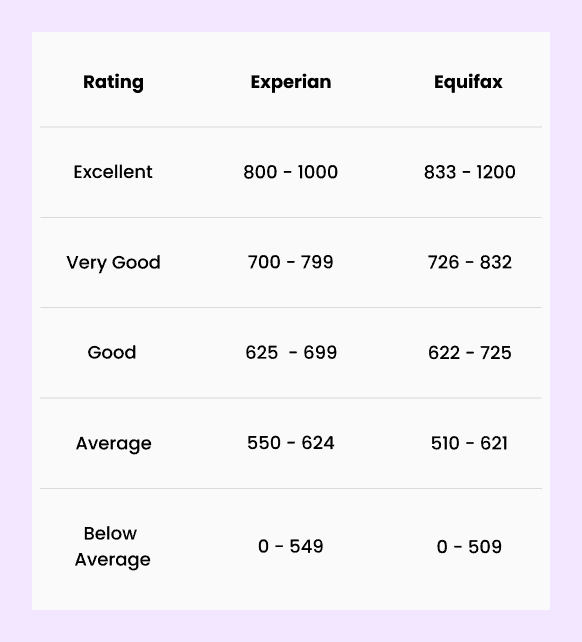
what is a good credit score, good credit score

Source: Experian and Equifax

While you should aim for an excellent credit score, reaching “good” is often enough to apply for a loan with good conditions.

If you apply for a mortgage, a personal loan, or a credit card in the future, your potential lender will perform a credit check and base their decision on your credit score. Higher scores can get you lower interest rates and better deals while loan applications with low credit scores may get higher interest rates or even get rejected.

What factors affect your credit score?

If you have to build your credit history from scratch, you may be wondering what your credit report is made of. Let’s have a closer look at its components.

Your credit score consists of a mix of things, including your previous payment history and how much you owe in comparison to the maximum amount you could borrow. You may be surprised to hear that borrowing money isn’t necessarily a bad thing for your credit score, as long as you pay it back on time.

Your credit score consists of multiple factors:

  • Credit Accounts;
  • Repayment History;
  • Defaults;
  • Credit Applications;
  • Bankruptcies and Debt Agreements;
  • Credit Report Requests.

Credit Accounts

If you have applied for credit in the last 2 years, it will be listed here. What type of credit did you have? Who is your credit provider? What is or was your credit limit? When did you open the account, when did you close it? If you applied for joint credit, the co-applicant would be listed as well.

This is something you want to consider on your journey to a healthy credit score. A healthy mix of different types of credit will give you a better score. This could be e.g. a personal loan, a car loan, and a credit card. Simply having multiple credit cards won’t give you the same effect on your credit score. However, whilst a mix of credit is good for your credit score, it is worse to take on too much credit and default on your repayments. You should only take out what you can afford. And here’s a tip for business owners: try to build relationships with Tier 1 business credit vendors. These vendors are important for creating a strong business credit profile because they usually report payment activity to major credit bureaus. By using credit from these vendors responsibly and paying on time, you can improve your business’s credit score and open up better financing options later on.

Tip: Wait a few months between applications if you are in the process of establishing a good credit mix. When you apply for a loan or type of credit, the credit provider will check your credit report to assess your creditworthiness. This is called a hard enquiry. Multiple hard enquiries in a short time will negatively affect your credit score. Additionally, you want your score to recover before you send your next enquiry to get you the best interest rate possible.

Repayment history

Your repayment history shows if you have paid your debt on time. It is an extremely influential factor for your credit score. Your credit report will include:

  • Repayment amount;
  • The due date for payment;
  • How often you have paid and if your payment was on time;
  • Missed payments (payments not made within 14 days of due date);
  • Did you make missed payments later?

Tip: Set up automatic payments to ensure that you always pay your debt on time. If you can’t set up autopay, set a reminder in your calendar. Missed payments can hurt your credit score for years.

Defaults

A default is a non-payment of debt of $150 or more. This includes any phone or utility bills, credit card bills, or loans that you didn’t pay on time or in case of a clear out. (A clearout = when a credit provider can’t contact you at all).

A default will be listed if the payment is 60 days or more past its due date or the provider has asked you by phone or in written form to make your payment.

Credit Applications

When you apply for any form of new credit, a hard inquiry is registered. This can have a short-term effect on your score. Too many hard inquiries at a time will negatively impact your numbers. Your credit reports lists:

  • Number of Applications;
  • Total Amount of Credit;
  • Loans.

Other factors that impact your credit score

While you are building your credit score from scratch, you won’t have to worry too much about these things. However, it’s good to know what could impact your score down the track!

  • Public records such as bankruptcies;
  • The number and residency of credit accounts you have applied for;
  • Cross-referenced files (additional credit files that contain similar information but vary in data-points);
  • Default listings with debt collectors.

Why don’t I have a credit history?

So far, your credit history is blank and you might be wondering why? There could be a few reasons why. If you just turned 18 and most of your bills have been paid by your parents, you haven’t had a chance yet to accumulate credit history. Even if you are older, chances are that you never applied for credit yet and therefore, the relevant credit bureaus don’t carry data about you.

How to build a credit history from scratch

If you want to build a credit history from scratch, here are some of the steps you could take.

Step one: Open an Australian bank account

Let’s start to build your credit history from scratch. If you don’t have your own bank account yet, that’s the first thing you want to look into. A long-held bank account may allow you to apply for a credit card down the track. While it may not help you immediately to improve your credit score, it could in the future. A bank you had an account with for some time may be able to offer you a credit card based on your previous relationship. Having a bank account will also allow lenders to verify your residency once you start applying for personal loans. You will often be required to provide multiple documents that have your address on them.

Additionally, a bank account is important to manage your finances well and on time.

Step two: Proactively provide information

You can proactively approach your credit bureau to provide information if your data is currently left blank. While you can’t just send them an email to get listed, you can send them

  • A document to prove your identity;
  • A document to prove your address.

Updating your information proactively will be useful for future reference. E.g. if you apply for new credit after you moved house and your address doesn’t match, this can affect your credit score by creating a cross-reference or even a new credit file.

Now there is some information about you in the system. Just because you never had a credit card or a loan doesn’t mean you don’t have a positive financial history. Let’s start your efforts to build a credit history from scratch.

If you live on your own, you may be reliable for paying rent and utilities. By making those payments on time, you have already proven that you can manage your finances well. If you have just started to live on your own, keep in mind that paying your bills on time may affect your credit score in the future. The earlier you start building healthy financial habits, the better.

Step 3: Apply for a credit card

While you may not be able to apply for a regular credit card with no credit score, there are other options available to you.

    • First credit card. Many banks offer specific credit cards for people that are just starting out with their financial life. They generally come with low fees and low interest.
    • Guaranteed approval credit card. As the name suggests, you will get approved for this credit card even if you don’t have a credit score yet. It comes with a higher interest rate, a lower credit limit, and fewer features. However, if you pay off your spendings every month, the interest rate won’t matter and can help you build a positive credit history.
    • Use a co-signer. Adding a co-signer to your application can improve your chances of getting approved. However, some big banks won’t allow it. Be careful who you choose, a co-signer will be legally responsible for any debt you accumulate on that card and will equally be able to access your funds. A co-signer should be someone you trust like a parent or a close family member.
    • Open a joint credit card. On a similar note, you may have better chances to open a joint bank account with a partner or a family member if they have a good credit rating. A joint account comes with joint responsibilities but also joint benefits. Did you move into your first place? How about a joint credit card to pay for house expenses? You will all benefit if everyone treats it responsibly.
    • Be an authorised user for some else’s account. If you want to build a credit history from scratch, this is something you can always do. Most credit cards allow you to add authorised users. They are different from a co-signer because the responsibility to pay the bills stays with the primary owner of the credit card.

Step 4: Work on your credit mix

When you’re a few months into building your credit history from scratch, you should have a credit score and it’s hopefully looking good. The next step you could take to developing your credit history is by thinking about other credit options if you can afford them. A healthy credit mix contains both types of credits:

  • Revolving credit – a revolving credit doesn’t have an end date and is a consistent line of credit like e.g. a credit card. It doesn’t have a specific limit but comes with minimum payments each month.
  • Instalment credit – on the contrary, instalment credit has a set amount and an end date. Examples are personal loans, student loans, or car loans.

Credit bureaus recommend having a blend of different credit types in your credit history.

Let’s say you are considering buying a car, it may be sensible to look into your loan options even if you could afford to pay the full price. Starting your credit history with a car loan may be a good idea. Most car loans are secured loans. Your purchased vehicle acts as security against the loan and allows your lender to offer you a better interest rate.

However, it is possible to build a credit history from scratch with a good score even if your credit mix consists of one sort of credit only.

Actions that positively impact your credit history over time

  • You can ask your bank for a small overdraft. It allows you to borrow extra money from your bank account. While you won’t actually have to make use of it, it will still impact your credit score as it is a form of credit;
  • Make sure all your utilities and household bills are in your name. While it may be difficult to set up all of them under your name if you don’t have a credit score, it will get easier over time. It’s important for your future history to have them in your name;
  • Always pay direct debit when possible;
  • Don’t apply for multiple credit accounts at the same time. If you are currently working on building a credit mix, space out your applications. Each application will create a hard enquiry that may cause your credit score to drop for a few weeks;
  • You don’t have to pay interest on your credit card to help your score. In fact, it is better to pay off your credit debt straight away each month. If you pay off what’s due you’ll build up your credit history without having to pay extra;
  • Don’t close accounts unless you really don’t use them anymore. The longer you own an account, the better it is for your credit history.

Want to learn more about your credit score? Tippla’s credit school may be of great help! Simply sign up with us today to access our free resources that can give you further guidance about your credit score and ways you can build and improve it.


How To Provide 100 Points Of ID For An Identity Check

100 points of ID as proof of identity

100 points of ID – Why you need it and what to provide

Ready to get to know your credit scores? We’re sure you care about your data as much as we do, so let’s talk about safety. When signing up for Tippla, you will be asked to verify your identity to make sure it’s really you. Our system will prompt you to upload personal documents that combined provide 100 points of ID. Keeping your data safe only takes a few minutes and then you are set up and ready to go.

Why do we need to confirm your identity?

Well, the information that we provide you with – your credit scores, the details of your various credit files – is sensitive and pretty personal. We can’t imagine you’d want it falling into the wrong hands. More than that, we take data security very seriously and have some strict rules to comply with. We’re legally required to ensure that you are who you say you are before releasing your data. How good?

Are you confused about what documents you can provide to prove your identity to authorities? Let’s have a look at what you need to provide 100 points of ID, shall we?

What is the 100 points of ID system?

In Australia, the most common way to prove your identity is the 100 points of ID check. If you haven’t already, you will likely come across it on several occasions, e.g. when renting a home, opening a bank account, or applying for credit.

You are required to provide a combination of documents issued by the Government or other authorities that, together, equal 100 points. Each document is given a certain amount of points, depending on if it is a primary or secondary document of identification. Sound complicated? Don’t worry, we’ll let you know if we need any additional information from you and what to submit.

How does Tippla verify my identity?

At Tippla, we keep your data safe by using 128-bit encryption and a multi-level infrastructure. First, we need to know it’s actually you who’s enquiring after your credit score. During the signup process, we ask you to verify your identity with – you may have guessed it – the 100 points of ID check. Because it’s safe yet convenient. All you need to do is follow our prompts.

You only have to verify your identity once when you sign up. It takes 2 minutes to get verified online –  and the alternative would be to show your ID at the post office… What a hassle!

Step one: Upload the required documents

You won’t have to worry about the 100 points of ID – we will tell you what we need and when to upload it. We will ask you to upload two of the following documents as proof of ID:

  • Passport
  • Driver’s Licence
  • Medicare Card

Step two: Get verified

Our system automatically matches your documents provided under your 100 points of ID with stored data about your person. Boom, you’re verified!

In some cases, however, we can’t match you. A reason could be that your personal information isn’t up to date. We will then have to verify you manually.

Alternative step two: Manual ID verification

If for some reason your automatic verification can’t give you a green light, we will ask you to send the required documents directly to support@tippla.com.au. In this case, we will ask you to provide a few more documents for security reasons:

  • Proof of address (Important: It needs to contain your name AND address in the same document)
  • 100 points of ID (refer to list below)
  • A selfie (we will ask you to hold up a number, so we know it’s you)

What if I don’t have a driver’s licence or passport?

That’s okay. You can alternatively use your Medicare care and an additional document to prove your identity. As long as you can provide 100 points proof of ID, we will still be able to verify you. But you will have to go through the manual ID verification process instead.

Fill in your application on Tippla and send us the required documents to support@tippla.com.au to speed up the process. If you have any trouble, just shout! Our friendly customer service will lend you a helping hand wherever you need one.

Why do I need to prove my digital identity?

Tippla allows you to see your credit reports and monitor them over time. And we want to make sure that it’s only you who can see the reports! Especially when handling sensitive data like financial documents, we must know your digital identity matches the real person.

The 100 points of ID check is a convenient and secure way to check your identity without making you come into our office.

What are primary and secondary documents of ID?

The documents you provide have to equal 100 points or more to be a valid source of ID. There are primary and secondary documents of identity. We can assure you, it’s easier than you think.

All you have to do is provide at least two different documents that together count 100 points.

E.g. Driver’s Licence (70 points) and a Medicare Card (70 points).

70 + 70 = 140

Primary documents of ID (70 points)

Primary documents of ID are issued by a Government authority and include your full name, date of birth, and a picture. That’s why they count the most towards your 100 points of ID.

Secondary documents of ID

These documents only contain two pieces of information about you like your name and signature or your name and DoB. That’s why they are secondary documents and don’t count as much towards your 100 points of ID.

Primary Documents of ID (70 points)

Secondary Documents of ID
Birth Certificate Australian Marriage Certificate
Driver’s Licence Australian Taxation Notice of Assessment
Passport Bank, credit or ATM card with signature
International Passport Divorce papers
Medicare Card Life insurance policies
Occupational registration documents
Recent bank statements

How can you protect yourself from fraud?

Fraud is a malicious activity that causes you to lose money and in some cases, also your reputation. What does that have to do with your identity? Actually, a lot! If someone steals your data, this person may be able to use your identity to make a purchase or to sign up for services. The Australian Institute for criminology says fraud is pretty common, which means it can likely happen to you, too.

It’s bad when someone uses your credit card for purchases but even worse if you get punished for unpaid debt that wasn’t even yours. That’s why you should check your credit report frequently to protect yourself from fraud. If something looks fishy in your report, you can either report it directly to the credit bureau or talk to the lender/ provider to investigate. The credit bureau will then correct the wrong entry.

Does Tippla protect my identity?

Hells yeah, we do! After verifying your identity with your 100 points of ID, we make sure that no one else gets to see your credit score. How do we do that?  We use 128-bit encryption and multi-layered infrastructures to keep your information where it needs to be. Our IT team performs regular vulnerability scannings to make sure your data is safe. If you want to know more about Tippla’s security practices, click here.

Other ways to protect your identity

While you can’t be fully protected from any fraud or identity theft, you can do a few things to make it less likely that your identity gets stolen.

Tip #1: Set a strong password

When you sign up for Tippla, we ask you to sign up with a strong password. You shouldn’t use the same password in any two services. A secure password is unique and contains a range of different numbers and symbols. If you struggle to come up with anything, you can use a password tool to create a safe password (and to save them after).

A strong password:

  • has a minimum of 8 characters;
  • includes lower and upper case alphabetic letters;
  • has at least 1 symbol;
  • has at least 1 number.

Tip #2: Always log out of your accounts

Whenever you access any of your financial accounts, including Tippla, make sure that you log out after each session. This is especially important when you use a public computer or someone else’s laptop.

Tip #3: Only access sensitive information from safe networks

One way strangers can gain access to your accounts is via your network. Only access your information from networks that you trust like your home wifi.

Tip #4: Check your accounts regularly.

To catch any suspicious activity early on, you should check all your accounts frequently and make sure that you recognise all information that shows up. At Tippla, you can regularly check your credit reports and monitor irregularities or strange interactions.

What Do Lenders See When They Look At My Credit Report?

What do lenders see when they look at my credit report?

If you’re wondering what lenders see when they look at your credit report after applying for a loan, then Tippla has the perfect guide for you!

Credit Score 101: What do lenders see?

If you are thinking about getting a loan, you may wonder what do lenders see when looking at your application. Not matter if you apply for a credit card or a personal loan, your lender will have a look at your credit report at some point during your application. Why? Because lenders want to know how likely it is for you to make your repayments. But what do lenders see exactly? Let’s have a look.

What is a credit report?

Your credit report contains all information related to your previous credit history. In short: Every time you have signed up for a credit account in the past, this account went straight into your credit report, including if you have been paying your credit card on time and how much of the credit you have been using.

When it comes to your credit score and what do lenders see, while this information is interesting for potential creditors, they mostly look at your credit score, a number that indicates your creditworthiness and the likelihood that you will repay credit debt in the future.

Your credit score is a number based on your previous credit history. Credit bureaus will predict the likelihood of making your payments on time judging from previous financial behaviour. Australia’s biggest credit bureaus are illion, Equifax and Experian. Different credit bureaus have slightly different scoring systems, so depending on what report you look at, your numbers may vary.

What is on my credit report?

A credit report is issued by credit bureaus, Equifax, illion, and Experian. They collect information about your consumer financial behaviour from anyone you may have a credit account with (plus any company that you didn’t pay in the past). If you look at your credit report, the sheer amount of information may be a little overwhelming. After all, credit reports are not made for consumers to use. That’s why we built Tippla – to break it down for you.

Your credit report consists of different segments and contains different pieces of information about you and your previous financial history. This includes:

Personal information

Your credit report will contain personal information such as your name, your address, and date of birth. It may also include details about your employment. This information is important to match the right information to the right person.

Note that your credit report doesn’t include any information about your marital status, income, or your level of education.

A list of your credit cards

This includes information about your credit cards, your credit limits, and your payment history. Your credit report won’t include your purchase history. What matters to them is if you make your repayments in a timely manner and if you borrowed money you are able to afford the expense of the financial commitment.

Your loans

You may have a list of different loans that you are already repaying such as student loans, personal loans, car loans, or a mortgage. Your report may contain the loan amount and your repayment history.

How much money you owe

Your credit report will also show any personal debt – It will show the applied amount of credit but will not indicate updated balances of those debts unless you default on a financial product and it is listed for the debt at the time of the ‘default listing’, including public records such as bankruptcies, tax liens and civil judgment against you. It will also include if you pay your bills for rent or electricity on time or if late payments occurred.

Hard inquiries

Any hard inquiries will be listed on your credit report. This could be credit enquiries, rental applications, and credit checks. Soft applications won’t show up in your credit report to a potential lender but will be visible to you.

It is important to check your account frequently to make sure the recorded information is correct. If you happen to find inaccurate information, you can dispute it to get it fixed. To answer the question of what do lenders see when they look at your credit report, they can see all of the above information.

Who can inquire about your credit score?

Your credit report contains very personal information about your finances, so you may be worried about who can actually see it, and what can lenders see. In Australia, while there are a few people who can inquire about your credit history, you can relax. Credit bureaus will keep your information safe and only share it with institutions that have a right to see it. This means lenders and potential lenders can send inquiries if given permission. In most cases, you give your written consent to inquire after your credit report within the application.  Your data is never simply available to the general public.

Your credit report can be accessed by:

  • Banks when you open an account
  • Creditors such as credit card companies or lenders
  • Potential Landlords
  • Utility companies
  • Government agencies with a legitimate reason
  • Student loan providers
  • Insurance companies
  • Any entity with a court order

You may have heard that inquiries may impact your credit report. That’s true but it depends on the type of inquiry. There are so-called soft inquires which include

  • Inquiries made by you to check your credit score
  • Reviews by existing lending accounts
  • Requests by companies to send you promotional credit card offers

These inquiries will not show up to potential lenders but you can see them in your own credit report where they will be saved for up to 24 months.

Hard inquiries are requests to review your credit history made by potential lenders. They do affect your credit score and will show up in your credit report. However, if you are shopping around for the best deal on a mortgage or a personal loan, that’s not a problem. Multiple inquiries around the same topic within a given period (14 to 45 days, depending on your credit bureau) will be counted as one hard inquiry. This allows you to look for the best deal without impacting your score.

Do all creditors see the same report?

When you request to see your credit report, you may see different information from what a potential lender would see. For example, for security reasons, you can see who accessed your credit report and when – lenders can’t see this information.

So what do lenders see when they look at your report and do all creditors see the same report? Yes, they do. However, there is a difference between hard and soft inquiries. Soft inquiries don’t leave a mark on your credit report and rather get an overview to verify who you are while hard inquiries are visible on your credit report and if there are too many in a short period of time, will affect your credit score negatively. They also get to see the credit report in full detail.

Note that each credit bureau has a slightly different reporting style, therefore, their individual reports may differ.

How to access your credit report

Legally, each credit bureau has to give you the option to access your credit report once a year. However, it’s recommended that you look at your credit report more often than that to prevent fraud and to make sure you know where you’re at. You can directly request your yearly free credit score from each credit bureau, it may take around 10 days until you get it. No one has got time for that, right?

With Tippla, you get access to your credit report within minutes. Simply verify your personal data and see your numbers. You can re-access your records as often as you want. That’s especially useful when you are working on growing your credit score over time. Click here if you want to check your credit score right now.

What if I don’t have much credit history?

To assess your credit history, a credit bureau needs valid data. There are many reasons why you may not have much data yet. Maybe you just finished school and are spreading your wings into the world of finances. If you make informed decisions now, solid credit history isn’t far off. Most credit bureaus need at least 60 months of data to give you a credit score. Read more about how to build a good credit history in your teens.

If you have been in the workforce for a while but stayed away from anything credit, you may have a so-called ‘thin credit file’.

Don’t worry. You can build a credit history within a few months time. However, it might require a little time and effort.

What do lenders see when they check my credit report: an overview

To sum up the answer to the question “what do lenders see when they look at my credit report” – they will be able to see the following:

  • Your personal information;
  • Your credit and repayment history;
  • And recent applications you’ve made.

How Tippla can help

Did they teach you finance in school? They absolutely should. Knowing how to build a solid credit file is important for your future self! As a Tippla member, you can go back to credit school. We teach you everything you need to know about building credit and how to improve your credit score. Keep a close eye on your file while taking the necessary steps into a strong financial future! Sign up to Tippla for no cost at all!

Car Loan vs Personal Loan: Which One is Best For You?

Car Loan Vs Personal Loan What's Best

Ready to get on the road? Now the big question: Car loan vs personal loan, what’s best?

You have finally found your dream car and can’t wait to be road-tripping? If you are looking for the right funds to hit the road again, you’ve got two options: Should you take out a car loan vs a personal loan to finance it? How do you know what’s best? Don’t worry, we’ve got you covered.

What’s best for you depends on what deals you can get. Firstly, you will want to compare car loans vs personal loans and find which one suits your budget and needs. Make it your mission to compare the market and find your best offer. You should look for interest rates and fees first, and which ones are best for the loan term you have in mind.

Which one should I choose: Car loan vs Personal loan

Car loan vs personal loan – what’s the difference?

Car Loan vs Personal Loan

Car loan

Personal loan

A car loan is a loan that you take out with the purpose of buying a motor vehicle. This can range from a car, motorbike or any other road vehicle. The vehicle you purchase acts as collateral for the loan. A personal loan is a loan for a specific amount of money that you use for personal expenses.

Personal loans can either be secured by some kind of asset (secured personal loan) or unsecured, where no asset is tied to the loan (unsecured personal loan).

Car loans are usually secured loans. The car that it finances acts as collateral. Secured loans often come with a lower interest rate. You may also be able to take out more money and buy a better car this way. However, if you only need a small amount of extra cash to buy your dream car, an unsecured personal loan could be just as good.

You won’t need to provide the vehicle or any other asset as collateral. Why is that a good thing? Well, if you fail to repay your loan, after several warnings, your lender will have the right to repossess your vehicle. Additionally, unsecured loans are often easier to get.

While you do have the option to take out a car loan vs personal loan to fund a car, new or used, they’re not the same nor do they work in the same way. Choosing between both loans depends on a few factors such as the type of car you plan on financing, and how much you can afford to repay now and over the term of your loan. The main thing you want to ask yourself  when comparing rates of car loans vs personal loans is:

Do you see your financial situation changing over the term of your loan?

If you’re expecting either minor or major changes in your finances over the term of your loan, you might want to consider taking out a personal loan. Those changes could be anything such as having a baby, buying a bigger home, or expecting a job change. As car loans are secured to your car, you don’t want to risk having your car repossessed if you see changes happening soon.

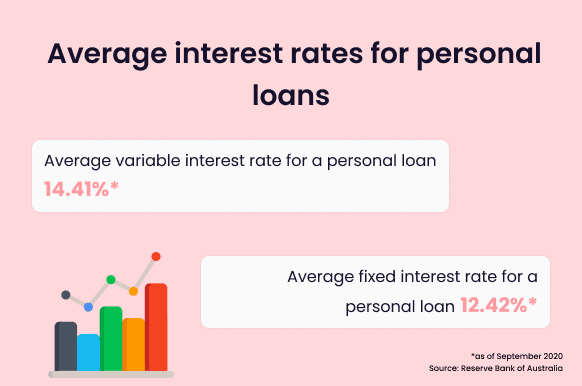
Average personal loan interest rates

The car you plan on buying

If you’re set on what car you plan on purchasing and have already thought of your budget, then you’re ready to start negotiating with lenders. It’s good to estimate how much you want to borrow so that you can then include additional fees such as interest into your budget.

The Moneysmart loan calculator can help you estimate repayments and total cost of a loan.

Your credit score and credit report

How does your credit score come into play when you’re considering taking out a car loan vs personal loan? If you have a bad credit score, that’s okay, you can still take out a loan. Car loans or secured personal loans may be your best bet as lenders will accept your car as security against the loan.

If you have a bad credit score, it’s more likely that an application for a car loan is successful. Check your credit score today and find out where you’re at. Additionally, you may also get better interest rates on car loans.

Is your car the only thing you want to finance?

Apart from borrowing funds to purchase a vehicle outright, some people may want to modify their cars either with new paint or have interiors changed. This could make a difference if you’re considering a car loan vs a personal loan. If you plan on remodifying your financed car then a personal loan could be your best option. Personal loans usually cover the costs of remodifications. Car loans, on the contrary, don’t usually cover extra costs such as remodifications as they serve the sole purpose of funding the market value of the car and nothing else.

Now that you’ve considered all these factors, you’ll want to then compare your finance options. Make sure you use a loan payment calculator such as the one listed above to help compare car loans vs personal loans. Additionally, keep an eye out for the annual percentage rate (APR) of each loan you compare, to determine the total cost of each.

The main differences: Car loans vs personal loans

The exact terms will vary according to multiple factors such as your desired lender, your credit score and history, as well as the vehicle you plan on financing. Here are some of the main differences between car loans vs personal loans. Often, personal loans are a little bit more flexible. And they don’t come with the risk of losing an asset.

You can take out a personal loan from any bank, credit union, or private lenders. Personal loans usually take less time to apply for because you won’t be providing any collateral. All you’d need to do is provide your personal and financial details, along with the purpose of the loan.

Car loans, on the contrary, solely cover the market value of the vehicle you’re buying. It’s never a case of how much you can borrow, but rather how much the car is worth. Car loans can take longer to apply to compared to personal loans as you’d have to provide personal and financial details, as well as details of the car you plan on buying. Those details can include the car’s make, model, and current condition. Therefore, car loans tend to have more restrictions than personal loans.

What Is a Joint Personal Loan?

What is a joint personal loan?

Understand what joint personal loans are, how they work, and learn about the advantages and risks before applying.

You and your partner had joint finances for quite some time and now you’re thinking about taking it a step further by taking out a loan together? A joint personal loan may increase your likelihood to get your application approved and provides security through a second party. But it also comes with a few risks. Let’s have a look at what you should think about before taking on a joint personal loan with a partner or relative.

What is a joint personal loan application?

As the name suggests, a joint personal loan is a type of loan that you take out with another individual. This could be either a partner, a friend, a business associate, or a family member. Both parties are referred to as co-owners. While it can be great to share responsibilities, joint personal loans come with one big risk: Both owners are jointly liable for the loan. If one co-owner becomes incapable of making the repayments, the second person is responsible to cover them. Even if your engagement with this person ends for whatever reason, you would still be liable to pay off the loan.

Why you might want to take out a joint personal loan

You could take out a joint loan to cover a shared asset with a partner (e.g. family car). In that case, it can be sensible to share the responsibility of repayments. In some cases, a joint application may also help to secure a larger loan amount.

But regardless of how close you are with the person, you plan on sharing the loan with, it is important to assess both your and their financial position before handing in the application. Even if you love them dearly, you should ask yourself:

  • Are they financially reliable?
  • Do they have bad spending habits or are they handling their personal finances well?
  • Can they sometimes be selfish with money?
  • Do you see any current risks for their financial future?
  • Can you easily talk about money with them?

How can you apply for a joint loan?

Applying for a joint personal loan is as simple as an individual application. You will have to provide your lender with personal and financial details of both you and your partner. The lender will assess both your financial situations through one application instead of two. Some lenders give you almost instant feedback but in most cases, you will hear back from them within 3 business days.

What could go wrong?

Let’s hope nothing goes wrong. But that doesn’t mean you shouldn’t think about the worst-case scenario and be prepared. Getting a joint personal loan means you are not the only one who’s responsible. Unfortunately, some co-owners may not take this responsibility as seriously as others. Possible worst-case-scenarios are that your co-owner runs out of money, decides to vanish or simply refuses to pay over a stupid argument and you are stuck with the repayments on your own. Your lender won’t care who makes the repayments as long as there is money coming in on time. Only if both parties fail to make their repayments, legal actions can be taken. That’s why the Australian Securities and Investment Commission (ASIC) recommends that you protect yourself before taking out a loan. This could happen in the form of legal advice.

Joint Personal Loans: Benefits and Risks

Are you still unsure if taking on a loan with a partner is a good idea or not? Let’s look at the conclusion before jumping into a decision.

The maybe biggest advantage of a joint personal loan is that you may be able to apply for a higher amount of money. Most likely you will be able to apply for a langer sum than if both of you would get individual loans. With a joint loan, you are also able to consolidate larger debts if necessary. You may also have a better chance of approval if one of you can benefit from the other’s good credit score. Check your credit score and find out where you’re at!

On the other hand, taking out a loan with a partner comes with some risks. You have to rely on each other to make repayments and not everyone is equally responsible. Therefore, you should choose wisely who you want to take on board for a loan. Even if it’s your partner who misses a payment, both of you may be charged a late payment fee. And worst-case, you are liable to ensure payments if your partner disappears or can’t meet their responsibilities.

Can You Refinance Your Home Loan to Consolidate Debt?

Can you refinance your home loan to consolidate debt?

Do you want to know more about how to refinance your home loan, or whether you can refinance your loan in the first place? If so, you’ve come to the right place! Here’s a quick guide.

Can I turn multiple debts into one and refinance my home loan to make my finances more manageable?

If you have accumulated multiple debts you may want to make your payments more manageable and opt to refinance your home loan. While you could take out a debt consolidation loan to combine your debts in one, you could also choose to repay them under your home loan.

It can make your financial life easier and spares you from having to track and manage multiple payments. Therefore, if you have multiple debts, you might want to consider refinancing your home loan to consolidate those debts. If you choose to refinance, you will then be able to pay off all your debts under one large home loan repayment, usually with a lower interest rate and less hassle.

But don’t jump to a conclusion straight away. Each lender has slightly different terms and conditions. Therefore, you should discuss the matter with your financial advisor or mortgage broker first. Get all the important details before you decide whether that is the best option for you.

Sometimes, you might find that a debt consolidation mortgage will result in higher interest fees if the loan isn’t structured properly. In this case, short-term debts could become long-term debts, and therefore you’ll end up paying more interest.

Who offers debt consolidation when refinancing?

If this option is available to you depends on who you have your mortgage with. There are many major banks and private lenders who offer multiple debt consolidation options when refinancing. The following is a list of lenders who offer debt consolidation refinance options:

  • State Custodians
  • Commonwealth Bank
  • Westpac
  • NAB
  • Community First
  • Fox Symes
  • Homeloans.com.au
  • ING

Refinancing to consolidate debt – how does it work?

While it comes with a little bit of (digital) paperwork, it only involves a few steps to consolidate your debt. Your lender will review any existing debts such as your mortgage or personal loans. All debts will be combined into your new mortgage repayments. As a result, you will only have to make one payment every week/fortnight/month instead of serval ones.

Some people may consolidate their debt to save money. Depending on your circumstances, it may give you the option to consolidate other debt into one loan with a better interest rate. So this tactic can make financial sense if the total cost of the new loan is cheaper than your other loans combined.

You can consolidate debts such as:

How can I refinance my home loan into a debt consolidation loan?

  1. Identify your needs and goals. If you’re finding it difficult to meet your debt repayments, you might find that refinancing into a debt consolidation loan could benefit you financially. However, it’s best to consider a few factors such as your lifestyle, goals, and borrowing needs. For example, do you have a back-up plan put in place to cover the remainder of your debt repayments in case you faced a lifestyle change? Do you think you’ll be able to manage the repayments and a potential longer loan term?
  2. Discuss matters with your lender. Your lender is here to help and give you the information you need. By contacting your current lender, you may be able to negotiate the interest rate that was offered on your existing mortgage. Your bank may be able to negotiate a better interest rate, depending on the situation and your financial status. As a result of negotiating matters with your lender, you might find ease on your financial pressure.
  3. Calculate your refinancing cost. It’s important to calculate your total refinancing costs. Keep in mind that you might need to pay a discharge fee which usually ranges between $150-$330. You might also pay additional government charges for exiting your current mortgage. If you end up getting a debt consolidation loan, you need to consider the upfront costs that you’d need to pay such as application fees or legal fees that get charged by a new bank. Make sure you consult your financial adviser to get a rough estimate of your costs and budget. Finder’s switching cost calculator can help you get an estimate of your total refinancing costs.
  4. Compare different refinance loans. Contact a mortgage broker to discuss your options and what type of debt consolidation loan will suit and meet your borrowing needs. It’s best to compare different mortgage products and possibly find one with features such as a 100% offset account. This gives a borrower the ability to make additional payments to help you decrease the interest payable over the term of your loan.

What are some things to consider when I refinance to consolidate debt?

Here are some factors to look out for when refinancing to consolidate debt:

  • Interest rates: Compare the interest rates of your old debt and new home loan. Interest rates can be a big indicator of your total repayments over the life of the loan.
  • Loan term: Be wary of loan terms, especially for personal debt. Although lower repayment amounts tend to be more appealing, the truth is you end up paying more in interest over the life of the loan.
  • Annual/ service fees: It’s important to always know what fees you’re being charged during the life of your loan.
  • Lender/ government fees: Just like annual and service fees, look out for lender and government fees and make sure to compare them before deciding on a lender.

Something to consider

If you find yourself in a stressful financial situation and you are unsure how to handle your debt, taking on more might not be the best option for you. To ensure that you’re tackling your debt the best way, you should speak to a financial advisor or free financial counsellor first.

Remember, there is always help available and someone to talk to if you find yourself in financial or emotional distress.

Can you increase your personal loan amount?

Can you increase your personal loan amount?

Is your loan set or can you increase your personal loan amount if needed?

If you have an existing loan and you’re expecting extra expenses, you might wonder if you can increase your personal loan amount and how? Your best option is a so-called personal loan top-up or consolidation loan/revolving credit facility. Instead of having to apply for another loan, it helps you to keep your debt in one place and stick to the one lender. Let’s dive deeper into the nitty-gritty details of increasing your personal loan and how to find out if you’re eligible!

What is a personal loan top-up?

If you unexpectedly need some extra cash, you can ask your lender for a loan top-up. As an already established customer, it is an easy way to get additional money when you need it. Technically, you have to apply for a second loan with an existing lender and sign a new contract. However, the top-up loan will be combined with your previous loan, so you will only have one loan to repay. Taking out additional money will increase your repayments, so depending on your circumstances, it may also mean that you have to extend your existing loan term.

Increase your personal loan amount or take out a new one?

But is getting a loan top-up really your best option? If you need to increase your cash flow, you may be wondering whether you should simply increase your existing loan amount or apply for a new one to consolidate your new and existing debt into one. Let’s check out the pros and cons to see what works best for you, shall we?

Pros Cons
Increase your personal loan
  • You keep your debt in one place and stick with the same lender
  • As you’re applying to your current lender, your chances of getting approved can be higher
  • You’d have to pay the application fees
  • Depending on your lender, some may have certain restrictions with loan top-ups
Apply for a new loan
  • You could find a competitive loan and potentially reduce your payments
  • Possible early repayment fees with your existing loan

If you have been repaying your existing loan for a while, chances are high that you could get a new loan for a better and more competitive rate. However, the fact that you have taken out another personal loan already may also affect your credit score and in fact lower your chances to get that better rate.

Here’s what to check before increasing your personal loan amount

Needing money can be a pressing matter. But don’t run headfirst into a new loan. You should ask your lender a few questions before settling for this option to make sure you get the best deal.

  • Should I be expecting any fees? Many major banks charge a one-off establishment fee which can vary in cost.  If you decide to increase your personal loan amount. This fee could be lower or higher than our estimate, and sometimes non-existent depending on your lender.
  • What are the restrictions? Some lenders may not allow you to apply for a top-up in the first year of your loan. Some lenders may also not allow you to apply for a top-up until you’ve paid a certain percentage of your loan. Check with your lender what restrictions are put in place for loan top-ups.
  • Am I eligible for a top-up? There are certain eligibility requirements you might need to meet for personal loan top-ups. The eligibility criteria could be the same as the ones that were in place when you applied for your existing personal loan. If you’ve had a change in your financial position, check with your lender to see if you still meet the eligibility criteria. Before making a decision, it’s wise to explore a reliable platform for a cash loan advance. This ensures your financial stability and helps you evaluate whether taking on additional expenses—or increasing your current loan amount—is worthwhile.

Will increasing your personal loan amount get listed on your credit report?

Yes, it definitely will! Like taking on any other loan, a top-up loan will show up in your credit history. Your credit score helps future lenders to make predictions about your future financial behaviour based on your past and current habits. It helps them to determine your likelihood to repay the loan. Increasing your personal loan amount will also increase your outstanding debt and, therefore, change your credit utilization ratio. Your credit utilization ratio is the amount of money you own in relation to the maximum amount of money you could borrow. It’s normally expressed as a percentage and you should aim to keep it below 30% if possible.

How can I top-up my personal loan?

Before you apply for a top-up, you should consider all your options. Is increasing your personal loan the most suitable option for your current financial situation? If you are experiencing financial hardship and feel desperate for some extra cash, you may want to speak to a free financial counsellor first.

The first step is to get in touch with your current lender. In most cases, that means you will have to submit a new application and go through the evaluation process again. Your lender will check if you are eligible and based on that, approve or decline your application.

Once your application is processed and approved, your personal loan will get topped-up. You will now want to work out how to manage your increased debt to stay on top of it. One option could be to increase your loan term. However, this may cost you more in interest. Alternatively, you can also increase your repayments.

What if my lender declined my application?

Not every lender will allow you to increase your personal loan. That’s when refinancing your loan or looking for other types of personal loans could be a better option for you. Review your credit score and report before applying to make sure you’re eligible as loan declines can affect your score. Refinancing with a new lender can help you move your debt elsewhere and you can borrow additional funds. Tippla can help you understand high credit scores and how to achieve them. Read more!

Make sure to list your reason for borrowing as ‘refinancing’. Although the lender can see that you have an existing loan, listing your reason as refinancing will make it clear that you will be closing your current loan if you get approved.

Q&A: Can I Apply For a Personal Loan For Someone Else?

Applying for a personal loan for someone else

If you’re wondering if you can apply for a loan for someone else, then we have a quick and easy guide to help get you started.

Can I apply for a personal loan for someone else like a friend or a family member?

Is one of your friends or family members going through a time of financial hardship and you think they should be getting a loan to get through it? Well if you’ve been wondering if you can apply for a personal loan for someone else, the quick answer is no. You cannot apply for a loan in the name of someone you are not. And you definitely shouldn’t. Here is why.

Taking on debt is a very personal decision. Everyone should make this decision for themselves. It can be hard to see your friends or family members have a rough time and you just want their best. However, the best thing you can give is good advice. If you or a friend or family member finds themselves in a sticky financial situation, you should seek free financial advice before taking on debt. The national debt hotline provides free financial counselling and can advise on ways to improve the situation.

Any bank or private lender will ask you to submit sensitive documents about your financial situation. It can be classified as fraud if you submit this information for someone else, especially if that happens without their knowledge.

Could I take on a loan for someone else?

In theory, you can take out a personal loan and give the money to someone else to use. However, you should think twice before taking such a risk for another person. You’ll find that people who are needing a personal loan will most probably ask a close friend or family member with a good credit score. The people most likely to ask you to take a loan for them, therefore, may be close relatives, a good friend, or an immediate family member like your children. Check your credit score frequently to know where you are at.

Reasons could be:

  • A friend or family member has just turned 18 and has no credit history to back up their application;
  • Because of previous financial misdemeanours, they have bad credit;
  • While they could get a loan themselves, their interest rate would be higher than what you could score.

While helping out a friend or a family member seems like a good deed, it comes with many risks involved.

What are the risks?

Helping someone out is great, right? So why should you think twice before taking on a loan for another person? Keep in mind that regardless of the scenario, the person taking out the loan on behalf of the person in need will be the liable party, bearing all the risk.

What risks are involved in taking out a loan for someone else? Let’s take a closer look at what could happen.

  • You have a fallout with your friend or family member. Imagine you get in a heated argument (maybe even about finances) and end your relationship. Then you are then stuck with a loan to pay off with a family member or friend you don’t speak to.
  • They fail to repay the loan. Financial situations can change rapidly. While their current finances may look stable enough to repay you on time, losing a job or big medical bills bear an unexpected risk for their ability to pay you back. You may be stuck with loan repayments that aren’t even your own.
  • They don’t pay you in time.  While everything went smoothly at first, you keep having to remind the other person to send you the repayments to your bank account. You catch yourself more and more often arguing over money and both sides start to stress.

As you can see, by taking on a loan for someone else, you put yourself at risk to be stuck with the costs. An unexpected change of circumstances may affect the other parties ability to pay back their loan. And not to forget, arguments about finances can have a heavy impact on your relationships and friendships.

How can applying for a loan for someone else affect your credit score

Let’s think about the best-case scenario: You took out a loan for someone else, everything goes perfectly well and you have been making consistent payments. This loan is now on your credit report. In the meantime, you may decide that you need a personal loan for your own purposes and send in an application. Your potential lender will notice that you have an existing open loan on your record already and may question why you will need a second one.

Even though you are technically not even paying for loan No 1 yourself, it may affect your interest rate and loan amount. You may even get rejected which could negatively impact your credit score and harm your chances to apply for a loan in the near future.

That’s when taking out a personal loan for someone else can be harmful to your potential financial situation and goals.

Taking out a personal loan for someone else means you’re putting down all your details and proving to a lender that your credit is good enough to pay off the loan. At the end of the day, it’s your responsibility to ensure the payments. While you wanted to be helpful, you will be the one facing the effects on your credit report and score.

Process of Personal Loans: How they work

Process of Personal Loans: How they work

The process of personal loans and how they work

If you need that extra cash but you don’t really understand how a personal loan works, you’ve come to the right place! Understanding the process of personal loans will give you the right tools to compare and make informed financial choices.

What is a personal loan?

A personal loan is a certain amount of money that you borrow from a lender for personal purposes. You repay that money over a set amount of time with added interest. A personal purpose could be anything: Paying for a big bill, consolidating debt, buying a car, paying for a holiday, or starting out as an entrepreneur are all examples for personal purposes. Personal loans are a good way to bridge short time financial issues. The set loan term will help you budget and pay off your personal loan in a specified time window.

The process of personal loans, how does it work?

No matter if personal or business loan, all loans work in a similar way. This is to say, not all loans are the same. You may want to look into different types first before you jump right into the application. You start by applying to borrow a specific amount from a financial institution like a bank or a private lender.

Your process of personal loans consists of 5 different steps:

  1. Choosing the right loan and lender;
  2. Applying with the necessary documents;
  3. Your lender assesses your suitability;
  4. Receive your money after your approval;
  5. Repaying your loan in the set terms.

When you first apply, your lender will assess your eligibility for the loan. That’s done by evaluating multiple factors regarding your financial situation. Every lender has their own process but they will most likely look at your credit score, credit report, and bank statements.

What’s next?

If you are suitable, you will then discuss with your lender a suitable loan term in which you pay back the full sum of money plus additional interest and fees. Your lender can charge fees for various things such as establishing the loan (=establishment fee), paying it off early, or missing a payment. Interest is another type of fee that you pay on top of your loan amount for the ability to use their money. A loan term can be anything from 1 to 7 years, and you can decide to pay back weekly, fortnightly, or monthly. What’s best for you depends on your financial situation.

Once you get approved for a loan, the lender will then immediately send you the full amount of the loan. After receiving the loan, you will make the repayments that will include the initial loan amount with added fees and interest. If you follow the repayment procedures as listed on your loan contract, your loan will be repaid in full by the time your term ends.

Process of personal loans: Step-by-step guide

Previous to your application, there are a few more things to look into. How do you decide what loan is best for you? How to know what interest rate is available to you? What are your chances to get accepted? It’s best to know your options before you apply. Therefore, it is a good idea to keep an eye on your credit score and make sure that it grows over time. How? Tools like Tippla allow you to check your score frequently and improve it by taking action.

The process of personal loans is as simple as this: You start with a comparison of your options, check your eligibility, apply, get approved or rejected, have the loan funded, repay the loan, and finally loan closure.

However, you should think twice before taking on debt. Can you easily afford repayments? If you are unsure, the national debt hotline provides free financial counselling.

Step 1: Comparison

The first step in taking out a personal loan is deciding what type of personal loan you’ll need. Here are some of the options to consider when taking out a personal loan:

  • Car loan. As the name suggests, this type of loan will help you purchase a car. The vehicle can be new or used and can include motorcycles, motorhomes and boats. You can use the same vehicle as security when taking out this loan. What does that mean? If you can’t finish your repayments, your lender may take your vehicle instead to pay off the missing amount.
  • Secured personal loan. A secured personal loan is a loan of a large sum that requires collateral. You can have assets such as a car, home, or expensive belongings put forward as security. You may lose your asset if you fail to make your loan payments.
  • Unsecured personal loan. An unsecured loan is a loan of a small amount, usually up to $5,000. You’re not required to put an asset forward as security, however, the interest on unsecured loans is usually higher than other types.
  • Short term loan. Short term loans are the same as payday loans. These loans usually have a small amount and short loan term. Amounts usually go up to $2,000.
  • Personal overdraft. This type of loan attaches to your transaction account. You can access the specified limits when the funds are exhausted and can then get charged a set rate.
  • A personal line of credit. This type of loan is similar to a personal overdraft, however, it’s an account that’s separate to your transaction account.

Compare lenders and banks

After deciding which type of loan best suits your needs and financial situation, it’ll be time to compare offers from banks and lenders. Here’s what to look out for:

  • Loan amount. What’s the minimum and maximum amount that this lender offers and is it sufficient for you?
  • Loan term. What are the minimum and maximum loan terms? Does this term suit your budget and fit into your time frame?
  • Fees. What fees come with your loan contract? These fees can be establishment, application, early payment, or ongoing fees. Discuss the additional fees with your lender to further understand your payments.
  • Interest rate. One of the most important numbers to compare when it comes to loans is the interest rate. Is this rate fixed or variable? You can then determine whether this rate is competitive.
  • Repayments. Once you determine your preferred loan amount and term, you can use a loan payment calculator to understand whether the loan repayments can fit into your budget.

Step 2: Eligibility

With all loans in Australia, you will need to meet the minimum requirements to qualify. While each lender may have additional criteria, these are the basics:

  • Your age. You must be 18 years or older;
  • You must have a regular income of at least 3 months;
  • Applicants must be permanent residents or carry an acceptable visa;
  • Applicants must have access to their financial details.

Step 3: Application

Every lender will have a different application process. However, almost every lender will require the following when you first apply for a loan:

  • Identification. This can be a driver’s license, passport, or official documentation proving your identity.
  • Proof of income. This can be your payslips from the past three to six months. It could also include bank statements and tax returns.
  • Any other financial documentation. You will need to provide statements if you’re in debt.

Step 4: Approval

How long it takes for you to get your answer depends on the lender and their system. While some lenders can give you an answer immediately, some may take up to 2 weeks to approve your application. Once you provide all the necessary information, all you can do is wait on the result of your application.

Step 5: Loan funding

Once you get approved for a loan, your lender will send you your funds as soon as possible. This may be an immediate transfer depending on your bank provider or may take a few days until it shows up in your bank account. If you e.g. take out a car loan, the lender may send the full amount directly to the car dealership. On the contrary, if you take out an unsecured loan, the funds will be sent to your nominated bank account.

Step 6: Repayment

Most lenders allow you a certain amount of freedom with your repayment structure. You can choose to pay the loan (and interest) weekly, fortnightly, or monthly. They may allow you to decide the loan term and set it up in a way that suits you. Something to keep in mind is that your interest depends on your loan term. A shorter loan term means you will overall pay less interest.

Step 7: Loan Closure

Once you’ve made your final repayment, the loan will then be closed.

It’s as simple as that!

Which is best: Business loan or personal loan?

Which is best: Business loan or personal loan

What is best for my business: Should I get a business loan or personal loan?

You’re ready to kick-start your business but don’t know what loan is best? Luckily, there are many financing options available to businesses. Let’s take a look at options and find out if it’s best to take out a business loan or a personal loan instead.

Most businesses make use of a loan at some point in their life. There are many reasons why you may want to take out a loan for your business. You may just be starting out and need a solid financial base for your operations. Maybe you need to boost your cash flow to get through a dry period or maybe you want to invest in growth and expand your company. Both business loans and personal loans are suitable for different occasions and have their pros and cons.  Whatever it is, let’s help you determine what loan is best for your purpose.

What’s the difference between a business loan and a personal loan?

If you are considering getting a personal loan or a small business loan instead, there are a few key points to consider. A personal loan is a type of loan based on your personal credit history. It may be easy to get if you have a good credit history already. A business loan, on the other hand, will look at both you and your business credit history. This may make it more difficult to get a business loan, especially if you’re new to the market.

Do you know your credit score yet? It makes sense to keep an eye on it and build a solid credit history over time. Tools like Tippla can help you to monitor and improve your score.

Also, keep in mind that business loans can only be used for business expenses while a personal loan is more versatile. However, you will be personally liable for any debt, not your business. This may make it difficult to separate finances in the future, especially, if you have a business partner.

Benefits of business loans and personal loans

Before we get into further details, let’s take a quick look at the pros and cons of each loan type.

Advantages of a business loan

  • Keeps your personal and business finances separate.
  • Lower interest rates
  • Less liability (depending on your business setup)
  • Can be shared with a business partner
  • Larger loan amounts
  • Helps you build business credit for the future

Advantages of a personal loan

  • Flexibility with money can be used for business and private
  • Easy approval
  • No collateral is needed for unsecured loans

A few things to consider before getting a loan

Before applying for a loan of any type, there are a few factors you should keep in mind:

  • Are you a sole trader or partnership? Business loans can be beneficial for partnerships as all partners will have equal access to the joint account. However, if you’re a sole trader, a personal loan can be better suited as you’d have full control.
  • The loan term. Depending on the loan term, interest rates can be greatly different and you might find advantages in each type of loan. Shorter loan terms normally mean less interest but higher repayments. If that’s suitable for you depends on your goals and financial situation.
  • The age of your business. You might find that if you’re a new business, accessing a business loan can be more difficult than personal loans.

Another thing you should consider is the interest rates you might have to pay. Here are the average interest rates for personal loans.

Average personal loan interest rates

Which is simpler to set up: A business loan or personal loan?

  • Business Loan. When taking out a personal loan from financial institutions such as banks, you’ll most likely be required to provide detailed projections, plans, and assurances that your company can comfortably repay the amount over the loan term. However, if you prefer a simpler approach to taking out a business loan, there are online business lenders that don’t require many details to approve your business loan. Online lenders might approve of you after looking over some accounting information or financials and some personal details.
  • Personal Loan. Whether or not you get approved for a personal loan completely depends on your credit score and your financial situation. You will need to provide proof of income, a credit report, and possibly a set amount of tax returns.

Which offers the best value: A business loan or personal loan?

Technically, both types of loans offer good value for your business, in their way. Let’s take a closer look at the benefits of each.

  • Business Loan. Business loans offer great advantages to business taxes. They help separate personal and business affairs. Additionally, if you’re a retail business, this type of loan can be beneficial for reducing import duties on the products you would’ve purchased with the loan.
  • Personal Loan. You can easily ensure you’re not overpaying for any business expenses that are usually paid for with personal loans.

What if I have a business partner?

If you decide on taking out a business loan, the loan will automatically be held in a joint account that’s easily accessible by all partners. The risk on each individual is tremendously reduced due to the loan being guaranteed by all involved partners. However, if you decide on taking out a personal loan, you won’t have access to the company’s loan. The lack of access to joint accounts can harm the efficiency of the company and potentially create problems with responsibility if the company fails to pay the loan.

If you do decide on taking out a personal loan with business partners involved, there are some options of a joint application personal loan. This type of loan will most likely require a maximum of two applicants, however, you might find some that allow up to four partners.

Where will I find more flexibility: Business loan or personal loan?

With business loans, lenders will most likely apply strict limits on your loan for the first year. However, if you provide good initial projections, you could access an increase in your funds. You will also need to use up the entirety of loan on business purposes.

On the other hand, if you want to increase your funds later in a personal loan, you will have to provide your lender with evidence that the initial funds were used successfully to grow the business. However, you may also find personal loans useful for funding your business as well as other personal needs.

Should I choose a secured or unsecured loan?

Deciding whether you prefer an unsecured or secured business loan mainly depends on how much you plan on borrowing. Many banks will require security deposits or belongings for start-up loans. Some banks may only offer an unsecured line of credit loans. You may find some online lenders who could also offer unsecured loans. However, keep in mind that you’ll most likely be charged higher interest on unsecured loans, so many may prefer taking out a secured loan. Although secured loans offer lower interest than unsecured loans, you will need to provide an asset as collateral. This asset can be repossessed if you fail to make your payments. Assets can include cars, homes, or expensive belongings such as jewellery.

It’s important to note that you will need to be prepared to fully pay off secured loans, as repossession of your asset can impact your personal and professional life.

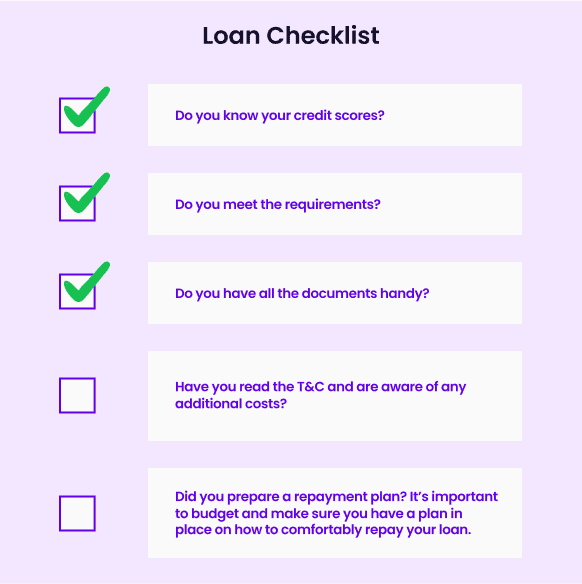
Helpful loan checklist

Before you apply for a loan, here’s a helpful checklist Tippla has put together to get you started:

what to do before applying for a loan

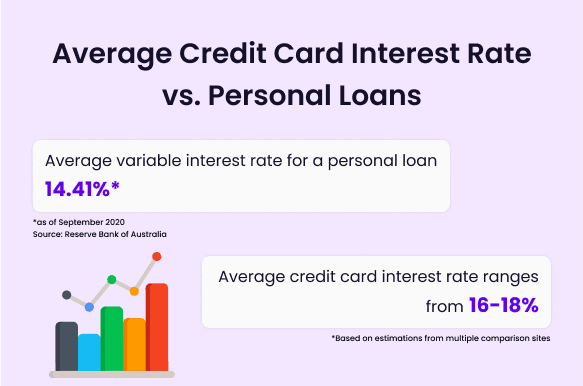
Which is better: Personal loans or credit cards?

Which is better: Personal loans or credit cards?

Loan 101 – what’s better for me – personal loans or credit cards?

Are you looking into getting some extra cash but you’re not sure about your options? You could either apply for a personal loan or get a credit card. Your choice should depend on two factors: What you plan to buy and how you’re planning to pay it back.

Statistics show that Aussies are in debt equal to approximately 150% of their income. Therefore, it’s not unusual for Australians to consider different loan options at some point in their life. Therefore, the question of whether to opt for personal loans or credit cards, is one many Aussies have asked. Your main two options are taking out a personal loan or borrowing money on your credit card. However, what option is best for you depends on your financial situation and financial goals.

What’s the difference?

Both personal loans and credit cards allow you to borrow a certain amount of money from a financial institution.

Although both can be taken out for similar amounts, personal loans are given for a certain period. You will receive the full amount right at the start. From there, you will start repaying the amount in increments with added interest until you’ve paid the full amount.

Credit cards, on the other hand, are known as revolving lines of credit. They don’t have but rather come with a set credit limit. You will have to make regular payments to keep your account. In the meantime, you can spend however much on your card as well as drawing up to the limit. Your repayments are a set percentage of the amount you spend each month. However, you do pay compound interest on the remaining debt and in some cases, your monthly payment only covers your interest. If you plan on taking out a larger amount of money, a personal loan is often the cheaper option.

Personal loans or credit card?

Personal loans and credit cards are both considered forms of credit that require monthly repayments. However, they differ in their features and fees. Some credit cards come with interest-free days, reward systems and balance transfers. They are an easy way to access a small amount of extra cash fast but you should be sure that you can make the repayments on time as your fees can add up quickly.

You can use personal loans best to borrow larger amounts of cash and to consolidate personal debt. Having a maximum loan term can also help plan your spendings and ensure that you fully pay off your debts at a certain point. In either case, make sure to check all costs and fees before signing up. Credit cards come with an annual fee, while personal loans may have additional application and service fees that come with the loan.

In both cases, your credit institution will look at your credit score when you send in your application. A good credit score will give you better options, therefore, it is sensible to know where you’re at. At Tippla, you can keep track of your credit score and get tips on how to improve it.

Pros and cons: Personal Loans or Credit Cards

There are many advantages and disadvantages with taking out a personal loan vs credit card. It’s important that you get a clear understanding of what they are to choose what’s right for you. Let’s have a look!

Personal Loans

Personal loans are best suited if you plan on making large purchases such as renovating your home, buying a car, or consolidating your debt. Additionally, they’re suited for borrowing over a long period, as personal loans can range up to seven years.

  • Lower interest rates compared to credit cards
  • Having a repayment schedule means your debt will eventually end
  • Are cheaper if considering the long term
  • May have additional fees for early payoffs and therefore less flexibility

However, personal loans come with some disadvantages, too. All personal loans will have a minimum loan period, which means you must have the debt for at least a year. Personal loans may not be as flexible as other loans as you could get charged certain fees associated with redrawing or early payments.

Credit Cards

While credit cards seem to be an easy option to access cash quickly, you should think twice before taking large amounts of cash out. They often come with higher interest rates and encourage you to take on continuous debt. However, if you plan on making smaller purchases up to $5,000 and have a repayment plan in mind, they give you quick access to additional cash flow.

  • Easy access to consistent cash flow
  • Can consolidate debt into one payment
  • Interest-free days and rewards (however, you need to spend a lot of money to actually benefit from reward system)
  • Require minimum payment during every statement period
  • Very flexible

credit card vs personal loan interest rates

What to consider: Personal Loans or Credit Cards

You should think about a few things before you apply for a credit card or a personal loan.

Compare your options.

Firstly, you should have a look at interest and comparison rates to find the cheapest personal loan. You can figure out the true cost by checking the comparison rate, and additional application and service fees. Credit cards don’t display a comparison rate, so your best bet is comparing their annual fees. Always read the small print to make sure you know about hidden costs or fees on missed payments.

Make your choice.

Choosing what’s best comes down to your financial situation. If you are confident with your funds’ control and spending, and strictly follow a budget, then credit cards are a good option. However, if you prefer having a more set repayment plan, personal loans could be your best option to keep track of your debt. Regardless of your choice, both options will require you to make regular payments towards your debt.

Save money where you can.

If you end up taking out a credit card, try and aim to pay more than your minimum repayment so that you can save on interest. On the other hand, if you borrow a personal loan, check with your lender first to make sure they won’t charge you an early repayment fee. If you won’t be charged, try and aim to pay back the loan as quickly as you can to save on interest incurred.

How does it affect my credit score?

Good question! Both forms of credit will have an impact on your credit score. When applying for personal loans or credit cards, your credit institution will send a so-called hard inquiry to check your previous credit history. If you get accepted or not will depend on your record (and other factors depending on credit type and institution). A rejected application can negatively affect your score.

Additionally, multiple credit applications in a very short period can also have a negative impact. However, you can improve your credit score by having a variable credit mix and managing your finances well. A credit mix consists of different types of credit like e.g. personal loans or credit cards. If you manage your repayments well, your credit score will improve over time. It’s advisable to check your credit score frequently to know where you’re at!