Short-term and temporary car insurance

Short-Term And Temporary Car Insurance

There is a lot of car insurance options out there. What is short-term and temporary car insurance, and what’s best for you?

What insurance is best for you?

Before driving a car, you have to make sure you’re insured by some type of policy. Whether it’s your policy or you’re a temporary driver on someone else’s policy, you must legally be insured if you want to drive. Car insurance essentially protects you if you get in an accident where damage is caused. Car insurance policies usually last between six months to one year. However, you can also get short-term and temporary car insurance.

Read more about car insurance renewal with Tippla!

Car insurance when you’re a temporary driver

Because it’s illegal to drive without insurance all around Australia, even short-term driving may result in large fines if you’re driving an uninsured car. Additionally, you may also be liable to pay for any out-of-pocket costs related to injuries or damage. Those costs are usually very high for the average person. That’s why it’s important to consider short-term and temporary car insurance.

However, you may sometimes need to drive a car that’s not yours, like:

– If you’re taking turns on a road trip 

– Emergencies where you might need to drive another car.

– Renting a car

– Your car is being repaired 

– You volunteer to drive someone’s car

Temporary drivers using your car

If you live with family members who plan on driving your car for a temporary period, you will need to contact your provider and add them to your policy. You will incur a small fee, however, that ensures all the drivers in your household.

If you’re unsure if a family member is covered, you can contact your provider and get more information on your policy. Additionally, note that adding young or inexperienced drivers to your policy may be more costly. Tippla can help you understand car insurance with new drivers

Borrowing a car

If you borrow someone’s car, you will most likely be covered by third party insurance. Make sure you confirm that with the owner of the car before you drive it. Getting in an accident in someone else’s car may raise the car owner’s premium. If you’re not covered under their third party insurance, you could look into short-term and temporary car insurance.

Renting a car

Depending on your provider, your policy may extend the coverage onto a rental car. You may purchase additional coverage for rental cars through your existing provider. The rental car company may also offer you coverage for an extra cost, however, that could be for a temporary period.

Public liability car insurance

This policy covers you when you drive a car that’s not yours. If the owner doesn’t have an existing policy on the car, you’ll need to purchase coverage before driving the car.

Public liability car insurance offers you liability insurance if you get in an accident driving someone else’s car. However, this policy won’t reimburse you if the car is stolen or badly damaged. They also have a policy length of six months to one year, just like a traditional policy.

Car-usage policy

If you don’t plan on driving your car as much, you could look into usage-based insurance*. This is a type of policy that allows you to pay for the amount you have driven, and how well you drive. If you drive less than the average driver and believe to be a good driver, your premium will be much lower with usage-based insurance.

Cancelling your car insurance before the policy period ends

With most car insurance companies, you can easily cancel your policy by contacting them and speaking with a representative. If this policy is new, most companies will have a cooling-off period that allows you to cancel the policy if you change your mind. However, cancelling your policy may incur you with a small early cancellation fee. 

What happens when your car gets written off in an accident?

written off

What happens when your car is written off?

Having a car written off is every driver’s nightmare. Regardless of how your car got written-off, when it seems damaged beyond repair, it could stress any driver out. 


Deciding whether or not your car is written-off is completely out of your control. When filing a claim after an accident, your insurer will send an assessor to evaluate the vehicle and compare the repair estimates to its market value. This process could also determine if the damage could have long term effects and whether or not the car is a total loss. Depending on your policy and coverage, your car insurance may cover a total loss. However, here’s what you should know if your car gets written-off.

What does it mean when a car is written off?

A car is assumed to be a total loss based on two things: It’s damaged beyond repair, or it would cost more to fix the car than what it’s worth. As mentioned before, you will be assigned a claims assessor after you file a claim with your insurer. The claims assessor would be your point of contact as you go through the claims process. They will also help establish whether or not your car is a write-off. 

What will insurance pay for a written-off car?

With comprehensive insurance, a written-off car will be covered. You will have to go through your policy to ensure you’re being covered for certain components, as all providers differ from one another.  Most policies might require a deductible, which is essentially the amount you will have to pay out-of-pocket before your insurer covers the rest of the costs. 

It could get a bit tricky with leased cars. You would’ve most likely been required to add comprehensive insurance on the car (the priciest coverage) to cover any write-offs. After determining your car is a write-off, your insurer will then calculate its actual cash value to pay to you, minus the deductible.

The actual cash value of a car is its market value before it got written off. This amount is always less than what you paid to buy the car, as it accounts for depreciation. 

How is the ACV of a car calculated?

Almost all insurance companies use an industry formula to calculate your car’s value. Multiple factors that are taken into account include your car’s make and model, how much is on the odometer, and of course how much it depreciated since you bought it. 

What is a new car replacement?

If your car is written-off within 2 years of its purchase, your insurer may reimburse you to buy a new one of its value. This ‘new car replacement’ coverage is usually included in most comprehensive policies. It’s best to add on this coverage when purchasing a new car, as it may deem worth it if you lose your car. Almost all insurance providers in Australia have this option, however, you will need to have comprehensive coverage. 

What happens when your leased car gets written off?

If you took out a loan to buy a car, that vehicle is under a financial stake of your lienholder, until the loan is paid back in full. You could, however, get in an accident and have the car written off. What could then happen is you’d have to make car loan repayments on a car you don’t drive anymore. That’s when Gap Insurance may be helpful. 

Gap insurance is an additional coverage option for cars that are being leased. Gap insurance covers the difference between the value of the car and what’s left of your loan repayments. 

What does car insurance cover?

Coverage

Car insurance companies provide you with multiple coverage options that provide different types of protection.

The concept of car insurance is your protection from financial risks. Those risks are taken into account when injuring someone or damaging your car. Other factors that are also covered by certain policies include at-fault accidents, natural disasters, or even theft and vandalism.  With certain coverages, you would be covered from situations where you’d be liable to pay large bills and expenses. Additionally, insurance may also cover third party damage or other passengers in your car. 

In Australia, you have the option between choosing comprehensive, third party property damage, compulsory third party insurance, or third party fire and theft coverage. However, you will need some sort of car insurance covering your car so you could drive it legally in all states. 

Read more on how much car insurance may cost you

The best way to describe car insurance is the coverage of your liability. As mentioned before, depending on your policy, you’ll receive a certain amount of cover. For example, comprehensive insurance covers the costs of theft, vandalism, collision, and certain expenses. 

Types of car insurance explained

As mentioned before, car insurance policies are made up of different coverage factors. Several coverage components provide different types of liability protection. When you first purchase insurance, you’ll be required to choose what coverage you want on your car. The higher the coverage is, the more costly your premium will be. 

Here are some different coverage types and what they do:

– Compulsory third party (CTP) insurance. Covers you if another person was injured in an accident. 

– Third-party property damage. Covers you if the damage is done to someone else’s property 

– Third-party fire and theft. Covers your car if stolen or damaged by fire or thieves.

– Comprehensive car insurance. Covers the most, and is usually the most expensive type. 

Does car insurance cover damage or injury you cause to other drivers?

Due to every state in Australia requires you to have some sort of car insurance cover, the extent of your coverage depends on your policy. Damage or injury caused to other drivers is covered by compulsory third party insurance, third party property damage and comprehensive car insurance. Medical bills can be costly, which is why most people tend to have comprehensive coverage. You might not realise how much damage your car can do to someone else’s property, which is why it’s the safest option to be covered by a comprehensive policy. 

Does car insurance cover injuries to yourself and other passengers?

Most insurance policies protect you and passengers in your car when injured. Costs covered could include medical bills and other repair costs. However, it’s difficult to list specific coverages as different providers would have different policies and offers. 

If your car insurance covers medical expenses, that would most likely include surgeries, X-rays and other bills. Some medication may also be covered by your insurance, however, it’s best to go over your policy to be sure. 

Moneysmart can help you get the right car insurance

Does car insurance cover theft or damage to your car?

Almost all types of car insurance protect your car from theft and damage. That includes the repair costs if damaged, and rebating your car’s market value if stolen. However, note that some coverage types may differ from another depending on whether you’re in the car at the time. Some providers may not cover the car if you’re not physically driving the car when damage is done. It’s best to go over your policy in detail to understand what’s covered. Comprehensive insurance will cover damage done to your car, whether it was being driven or not. That also includes out of control events such as extreme weather conditions, vandalism or falling objects. 

Does car insurance coverage apply when your car is worth less than owed if it was stolen or written off?

Although your car insurance pays out your car if it’s written off after an accident, your provider will most likely deduct the amount the car depreciated. This means your car insurance provider will pay you the actual cash value of the car rather than its market value. 

If you loan a car, you could owe more money than the car’s worth. Therefore, the actual cash value may not be enough to make the payments owed. That’s when gap insurance pays out what’s left from the amount owed on the loan and the car’s actual cash value. 

Does car insurance cover you if hit by an uninsured driver?

You do have the option to purchase additional coverage that protects you from the risk of other parties not having enough insurance or coverage. If you get in an accident with the other party being at fault, they must cover all the costs. That’s why insurance can play a major role. You also don’t need to be driving the car at the time of the incident for insurance to protect you. 

What does car insurance not cover?

When purchasing your car insurance, your coverage will be thoroughly detailed on your policy. The policy will provide what’s covered and what isn’t. The following is not covered by car insurance:

– Regular services/ maintenance. Repairs for regular wear and tear or your car’s yearly service.

– Other people who drive the car. This factor is tricky. If you have third party coverage, other people may drive your car, however, if you don’t have that additional coverage, you won’t be covered. 

– Ridesharing. Depending on your policy, some providers may not cover the cost of damage if the vehicle was being driven for fares. 

– Damage that exceeds your limits. This is when your insurance covers the maximum coverage, and you’re required to pay the deductible. 

What age does car insurance go down?

Age

When you turn 25, you’ll notice a drop in your insurance premium.

Car insurance companies calculate premiums based on how much of a risk that driver is. Therefore, new drivers, regardless of their age are perceived as high risk with a likelihood of getting in an accident, which as a result increases the premium.

How car insurance rates are set 

Car insurance companies will want to know a few basic information when you apply for a policy. That information includes:

  • Your driving record
  • Age 
  • Credit History 
  • Car make and model 
  • Your location
  • How often you’ll drive the car

Your insurance provider will ask you to provide this information because it’ll help them calculate how much of a risk you are to insure. As a result, your premium will be calculated based on those components. Sometimes car insurance companies get too stereotypical resulting in high premiums. Unfair, right? Have you heard of usage-based insurance? If you are a firm believer in your driving skills and lack of accidents then you should check it out!

Essentially that’s how insurance works. The way you drive determines your insurance rates. What car insurance providers do is, they collect your driving history along with your age to determine the likelihood of you getting in a crash. That’s why new drivers tend to pay higher premiums than experienced drivers. Read more on car insurance rates for new drivers

When your car insurance rates drop 

Generally, all insurance providers drastically decrease premiums when drivers turn 25. However, that applies to drivers who turn 25, with a good driving history. As mentioned previously, accidents tend to boost your premiums for a couple of years. Therefore, if you’ve had a clean driving record, you’ll notice a decrease in your premium even before turning 25.

You can expect your insurance premium to decrease continuously up until approximately the age of 65. However, that rule doesn’t just apply to age. Factors that may contribute to your premium include your car, how often you’ll be driving, your neighbourhood, and other factors that summarise how much of a risk you would be to insure. 

Other ways to save on car insurance 

The best way to save on car insurance and one of the most efficient ways is to compare car insurance quotes from different providers. Have a range of companies with their quotes for you to understand which one would suit you best and help you save money in the long run. 

Understanding car insurance deductibles

car insurance deductible

What are deductibles and what do they mean for you?

An insurance deductible is an amount you have to pay out-of-pocket after your coverage is applied. Unlike medical insurance, deductibles, not all car coverages require a deductible. 

When adding coverage to your car insurance, you may have the option to where you want to set your deductible. 

The way it works is the higher your insurance deductible, the lower your premium will be. However, you don’t want to set your deductible so high that you wouldn’t be able to afford it. Here are a few tips on how deductibles work and how much you should set it to. 

What does car insurance deductible mean?

The amount you pay out of pocket when filing a claim is known as a deductible. For example, if you get into a car accident and your coverage has a deductible of $500 and the repairs cost $2,000, your insurance would pay $1,500. Essentially you want to try and pay out of pocket only when the damage is less than or equivalent to your deductible. 

Moneysmart can aid you tips on claiming your car insurance

What kind of coverage requires a deductible?

Not all insurance coverage will have a deductible. For example, third party coverage, which covers the cost of damage done to someone’s property, doesn’t require a deductible. However, with most types of car insurance coverage, you’ll be required to set a deductible. Comprehensive car insurance’s deductible usually ranges between $500 and $1,000, depending on multiple components. Comprehensive car insurance is a type of coverage that covers the most damage and costs, although is also the most costly. 

How do I decide what my deductible should be?

Essentially, the way it works is, the higher the deductible, the lower the premium. That’s because you’re setting the cost and worth of the coverage, rather than your insurer. The same applies the other way around, the lower the deductible, the higher the premium. 

Although it’s tempting to set a high deductible for the low premium, you need to keep in mind that there could be a chance that you’d have to pay the deductible. Therefore, it’s best to set an affordable deductible for a reasonably priced premium. 

Are you a new driver? Read more on Car insurance rates for new drivers


What is a Car Make and Model?

Car Make and Model

If you’re unsure of what is a car make and model, here’s a quick breakdown of everything you need to know.

How could your car make and model affect your insurance?

One of the first things you’ll have to fill out in your insurance application is your car make and model. This is your car’s manufacturer, and what line of cars it’s from. For example, if you drive a Toyota Yaris, the make would be Toyota (the manufacturer), and the model is Yaris.

Some models may have additional variations. For instance, some may have multiple body styles such as two or four-door versions. Additionally, models may have different engine options.
You may also personalise your car’s trim level. The trim level is the additional feature you may choose for your car.

The make and model of your car give your insurer a detailed description of your car. This helps insurance companies determine your car’s worth to insure. Here’s how to find your car’s make and model.

Moneysmart can help you pick the right car insurance for you. Read more!

How to find your car’s make and model

You can easily find your car’s make just by looking at it. Almost all cars will have the manufacturer’s logo or symbol on the front and back of your car. You also have the option to look up your car’s make, model and other information with your vehicle identification number.

What’s a vehicle identification number?

A vehicle identification number (VIN) is a unique 17-digit serial number specific to every car. This number is used by the automotive industry to identify specific cars.

You can find your car’s VIN on your dashboard, and it’s visible if you’re standing outside.

How make and model affects your car insurance

The make and model of your car give your insurer a detailed description of your car. This helps insurance companies determine your car’s worth to insure. Essentially, the more expensive your car is, the more expensive it’ll be to insure.

Are you a new driver? Read more on how your insurance rates will be affected!

What to do after a car accident?

Accident

Here’s a step-by-step guide on reporting an accident and filing a claim.

Car accidents can be terrifying and overwhelming. Some people may get too emotional and won’t remember what steps to take after an accident. We’re here to help by giving you a step-by-step guide that’ll allow you to gather all necessary information when reporting an incident and filing a claim.

Get to safety

Accidents happen, and that’s okay. The first thing you should do after a collision is to safely evaluate the scene. Check for any injuries on yourself and any involved parties. If it’s safe to do so and you’re able to, you should move the cars somewhere to allow the flow of traffic to go on. 

It’s important to turn your hazard lights on so surrounding cars can slow down.

Take a moment to collect yourself and take a deep breath. It’s easy and natural to get overwhelmed in these situations. However, whatever you do, don’t leave the scene of the accident as you can face serious legal repercussions regardless of how small the mishap is. 

Call 000

This step is not always necessary. You should only call 000 if someone is seriously injured and in need of urgent medical assistance. Otherwise, you may call 000 if violence escalates from one of the persons involved. 

Collect all the required information

After an accident, the most important to take is swapping information. Your car insurance provider will need basic information to begin a claim and assess the situation. Here’s the information you’ll need to collect:

    • – Contact information of any witnesses
      – Timestamp and exact location of the accident
      – Insurance companies and policy numbers of people involved
      – Make, model and colour of cars involved
      – License plate numbers
      – Names, addresses and contact information of people involved

Document the car accident 

The more details you provide on the situation, the easier you make the claim process. While your memory is still fresh, you should write down every detail you can think of about the accident and how it could’ve happened. Additionally, take photos of the damage done to all vehicles from multiple angles, as that could be used as evidence. Photos and a timeline of the accident make it easier for your insurer to understand the chain of events and who would be at fault. 

File a claim 

Aim to contact your insurance company to file a claim as soon as possible. Filling a claim is a simple process that can be done by calling your provider and giving them all the details. Your insurance company will ask you basic questions about the accidents and from there you will be able to assess who would be at fault. 

Your insurance company will then take care of the costs, depending on who’s at fault. If your car has been written off, the insurance will inform you. Make sure to stay on top of the process and document every step.

What is usage-based car insurance?

usage-based

With usage-based car insurance, you could save a lot of money compared to the regular policy. What exactly is it?

Usage-based car insurance is personalised insurance that is solely based on how you drive. Premiums are calculated by how much of a risk you are to insure. If you’re a new driver, insurance companies consider your likelihood of getting in an accident is larger than experienced drivers. 

Nowadays, there are some companies in Australia that base your premium on how you drive. This is what usage-based insurance is. The safer you drive, the lower your premiums will be. This new form of insurance saves you money over the traditional calculation of premiums. 

How does this type of car insurance work?

Usage-based insurance is a personalised policy that is based on how you drive. Companies use telematics to track your driving style and calculate your premium based on your safety. The concept behind it is that if you’re driving safely or hardly driving, then you’re less likely to get in an accident. 

It’s an awesome and helpful product that’s still relatively new. Therefore, it will be difficult finding insurers in Australia who offer this specific policy. 

How is my driving reported?

Usage-based insurance companies have a few ways to monitor your driving style.

Mobile App

Your insurance provider will most likely have a mobile app that would track how often you drive. The app will have a history of all your trips and locations. This can help the provider recognise driving in risky times or areas, which can affect your premium. 

This also allows your insurer to check any risky actions such as mobile use, sudden braking or speeding. 

Which companies offer usage-based insurance?

Usage-based insurance companies are still rare in Australia. However, we managed to find a 100% Aussie company that’s here to help you save!

UbiCar

UbiCar is a usage-based Australian company that uses telematics to track your driving style to give you a driving score that calculates your premium. Based in Manly, NSW, UbiCar is available to all licensed drivers living in Australia. Visit UbiCar or download their app to find out more. 

What’s included in a car insurance policy?

Usage-based

You must understand all aspects of your car insurance policy.

Having an active insurance policy on your car is crucial for making sure you and your vehicle are protected if an accident occurs. Additionally, not having an insurance policy on your vehicle is illegal in Australia, and you won’t be able to drive your car. That’s why you can’t go wrong with insuring your car. 

Regardless of how long you’ve been on the road, a car insurance policy can be complicated. Let us help you break down your insurance policy and to understand to what extent you’re covered. 

Declarations page 

With any form of insurance, you’ll have a declaration page on the front of your policy. It’s where you want to look to get a summary of the basic details of your policy. A declarations page usually includes:

  • Summarised policy information. This information usually includes your policy number, its life span, your agent’s contact information and the name of the person insured. 
  • Information about your vehicle. That can include the make, model, and registration details. 
  • Your car insurance premium. An insurance premium is an amount you have to pay every 6 months or yearly to keep your policy active. 
  • Deductibles. That’s the out-of-pocket amount you could pay in some situations.
  • Coverages. This is the additional coverage you purchased on top of your existing policy.

Insuring agreement

Following your declarations page, you’ll find your agreement section. This section acts as a legal contract stating the obligation you and your provider must have to each other. It breaks down your responsibilities and the types of coverages in your policy. Insuring agreement may include the situations in which you’re covered. 

Exclusions 

Your agreement section will also include exclusion. Exclusions for every coverage is essentially the situations in which your insurance won’t cover.   

Conditions 

Your car policy will include a conditions section. This section covers the conditions you must meet to be insured. Conditions could include your responsibilities during an accident. If you don’t meet the requirements of your policy, your provider can decline your application and deny a claim. 

Definitions 

You can find this section either at the start or end of your policy. The definition section highlights the terms you should familiarise with or that you would’ve come across. This section can help clarify any confusion with your coverage. 

How to get a copy of your car insurance policy 

When purchasing your car insurance, your provider will most likely send you a digital version along with a physical copy in the mail. A car insurance policy can be your helpful guide when you need to file a claim. Don’t panic if you lose your policy! You can easily get one by contacting your provider. They might ask you basic security questions and for identification. 

Need to renew your policy? Read more all about car insurance renewal.

Can you get car insurance without a license?

car insurance without a license

You can still take out car insurance without having a driver’s license.

However, you won’t be covered if you drive it as that would be illegal. Sounds counterintuitive right? Insuring a car without having a driver’s license. However, there are many scenarios where you’ll wish you had insurance on your car!

Reasons to buy car insurance 

There are many reasons as to why you’d want a car insured, even without a license. Car insurance policies have coverages such as fire, theft, and vandalism! Here are some cases as to why you’d want to buy insurance for your car without a license. 

Getting car insurance for an underage driver

You won’t be driving your insured vehicle without a license. However, other licensed drivers in your family can drive the car. Adding other drivers to your policy is cheaper than purchasing separate ones, especially if they’re under 25. If you have a child in your family with a learner’s license, you’ll want to insure them through your policy, to begin with.

 Read more on Learner drivers and car insurance

Getting car insurance for a personal driver

If you have a chauffeur driving your car, the car will still need to be insured. Whether you’re wealthy, disabled, or simply retired from driving, you must always ensure the car you’re driven in. You can add your driver onto your policy by contacting your provider and listing them as a primary driver. It’s a simple process that can be done on the same day!

Getting car insurance for a vintage car

Some people may have a vintage or collectable cars, without driving them. Even if you don’t drive your vintage car, you need to take into account protecting the car from theft, vandalism, or natural disasters! Simply contact your insurer and list the car under third party coverage. It’s a less expensive coverage that covers from the listed perils. 

How to buy insurance without a license

When applying for insurance for your vehicle, you will be asked to include your licence number. Although insurance companies prefer you have your license, you may still apply without one! Instead, you can use the name and information of the primary driver or another driver in your family. That step insures your car as long as you don’t drive it!

Car insurance rates for new drivers

New-driver, car insurance rates

New drivers or young adults pay more for their car insurance policy. Here are some tips to get cheaper car insurance rates for new drivers.

When purchasing a vehicle, you must always purchase a car insurance policy along with it. In Australia, you’re legally required to have a certain amount of coverage to drive your vehicle. Car accidents can be extremely costly depending on the damage, and that’s when car insurance can be helpful and important for your financial protection. 

However, for new drivers or drivers under the age of 25, premiums can be insanely costly. Car insurance companies calculate premiums based on how much of a risk that driver is. Therefore, new drivers are perceived as high risk with a likelihood of getting in an accident, which as a result increases the car insurance rates. For parents, adding another driver to your policy that’s under 25 can also increase your premium. 

That’s why it’s important to compare insurance companies and their rates before making your final decision! Read more on Learner drivers and car insurance

Why is insurance expensive for new drivers?

As mentioned previously, insurance companies calculate their premiums based on how much of a risk you are to insure. Therefore, new drivers or drivers under the age of 25 have much higher premiums because of their calculated likelihood of getting in an accident.

Other factors that contribute to your premium include: 

  • Your age 
  • Driving history 
  • Credit Score 
  • Make and model of your car 
  • Your address 
  • How often the car will be driven 

Moneysmart can help you with choosing the right car insurance. Read more!

How can new drivers lower their premium?

For new drivers or drivers on their learner’s license, finding a cheap car insurance rate can be difficult and a bit of a challenge. However, there are some steps to take to lower your premium if you’re a new driver. 

Add a young driver to your existing policy

One of the most affordable options to take when insuring your teenager is adding them to your existing policy! This may raise your premium slightly, however, it’s tremendously cheaper than having them on a separate policy. 

Adding new drivers to your policy is a simple process. As long as you both live in the same residential address, all you’ll have to do is call or email your provider, and it should take effect on the same day!

However, that means your teen can only drive your car as that’s the only one they’re insured on. If they move out or get a new car, they will need to have a separate policy. 

Maintain a clean driving record 

Maintaining a clean driving record is the best step to take to get low offers on multiple things, insurance rates included. If you get into an accident, your premium can increase tremendously, so it’s best to stay safe and avoid major costs!

Drive an affordable car

Having young adults driving expensive cars is essentially a recipe for high insurance premiums. Driving an affordable car with effective safety features can lower your premium, especially for a new driver. 

If your car is luxurious and you want your teen to drive it, your best and most affordable option is to add them to your policy. That would be cheaper than having a separate one as discussed previously. 

When does car insurance go down?

As discussed, young or new drivers under the age of 25 pay much higher rates. Essentially, the younger the driver is the more they’re perceived as a risk to insure. 

In saying that, your premium will decrease after you turn 25! However, make sure you have a clean driving record as accidents and claims increase your rate regardless of your age. 

Read more on how your insurance goes up after a claim.

Will my car insurance go up after a claim?

making an insurance claim

Even though your premium will increase after filing an at-fault claim, there are some things you can do to lower the costs. 

Filing a claim is never fun, especially knowing you’ll have to pay more for your insurance. But accidents happen and that’s why insurance is there in the first place. With comprehensive insurance, the cost of damage and medical bills will be covered.

You may wonder, will my car insurance go up after an accident? Generally, filing an at-fault claim will very likely increase your insurance premium, significantly. An exact price would be hard to predict and it would depend on multiple factors such as the severity of the accident. However, here’s what you should know about the effect of claims on your car insurance rates. 

How much does your insurance go up after an accident?

Hypothetically, say you’re driving and you accidentally rear-end someone. Regardless of how it happened, you will be at fault for being the car to rear-end the other. This, unfortunately, means your car insurance will have to cover the costs and your premium will be increased. 

If you get in an accident, make sure to follow all the right steps to make sure everyone is safe. Additionally, make sure you exchange all the necessary information for the claims to be resolved smoothly and quickly. 

Here’s a summary of what your insurance coverage does:

Compulsory Third Party (CTP) insurance Protects you if you injure (or kill) someone in a car accident 
Third-party property damage  Covers you if you cause damage to someone’s else’s property 
Third-party fire and theft  Covers you if your car is damaged by theft or fire
Comprehensive car insurance  The most advanced type of coverage (also the most expensive)

If you get in an accident, your insurance will cover all the repair costs you or the other driver needs, depending on your coverage limits. 

Additionally, medical costs are also covered for both parties, depending on your coverage limits. In saying that, if you exceed your coverage limits, you are fully responsible for the expenses. That’s why people usually go for comprehensive insurance, as it provides the most coverage out of all the other options.  Once your policy is due for renewal after you’ve filed a claim, your provider will notify you of any increases to your rates. Your insurance rate increase depends on a few factors. 

How long does an accident stay on my record?

The severity of the accident, whether you’re at fault, as well as your driving record, contribute to your insurance rate. If this is your first accident, don’t worry! It will most likely stay on your record for 3-5 years. The way insurance calculates the cost of your premium is based on how much of a risk they see you as. That’s why drivers under the age of 25 have much higher premiums. 

If you’re on your learner’s license or are a guardian of a learner, read more on Learner drivers and car insurance.

Accidents tend to stay on your record for 5 years. So, that’s good news! Your premium rates won’t stay high forever! Your car insurance provider will only take the past three to five years when calculating your rates. 

How does car insurance work if you’re not at fault?

If you’re in an accident where you’re not at fault, your insurance can still step in. For example, if your car gets hit while it’s parked, you may want to file a claim to get your losses covered. 

There’s also the scenario where your car gets damaged by natural causes. That’s when comprehensive coverage does its job and covers the damage when you file a claim. 

Moneysmart can help you find the right car insurance for you.

Hungry for more?

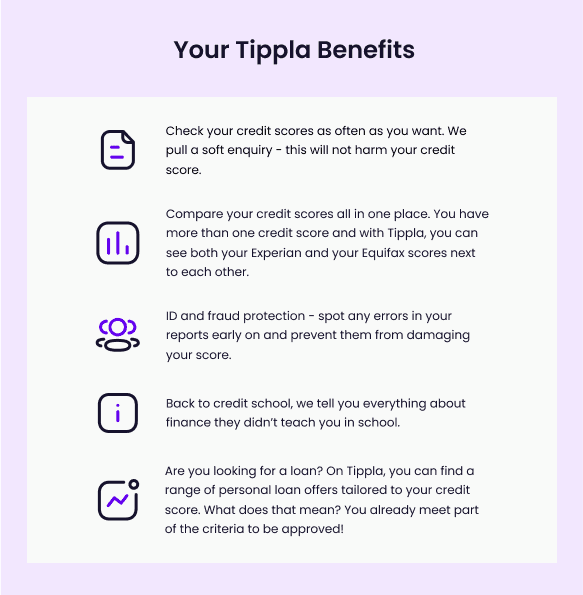
If you would like to read more on insurance, or other financial topics, head to Tippla’s blog. Or, you can sign up to Tippla for a whole heap of benefits!

listed benefits of Tippla, a credit score management platform

Learner drivers and car insurance

a woman preparing for her Learner's license

Do you have a new driver in the house? Here’s what you could do to insure them.

Teenagers are often very excited when they get their learner’s license, and probably want to start learning straight away. If you’re the parent or guardian wondering how it’ll affect insurance, let us help you out.

Having a driver with their learner’s license won’t raise your premium rates, so don’t worry there. However, you should check with your insurance provider whether additional drivers in your households are covered or not. Adding a driver to your policy isn’t as expensive as you might think!

What’s a learner’s license?

Teens can apply for their learner’s license once they turn 16 (all states except for ACT). In Australia, a learner’s license allows you to drive, as long as you’re under supervision. It can’t be any supervisor though. The supervisor must be a valid open license holder who’ve held their open license for a minimum of a year. All you need to get a learner’s license is to pass a written road rules test.

You will need to apply for a learner license at your local Department of Transport.

Different states have different laws correlated with learner drivers. The most common laws for Learners across all states include:

  • Driving with a supervisor
  • Carrying your license at all times when driving
  • Display your L plates when driving
  • Comply with the no alcohol limit

The minimum age in every state

ACT 15 years and 9 months
NSW 16
QLD 16
SA 16
WA 16
TAS 16 years and 3 months
VIC 16
NT 16

Check with your local Department of transport for more information on applying.

Transitioning from a learner’s license to a full license

A learner’s license grants you time (100-120 hours) to practice and get used to the road rules before you get your P1 license. Once you’ve lodged your state’s required hours, you may then complete a driving test and gain your P1 license.

Information you’d need when applying for a P1 license would include your current learner’s license along with proof of your residential address.

Do you need car insurance for a learner’s license?

In short, yes definitely. Any driver with any license must be insured to legally drive. So, what are your options to get insured on a learner’s license?

There are only two options for that:

  • Take out a separate policy. That option is best if the learner has their car is the driver that uses the vehicle the most. They will receive the same amount of coverage as any other driver. However, premiums for young drivers are much higher!
  • Add the learner onto an existing policy. This option is probably the most popular one as many learner’s don’t have their car while practising. This option is also tremendously cheaper. However, that means that the learner won’t be able to drive another car except for the one they were added onto.

Read more about how much car insurance costs.

All about Car Insurance Renewal

car insurance Renewal

Car insurance policies are up for renewal every time your premium expires, which is usually yearly or every 6 months.

When purchasing car insurance, your premium either lasts for 6 months or a year from the day it’s purchased. After that date, your premium is up for renewal and you can’t legally drive your car until it’s renewed. If you don’t choose to renew your policy, your other option would be changing to another provider. Not sure where to start? Here’s a helpful article on car insurance renewal.

Renewing your insurance premium is a process that doesn’t take much effort. All you need to do is make sure you have enough funds in your bank account for the insurance provider to deduct. Don’t worry though, your insurance company will notify you when your premium is coming to an end by email or SMS.

If you try to renew your premium after it’s expired, it may complicate things. What could happen is your insurer will decline your new payment, otherwise known as non-renewal.

Want to find out the different types of car insurance? Read more with Moneysmart.

How do I renew car insurance?

Most car insurance companies have automatic renewals. That’s a helpful feature as you won’t need to worry about paperwork, and you won’t need to worry about increased rates as the company will notify you of that.

However, when initially purchasing your premium, your provider will give you an expiry date. Luckily, you won’t need to worry about missing payments because you’d be getting monthly and weekly notices close to the expiration of your premium.

Why did my premium go up?

When receiving notice of renewal, your insurance provider will inform you of any increases to your premium. There are a few reasons as to why your premium would’ve increased. Car insurance premiums are calculated based on several components.

Some factors that may weigh into an increase in your premium include:

– You have filed a claim, or you were involved in claims filed.

– You moved (interstate or across states)

– The market itself changed

You do have other options if you’re not happy with your new premium rate. The best thing to do is comparing other providers and switching your policy before your current premium expires.

How to decline your car insurance policy renewal

As mentioned before, you may cancel your policy with your current insurance provider if you’re not happy with your renewed premium rates. All you can do is contact your current insurance company and cancel your account. After that, you’ll have to purchase new insurance before you drive your car. Remember, it’s illegal to drive without insurance in every state in Australia.

Read Tippla’s article: Do I need car insurance before I buy a car?

Some insurance providers are happy to cancel your policy over the phone, while some will need a signed letter stating your cancellation.

How does a car warranty work?

Car Warranty

When purchasing a car, you will most likely be covered by a warranty for a certain period.

Warranties cover costs of repair if there’s a manufacturer’s defect. You may purchase an extended car warranty to be extra safe and save repair costs in the future.

Depending on your warranty, coverage may include issues with the engine, transmission, air conditioning or other systems. However, warranties only last for a certain period or mileage. That’s when an extended warranty can come in handy. You can purchase extended warranties from car dealerships or third-party companies.

They are different from insurance in that they only cover repair costs and not collision. When we say repairs, that doesn’t include your regular services such as oil changes or brake pad replacements.

What does a car warranty cover?

As mentioned above, you’ll get a warranty on your car when you first purchase it. That warranty lasts for a certain period and therefore is transferrable from the owner to the owner because it sticks with the car.

Types of issues covered by a car warranty include:
– Engine parts
– Transmission parts
– Seat belt or airbag default
– Entertainment system defect
– Air conditioning or electronic systems default
– Some warranties may also include roadside assistance, but that depends on your dealership.

Types of warranties

When purchasing your car, you’d get an original manufacturer warranty, otherwise known as the factory warranty. It usually lasts for a certain period or kilometres, whichever comes first. When shopping for a car, you should consider the warranty length, as that varies with different dealerships.

There are two types of warranties:
Statutory warranties: Usually added onto used cars.
New car warranties: Added onto new cars.

Should I get an extended warranty?

An extended warranty is a separate product that can be added when purchasing your vehicle. That extends your warranty to a certain time or kilometres reached, whichever comes first. Extended warranty still covers similar costs as an original warranty. Those costs may be the engine, transmission, or electrical repairs. Make sure you read your warranty fine print to understand what’s covered so you don’t get any costly surprises.

An extended warranty may work best for people with old or used cars that have an expired original warranty. You can purchase additional warranty either through a dealership or third-party companies.

Extended car warranty companies

As mentioned before, you may purchase an extended warranty from a car dealership or third-party companies. Just like insurance, it’s best to compare different warranty rates before choosing the one for you. It’s best to read fine prints before finalising your options. Sometimes cheaper warranties cover less than warranties that cost more.

Some third-party companies that sell extended warranties are:

Car warranty vs. insurance

Warranties cover manufacturer’s defects and issues while insurance covers damage caused by an accident. Car insurance is important to cover damage to yourself or others in the event of an accident. However, car insurance coverage is broken into multiple components.

Read more on how much car insurance roughly costs in Australia.

How much is car insurance?

Car-Insurance

On average, Aussies are paying $1,131 for their car insurance. However, that number varies depending on multiple factors. 

We can’t give you an exact number on how much your car insurance will cost, because it depends. Insurance rates are based on factors such as your age, location, driving history, car, additional coverage and a few other components. 

If you’re wondering about the average cost of car insurance in Australia, you’re looking at $1,131 per year according to Mozo.

Average car insurance cost by state

In every Australian state, driving without insurance is illegal. Prices vary by state as some states may file more claims on average, making premiums more expensive. If your state is more populated or has a higher crime rate, you’d also be looking at higher premiums.

State Average Premium per year
NSW $950 – $988
QLD $653 – $718
VIC $1,002 – $1,030
SA $740 – $780
WA $720 – $739
TAS $690 – $753

  Source: Canstar, 2019

The average cost of car insurance by coverage type

Specific coverage that is added to your policy contributes to your total premium. For example, having compulsory third party coverage increases your premium. However, that also means you are protected if someone is injured in an accident.

Additionally, additional coverage such as comprehensive insurance is pricier, however, you’d be fully covered. Comprehensive coverage is the most advanced form of coverage. Other types of insurance coverage include third-party property damage and third party fire and theft coverage. Third-party property damage covers you if the damage is caused to someone’s property. Third-party fire and theft cover you if damage such as a fire of theft is done to your car.  

Let’s give you some average figures on each coverage annually.

Type of coverage Average cost
Third-party property damage $31 per month
Third-party fire and theft $48 per month
Comprehensive insurance $82 per month

What determines the cost of my car insurance?

Multiple components contribute to your car insurance premium. That’s why it’s difficult giving an exact figure without knowing your information. Additionally, each insurance organisation has its own set of factors that help them determine your premium.

Let’s breakdown some of the most common factors that determine your premium:

Your driving history

As you can imagine, car insurance companies will look at your driving history (usually the last 5 years) to determine your rate. If you’ve previously been in an accident, your premium will be higher. That’s because your car insurance provider will see you as a higher risk of filing a claim. Therefore, if you haven’t been in a car accident, you are less of a risk, meaning you could find lower rates.

Essentially, lower risks mean lower rates while higher risks mean higher rates.

The type of coverage you purchase

As mentioned previously, additional coverage results in additional prices. Refer to the table presented above to get a rough estimate of how much each coverage costs per month.

Age

Unfortunately, drivers under the age of 25 in Australia are seen as being a higher risk by insurance companies. Your experience on the road determines the likelihood of you getting in a car accident, which is what car insurance companies look at. Therefore, if you’re still a P plater, unfortunately, your premiums will be much higher than a middle-aged driver for example.

How often you’ll drive

Car insurance companies consider more time on the road as more likelihood of getting in a crash. Inputting a bigger amount of time driving when applying for insurance will increase your premium.

Location

Some suburbs or states may be perceived as higher risks than others. Car insurance companies look at statistics to determine the possibility of your car being vandalised or stolen, and therefore either increase or decrease your premium.

Does filing a claim increase my premium?

Yes, filing a claim will increase your following premium. That’s because your insurance provider will see you as a higher risk. That’s why some people may not file claims if an accident wasn’t too bad.

Credit Unions vs. Banks: Which is better for my money?

Credit Unions

Credit unions and banks are both financial institutions that provide a safe place for your funds and have similar financial services.

When opening a savings account or taking out a loan, you might wonder whether to go to a bank or credit union. Is there much of a difference? Simply, credit unions are nonprofit organisations while banks are for-profit. The way it works is they serve customers by passing along their savings while banks maximise profit. Banks are generally better equipped for convenience. On the contrary, unions focus on better customer service and better rates. However, both financial institutions come with disadvantages and advantages. 

Credit unions vs banks

They essentially offer the same financial products such as checking and savings accounts, loans, and mortgages. However, one of the biggest differences is the rates and fees charged. 

Banks  Credit Unions
For profit Non-profit
Higher fees Lower fees
More branch locations Less branch locations
Less focus on customer service More focus on customer service 
Technologically advanced  Technologically delayed

Advantages of credit unions

They are membership-based institutions, which means you will need to be a member when opening an account. Becoming a member you become a part-owner of the union. Just like banks, they offer services such as savings and everyday accounts, loans, credit cards and term deposits. 

They are more focused on community and customer service. You’re more likely to get personalised care as well. Additionally, they might hold community-focused events that give back to their local communities. 

Read more on the advantages of credit unions here!

Disadvantages of Credit Unions

Some disadvantages may be that they mainly offer their services to local branches.  What that means is, if you’re located outside their areas of service, being a member becomes more difficult or receive physical banking services. The only way you could access those services is from Australia Post or possibly your the union’s website. That’s when banks become more of an advantage. Banks have more branches around rural and metro areas. However, before deciding on one, make sure to compare benefits and figure out which one better suits your financial needs.

Should I choose a credit union or a bank?

Choosing between a credit union or a bank comes down to your personal needs and financial goals. Although they offer lower fees and better rates for customers, you may be able to find comparable benefits at a bank. 

Enjoyed this article? Read more on how to open a bank account.

What is a certified cheque?

Certified Cheque

Certified cheques are aimed for large payments, security deposits, or down payments. By validating a certified cheque, your bank assures the payee you have sufficient funds to cover the cheque. 

A certified cheque is essentially a personal cheque validated by your bank to prove you have enough funds to cover the amount on the cheque. Afterwards, the bank will freeze the funds in your account for it to still be there when the recipient cashes or deposits the cheque. 

Classified as an official cheque, the bank guarantees a payment worth the amount is written on the cheque. They are mostly useful for large payments where cash usually isn’t the best option. Additionally, if you are the recipient of the cheque, they tend to be useful as they guarantee the payment will go through. 

You can only get certified cheques from banks or credit unions. Therefore, if you don’t have a bank account you’ll have a difficult time acquiring one. Find out if your bank is open today.

When to use certified cheques

Certified cheques are most commonly used for large payments such as mortgages or security deposits. Some payments may be too big for cash, therefore that’s when certified cheques come in handy. Additionally, if you plan on transferring a large amount from one bank to another, financial institutions may require cheques. 

Try out Moneysmart’s mortgage calculator to determine your repayments. 

On the contrary, if you’re expecting a payment and you don’t know the cheque writer, certified cheques are your best option. Accepting personal cheques can be risky as some people might not have sufficient funds. Therefore, certified cheques are a guaranteed payment method. 

How to get a certified cheque

Due to certified cheques being personal cheques, you will need to have your own. That means you will need to have a checking account with your bank. 

After writing a cheque, you will need to take it into your bank’s branch or local credit union. It’s a rather simple process that requires you to provide some necessary information, and then your bank’s employee will process the cheque. 

Getting a certified cheque requires:

    • – Payment for the cheque
      – Payee’s name and other information
      – Official identification: License or passport
      – An account with the amount written on the cheque

The cost of a certified cheque 

Regardless of how much you plan on writing a cheque for, they cost $10. You can simply contact your local bank for more information or to purchase cheques. The best way to pay for the fee is either to pay it from your bank account or in cash to your local brick-and-mortar location. 

Alternatives to certified cheques

Although certified cheques are useful for some specific type of payments such as large ones, they’re not suited for everyone. Therefore, you should consider other alternatives to certified cheques.

Regular Bank Cheque

Although cheques are hardly used nowadays, you might still receive cheques from certain payments such as rebates or salaries. Bank cheques are simple to use whether it’s for depositing or withdrawing/ transferring money. However, digital transferring tends to be quicker and simpler. 

Money Order/ Cashier’s Cheque

A money order is similar to a cashier cheque, as in it can only be redeemed by the person the cheque was made to. That makes this form of payment safe. You may get money orders from any Australian Post office for under $5. 

Digital Payments 

The most common, simple, and quick way of transferring money is digital. Whether it’s through your bank’s app/ website or a third party company (Paypal), payments can be received in under 24 hours. Contact your bank to understand the process of activating your internet banking. 

Avoiding fraud 

Considering certified cheques are the more secure type of payment, you may still face a scam. There are a few ways to identify scams or counterfeit ones. 

When dealing with large payments, contact the bank that certified the cheque to ensure it’s real. Additionally, if you believe you received a counterfeit cheque, contact your bank immediately. Banks will have a certain process to verify cheques, therefore, don’t spend any of the amounts until the cheque’s been cleared. 

A common scam is when a payer gives you a cheque with a larger amount than what’s been negotiated. They will ask you to return the excess amount, and by the time you realise the cheque is counterfeit, the payment to the scammer would already be processed. 

Are Term Deposit accounts worth it?

Term Deposit Accounts

Although a term deposit account tends to earn high interest, you can’t access your funds for a long time.

A term deposit is a type of account that is interest-bearing as you’d need to keep your money in there for a certain period. Essentially, the longer the money is in the account, the more interest earned. 

However, you must prepare to keep the money for a long time. Withdrawing fees from a term deposit account may incur large fees. You may choose a range of 1 month or 5 years with Commonwealth. This set timeframe can help you fix your interest rate and avoid market fluctuations.

Moneysmart can help you with banking. Read more!

When are term deposits worth it?

Term deposit accounts are interest-earning.  They have advantages compared to other types of accounts. Therefore, they may suit you depending on your financial goal and spending habits.

– They earn high interest

– They earn stable returns

When are term deposits not worth it

There are multiple options for building wealth, which is why term deposits may not suit everyone.

– Maintaining a good interest rate requires a longer-term deposit term.

– Early withdrawal penalties can be large.

– They may have high minimum deposit amounts.

How term deposit accounts can fit into your financial plan

Term deposit accounts are a great way to essentially earn money for leaving your funds alone. High-interest rates are guaranteed as opposed to other accounts. 

They’re not suitable for spending or everyday purchases. That’s when a checking or savings account is better suited to your needs. However, if you plan on saving for a mortgage, term deposits may help you reach that goal.  Although they’re beneficial for big investments and purchases, it shouldn’t be your only savings option.

Read more about the difference between Savings and Checking accounts with Tippla!

What is an online bank?

good credit score

Similar to savings accounts, online banks tend to offer higher interest rates for maintaining your funds there. They’re pretty safe and convenient to use, however, don’t leave your physical bank just yet.

Technically, online banks don’t differ much from traditional ones apart from the fact that they don’t have a physical brick-and-mortar location. They still have all the functions a regular bank would, such as depositing and withdrawing money. However, depending on the account you opened, you may earn a higher interest on your funds.

Although there are digital-only banks, they might still have a small number of brick-and-mortar locations in the real world.

Of course, there are a few advantages that come with opening an online bank account. One of the most common advantages is higher interest rates. Unlike brick-and-mortar locations, online banks offer higher interest rates on savings accounts. Additionally, they also offer interest on checking accounts, which is rarely offered with traditional ones.

Since it’s not sufficient for writing cheques, it’s best to have both an online and traditional account.

Pros and cons of online banking

Although online banks tend to be more convenient for their lower fees and high interest rate, not having physical access may not suit everyone. Let’s list the advantages and disadvantages.

Benefits of online banks

There are several advantages and disadvantages to online banking. Choosing between an online bank and a traditional bank comes down to your preferences and financial goals.

Easy to set up

Signing up to an online bank is a simple process that would require a few documents. You will most likely have to submit identification documents such as a driver’s license as well as proof of residency. You may then choose what type of account to open and proceed with transferring your funds over.

Easy to use

With your bank’s app or website, you could transfer funds or receive payments pretty quickly. You will have all your bank statements accessible too. Just like traditional banks, you will have a debit/ ATM card for instant withdrawals too.

Higher interest rates

As mentioned previously, online banks tend to have higher interest rates. That’s mainly because they don’t need to maintain any physical locations.

Read more about the different bank accounts with MoneySmart.

Unlimited access to ATMs

As many online banks don’t have physical branches including ATM’S, they usually belong to ATMs administered by third-party companies. This essentially means your card would be accepted by thousands of ATMs globally.

Disadvantages

Although online banks do come with some disadvantages, it’s not a reason to avoid them. It could simply mean that traditional banks suit your goals and needs.

Physical access

Setting up is simple, however, you still need to transfer your funds from somewhere. The best way to do so is electronically from your current traditional bank to your new account.

Transaction limit

Depending on who you’re with, some accounts will have transaction limits. Therefore, that may either limit how much you withdraw from an ATM or how much you transfer to another person. Withdrawal limits vary with every account.

No cash deposits

Due to them being primarily online, there’s no possible way you could deposit cash. That’s why it’s best to keep your traditional bank and transfer your funds from there.

Foreign currency

Some online banks may not be able to exchange your funds to another currency. However, many of them have free ATM usage overseas.

Are online banks safe?

Online banks are as safe as traditional ones. They’re heavily secured and there’s no more of risk losing your funds online as opposed to from a traditional bank.

Learn more about how to close a bank account!

How to close a bank account?

How to close a bank account

Although closing a bank account is generally a simple process, it’s important to understand how and why it gets done.

There could be many reasons as to why you’d want to close your bank account. It could be due to a move, changing banks, or simply wanting a different account. Worst-case scenario, you maybe don’t like your bank anymore. 

Closing bank accounts is simple. However, if you have any recurring payments such as bills or mortgage payments, change those to your new account before closing your current one. The same also applies to direct deposit. 

After changing your payments over to your new account, you can then either withdraw your remaining balance or transfer it electronically. To close your account, you will either have to call your bank or visit your local branch and finalise the closure. You will most likely have to sign closing forms to make it official. 

If you haven’t transferred your funds over before closing your account, don’t panic! Your bank will probably send you a cheque or transfer the funds for you. 

Closing a bank account checklist 

When closing a bank account, it’s best to follow the following steps. Those steps can guarantee you won’t miss payments or cause delays.

Open a new account. This ensures you have somewhere safe to move your funds to.

– Transfer funds to your new account. Once your funds are transferred over, it’s best to close your current account to avoid any low balance fees.

– Switch recurring payments. Change your bank details for any payments you have to your new account.

– Confirm your funds and pending payments have cleared.

– Change direct deposit to your new account.

– Inform your old bank. Make sure you inform your old bank of the closure as you’ll need to sign forms.

– Sign closure forms.

– Maintain documentation. Make sure you get confirmation of your account’s closure.

Inactive or overdrawn bank accounts 

With some checking or savings account, if you don’t use them for a while, the bank may consider the account inactive. Therefore, if that happens to you, you’ll have to reactivate your account before officially closing it with the bank. To close your account, you will have to visit your branch in person. 

Additionally, if your account has a negative balance, you won’t be able to close it. If this is the case, you’ll have to transfer funds over to that account to pay off overdrawn debt, then you can easily close it. 

How to close a bank account of a deceased person 

In the unfortunate event that a person passes away, loved ones may have the rights/ ownership of the funds. Sometimes, the money is transferred to a listed beneficiary automatically. However, if there is no beneficiary, the funds will have to go through probate depending on the deceased’s will. 

If there is no will, the deceased’s loved ones may be able to contact the bank to receive access to the account. Otherwise, rather than closing the account, loved ones could be listed as owners of the account and may keep it active. 

Payment-on-death beneficiary 

If the deceased created a payment-on-death designation, then there will be listed beneficiaries on the account. When the account holder passes away, the funds will automatically transfer to the beneficiaries listed. 

If you plan on claiming funds from a deceased’s person’s account, proof of death will need to be provided and signing an affidavit to prove your rights to the funds. 

When there is no will 

If the account’s owner didn’t have a will, then the loved ones may dispute the matter in court. The courts appointed administer will then distribute the funds with assets to the loved ones. 

How to close a bank account you had as a kid 

Many parents open savings accounts for their children to teach them how money works from a young age. The parent will remain a joint owner of the account, giving them access to making deposits or simply monitoring transactions. 

When reaching a certain age, some young adults will want their account. To close an account that you co-owned with a parent, you will need to go to the bank in person with your parent to close the account. 

How to close a joint bank account 

Similar to the process above, to close a conjoint account, both owners will need to physically go to a bank and complete the closure. 

However, if one of the partners refuses to cooperate, you could consult an attorney and dispute the matter in court. 

What do I need to open a bank account?

a person opening a bank account

Opening a bank account is a simple and quick process. You’ll only be required to provide some personal information and some sort of identification.

Regardless of the type of account, bank accounts are easy and quick to open up. Normally, you’ll need to provide personal information such as your address and official identification. Additionally, you might also be required to deposit a minimum amount of funds, depending on the type of account you plan to open. Nowadays, you may also open an account online, without having to visit a branch. 

Money to deposit

When opening an account, you will most likely be required to deposit some cash into the account. Additionally, some accounts may require you to maintain a minimum balance, otherwise, you might face fees. Therefore, it’s best to explore the different accounts before deciding on one. 

Read more on the difference between Checking and Savings accounts

If you sign up for direct debit, you might be able to waive the minimum deposit requirement. 

Information needed for opening a bank account

As mentioned before, you will be required to provide some information and documents when opening a bank account. Information you’ll need to provide could include:

  • Driver’s License or other photo ID
  • Proof of residential address
  • Email address and phone number 
  • Occupation 

However, if you plan on opening a joint account, the account co-owner will also need to provide the same information. 

To make banking easier, you should consider registering an online bank account. You can easily do that on your bank’s website by creating a username, password and some security questions. 

Documents and ID

You have to provide certain documents to prove your identification and certain information. Photo identification that you could provide include:

  • Drivers license 
  • Signed school/ university identification card
  • Passport 

Read more about how bank accounts work with Moneysmart.

What is a savings account?

Savings-Account

Grow your money faster with savings accounts

Unlike everyday transaction accounts, savings accounts offer high interest rates, which helps grow your funds. 

Savings accounts are usually online, and you won’t be provided with a debit card. This makes it harder to access your funds and potentially spend it. However, you can still easily access your funds through your online banking app. 

Essentially, the bank pays interest on the money you deposit and for leaving it there. 

Minimum savings balance

Depending on your bank, some savings accounts may require a minimum deposit to open one. Additionally, you may be required to maintain a certain balance to receive high interest. For example, if you make recurring deposits of $300 per month, or maintain a balance of $2,000. Therefore, if you expect to make multiple withdrawals (such as rent or bills), a checking account would better suit you. 

The average account offers an interest rate of approximately 2.2%, and that rate can increase. On the contrary, an everyday transaction account will have an interest rate between

0% and 0.5%.

Savings accounts vs checking accounts

Although both checking and savings are considered similar helpful financial tools, they have different features that you should be aware of before opening an account. The majority of users generally benefit from having both as they can complement each other, but

it’s still important to understand their limitations and how they could each benefit your financial goals.

Both accounts have their benefits and withdrawals. To find out more, read our article on Savings vs Checking accounts

Comparing different savings accounts

Before opening a savings account, its best to explore all your options and compare different features. Features you could compare include:

  • Interest Fee
  • Account Fee
  • Minimum and maximum balance 
  • Withdrawals and deposits 

Read more about savings accounts and how they could suit you with Moneysmart.

How can banks afford to offer interest?

That’s a question that easily crosses anyone’s mind. To put it simply, the money that banks earn from interest on loans is the money that is offered (as interest) to deposit account holders. You may find the best interest rates with online banks. Online banks can offer high-interest rates, as they don’t have the expenses correlated with brick and mortar locations.

Banks also earn money through different fees such as account or maintenance fees. 

In summary, banks use the money deposited to fund loans and offer high-interest rates from the interest accrued from loans. 

What is direct debit?

Direct-Debit

Essentially direct debit is the safest and most convenient way to digitally debit paychecks into your bank account.

Direct debit is a type of transaction that allows you to directly debit your pay into your savings or checking account. It’s a fully digital transaction, meaning it’s more convenient and secure. It also tends to be quicker than other types of transactions.  Apart from getting your payment, you can also use direct debit to make payments. Those payments could be anything such as paying bills, rent, or even your mortgage payments. 

Who’s eligible?

Essentially, anyone can use direct debit. It’s most commonly used for payslips. You can receive your salary through direct debit as long as your employer uses it too. It’s eligible for any employee regardless of the type of pay (hourly or annually).

How to sign up?

To sign up, you’ll have to complete an authorisation form. It’s a simple and quick process that can be done by your employer, real estate agent, or even your electricity provider. 

Visit Moneysmart to read more about the direct debit.

How long does it take to set up?

The process may take anywhere from minutes up to 10 business days because of standard banking procedures. Therefore, some organisations may hire employees at the start of the paying cycle purposely. That helps authorise the process by the time the new employee receives their first payment.

Splitting your direct debit

You have the option to split your payments into different accounts. If you choose to do so, you’ll have to specify all the accounts on the authorisation form, including the specific amount in each. It’s best to always set up your payments the day after your payslip, so you’re guaranteed to have money in your account. You may face dishonour fees if your account overdraws.

Can I use a credit union account?

Yes, you can! You can easily direct debit into your saving or checking account regardless of which bank or credit union you’re with. It’s the same process for online banks. 

Want to read more banking tips? Find out how transferring funds work here!

Cheques: What they are and how to use them

Cheques

Cheques are written documents that instruct financial institutions to withdraw funds from your account.

Cheques are a financial tool that requests a certain amount of money to be withdrawn from the account written. The withdrawn funds are then given to the recipient that is physically written on the document. You can only write them from your checking account, not your savings. 

Although still existing, research proves that cheque usage in Australia has dramatically declined over the years. Due to electronic payments and technical enhancements, their usage in Australia has decreased by approximately 85%.

Using cheques to pay and get paid

Before debit and credit cards, cheques were the main form of payment. It eased the process of carrying around cash when making purchases. Now that we have debit and credit cards, it’s very rare to complete transactions using them. 

However, they may still be used for large transactions such as:

– Paying bills

– Mortgages

– Insurance premiums

Depositing a cheque

You may deposit a cheque at your local branch or ATM if you have a checking or savings account. Some banks may also allow you to deposit with a digital proof. 

To validate them, you will need to endorse them. Endorsing is the process of signing it on the back. Additionally, the person or organisation endorsing it must sign the front. With your endorsements, you validate it and allow the bank to transfer the funds to your account. The bank will then scan it and transfer the funds to your account. 

Learn more about banking with Moneysmart.

Online banks

Similar to brick-and-mortar banks, online banks also allow you to write cheques. It can be done through your online bank’s website or app. 

However, some online banks may have certain limitations, therefore it’s best to contact your bank. 

Cashing a cheque

When you cash a cheque, you redeem it for its value. You may also transfer some of the funds over to your bank account, and receive the rest in cash. You’re eligible to deposit cheques of any value.

If you choose to cash a cheque, you will most likely be required to provide identification and go to the bank where the cheque writer’s account is located. 

How to fill out

There are a few components on the face that you’d have to fill out. Those components are:

– Date: Date it was issued.

– Cheque number: May include machine-readable account information.

– Payee: The person being paid.

– Drawer: Person or organisation who wrote the cheque.

– Amount box: The amount being deposited/ withdrawn.

– Bank Name: Bank of the payer.

– Drawee: Where it can be cashed/ processed.

– Signature line: Signature of the payer.

– Endorsement line: Where payee agrees to have the money deposited in their account.

Buying cheques

The majority of the time, the bank or financial institution you sign up to will provide you with a chequebook. However, if you need more, you can also purchase them from your bank. 

Although you may buy them from your brick and mortar location, many people find it more affordable from third-party services. 

Types of cheques

In Australia, there are different types of cheques.

– Bank

– Order

-Bearer

Want to learn more about cheques and how to void them? Read more here.

Should I get a student bank account?

girl thinking about a student bank account

Student bank accounts are essentially the same as any regular account. However, they usually offer special benefits and low rates for those who are studying and young adults.

Why is a student bank account important?

Regardless of your age and income, it’s best to always have a bank account to store your funds. Student-focused bank accounts are functionally the same as regular bank accounts. However, student bank accounts have special features that help young adults increase their savings. It’s a simple process of depositing your funds and earning interest. 

To find the best banks for when you’re studying, look for one with a low minimum deposit. Additionally, you should look out for common fees such as account maintenance fees. 

Student bank accounts are the best lesson on managing your money. However, if you’re under 18, your best option is opening a joint account with your parents or guardians.

When choosing a bank to join, look for branches near you to make ATM transactions simple. Furthermore, when opening a savings account, look out for the interest rate to ensure you’re getting the best possible offer. 

Student checking account

Student checking accounts allow second parties to deposit and withdraw money from your account. However, note that checking accounts don’t receive much interest and require a low deposit fee as well as little to no fees.

Unlike savings accounts, you can make unlimited transactions. Finally, like regular accounts, you’ll be given a debit card.

How to open a student checking account

If you’re under the age of 18, you will most likely be required to have a parent or guardian present when opening a bank account. That makes your parent or guardian a co-signer on the joint account.  

Initially, you’d need to make a low deposit, but because it’s a student account, the deposit amount would be low. You will then be given a debit card to access your funds and make withdrawals. You may also set up a direct deposit if you’re an employee with recurring income. When opening an account, you will be asked to provide photo identification, proof of residential address, and possibly your student card.

Want to learn more about banking? Read more about the different types of bank accounts!

Students savings account

Although savings accounts earn interest, they usually have transaction limits. Savings are important for budgetary purposes, especially for paying bills when you’re studying. 

Need to plan your budget? Check out Moneysmart’s budget planner to help you determine how much you can afford to pay!


How to void a cheque

void

Having “VOID” across a cheque prevents fraud, while still sharing your account number to second parties.

Voiding a cheque is a simple process that requires you to write the word “VOID” across the front of the cheque. Ideally, it’s best to write it in big letters across your information. Using a pen or marker is best to ensure it shows up clearly and is un-erasable.

If the cheque was initiated to share your bank information, make sure not to write over those details. If you do this on a blank cheque, it’s helpful to take a photo of it for future use. 

Voiding a cheque can be done by anyone whether it’s blank or filled out. However, banks generally do not accept this type of cheque. 

Why void a cheque

Voided cheques are best for sharing your account number without worrying about anyone using the cheque. 

When setting up recurring payments or direct deposits through a physical form, the other party will most likely ask for a blank cheque. This is also common when scheduling mortgage payments. As mentioned before, make sure not to write over the printed numbers on the cheque. That’s due to the information being needed by the other party. 

Additionally, voiding cheques is usually a safety precaution. This helps cancel cheques that aren’t needed anymore. It is generally an extra measure against fraud too.

Cheques in Australia

Although still existing, research proves that cheque usage in Australia has dramatically declined over the years.  Due to electronic payments and technical enhancements, cheque payments in Australia have decreased by approximately 85%. Therefore, only a small number of cheques are used by certain sectors in Australia.

Read more about cheque usage in Australia here!


How transferring funds work

Transfer Funds

Here’s the best way to transfer funds to another account, without the hassle of visiting a branch.

There are many reasons as to why you’d want to transfer funds from one bank to another. For instance, you could either transfer funds to combine them with a partner, or just to a savings account. Furthermore, you also could be moving your money to a new account if you’re cancelling your current one.

Nowadays, you won’t need to leave the house to do complete any financial transactions. With online banking, you can easily transfer or receive funds up to certain amounts. Therefore, that can be done either through your banking app or with a third-party money-sending app.

How long does it take to transfer funds between accounts?

Transferring between banks can take anywhere from minutes to days depending on your chosen method of transfer. The table below briefly displays different transferring methods, time and fees in Australia. Transactions between different bank accounts can only occur on business days (Monday to Friday, excluding public holidays.) 

TRANSFER METHOD TIME FEES LIMITS
Bank Transfer 24 Hours None $2,000-$50,000 per day
Wire Transfer 1-2 Business Days $12-$30 None
Cheque 3 Business days None None
PayPal Instant None $500 per month
Beem It Instant None $200 per day

$10,000 per month

When transferring your money, it’s always best to check if you have a sufficient amount. Consequently, transferring with insufficient funds may result in overdraft fees and could delay the process. 

Transferring funds between banks

Usually, there are 3 ways to transfer between banks. Those methods are:

– Cheques

– Wire Transfer

– Online

Cheques

Although it’s an outdated method that not many people use, checks are still a tried and true way to transfer funds. Therefore, you can either write yourself or another person a check, and have funds transferred through a branch. 

Read more about how cheques are processed here

Wire Transfers

Although they come with a fee, wire transfer is a method used for large amounts as it has no limits. However, wire transfers can take anywhere between 1-2 business days.

Bank-to-bank Transfers

One of the most common ways to transfer money is through your local branch or online. Therefore, bank-to-bank are one of the fastest ways to transfer funds and generally incurs no fees. However, when transferring between different banks, it may take up to 24 hours. Many Australian banks have online banking allowing you to instantly transfer funds between your accounts. Moreover, features on online banking include scheduled transfers in case you’re an employer and have to make constant payments. 

Want more banking tips? Check out our latest article on bank statements!

High credit scores and how to get one

Credit-Score, high credit score

What’s a credit score, how does it affect you, and how can you get a high credit score?

A credit score is a number that lenders use to determine someone’s creditworthiness. The higher your score is, the more reliable you are to receive and repay your loans. The scores usually reflect on a five-point scale (excellent, very good, good, average, below average).

Lenders and financial institutions check your score and history before offering you any type of loan. Generally, borrowers with higher scores qualify for lower interest rates. Therefore, it’s important to maintain the highest score possible to qualify for the best rates possible. 

Scores range from 0 to 1200, with 1200 being a perfect score.

what is a good credit score, good credit score

Source: Experian and Equifax

How many credit scores do I have?

You can find out what your credit score is within minutes with Tippla. All you need to do is sign up here.

 Your credit report containing your debts and payments determines your current score. You will most likely have a credit report with agencies such as EquifaxIllionExperian. That means you have three separate credit scores.

Your credit score is based on the information in your credit report. Here’s an overview of the information that goes onto your credit report:

Information on your credit report

Does having a perfect credit score matter?

Technically, it’s best to constantly improve your score. However, having a spot-on perfect score isn’t mandatory as you’d get good loan rates with a score of 600.

How to get a high credit score

Do you want a high credit score? It’s not out of reach! There are many ways to improve your score to get better rates. However, here are some ways to always maintain your credit score:

  • Apply for credit only when necessary
  • Pay your bills on time and in full
  • Regularly review your credit report
  • Keep your credit utilisation low

Learn more about how the accounts you hold can affect your score by signing up with Tippla.

How to get a motorcycle loan

Motorbike Loans

Although it’s not advisable, you can finance a motorbike with either motorbike loans or an unsecured personal loan.

Whether you’re a first-time rider or an experienced biker, buying a new motorbike is a big decision. Finding an affordable motorbike for sale isn’t difficult, however, if you’ve decided on a pricier bike, you’re probably wondering if a motorbike loan is a good idea.

Motorbike loans tend to be trickier than car loans. Many financial institutions offer loans on new or used cars, however, that’s not always true with motorbikes. Some banks or credit unions may have restrictions on the type of motorcycle they’ll finance or offer different types of loans for bikes.

Another option to consider is financing through a motorcycle dealership. Apart from motorbike loans, you can consider borrowing an unsecured personal loan. It’s important to note that unsecured personal loans tend to have higher interest rates, making it a costly option.

Options for financing a motorcycle

You should compare motorcycle loans just like you would treat car loans. It’s best to always shop around and compare different loan rates to find a deal that suits your needs.

Motorbike loans from a bank or credit union

The process of getting a motorbike loan from a bank or credit union is similar to the process of getting a car loan. You apply for a loan, get approved, sign an agreement, and then pay your debt in increments.

Apart from having affordable monthly repayments, there are other budget rival factors to consider when taking out a loan. It’s crucial to consider factors such as the loan term, as well as any interest rates.

Although longer terms mean lower monthly payments, interest accumulates over long periods. Therefore, you might find that long term loans can cost you more than shorter ones.

Borrowers with low credit scores may not get similar rates as people with better credit scores. That’s why it’s best to improve your credit score before applying to loans.

Financing through a dealership

Just like cars, you can usually finance your motorbike from the dealership you purchased it from. Financing through a dealer is convenient as you’d be getting your vehicle and your loan from one place.

However, when financing through a dealer, you may miss out on loan benefits from other providers, so it’s best to compare different rates and lenders before applying to one. Financing through dealerships may be costly, as they tend to have higher interest rates than banks and credit unions, and may also charge additional fees due to them acting as the middleman.

Financing a motorbike with a personal loan

Motorbike loans are essentially secured loans, meaning your motorbike acts as collateral and can be seized if you can’t make your payments. If a motorbike loan doesn’t suit your needs, you might consider borrowing an unsecured personal loan.

With unsecured personal loans, your property isn’t considered collateral. You agree to borrow a certain amount from the lender, and pay it back over a certain period, plus interest. However, if you don’t pay back your loan, you could face wage garnishment, meaning the loan can come out6 of your paycheck.

Personal loans tend to be more costly than secured loans, as the interest rate is higher, and you may have prepayment penalties throughout the life of your loan. It’s always best to consider the interest rate on your chosen loan, as those fees accumulate and end up being less cost-effective.

Is getting motorbike loans a good idea?

Borrowing a loan is a big commitment. If you’re a new rider and plan on financing your motorbike, it’s best to consider other options in case you realise you don’t enjoy riding and are already committed to a loan.

The worst thing that could happen is making payments on a bike you don’t use, and even worse, making payments on a vehicle that lost its market value.

As mentioned previously, finding an affordable motorbike isn’t difficult, and is a good option if you’re a new rider. The best option to consider is saving up to buy your preferred bike in cash rather than taking out a loan.

How does financing a motorcycle affect insurance?

Owning any sort of vehicle is pricey, as there are payments you’d constantly need to make such as insurance, registration and services. Some types of coverages motorbike policies might include are:

  • Liability coverage. Covers any second party damage that was done while you’re on your bike.
  • Uninsured/underinsured motorist coverage. Covers you if a second party involved doesn’t have insurance or their insurance doesn’t cover the full extent of the accident.
  • Personal injury protection. Covers medical expenses caused by the accident.
  • Collision coverage. Covers any damage is done to your bike regardless of who’s at fault.
  • Comprehensive coverage. Covers damage done to your bike when it’s not being driven. That includes extreme weather conditions or vandalism.
  • Guest passenger liability coverage. Covers medical bills of injured passengers.

You’ll most likely be required to have comprehensive and collision coverage when financing your motorbike.

Like what you’re reading? We’ve got plenty of more interesting content. Found about more about car insurance brokers

Dealer financing vs getting a car loan from a financial institution: Which is best for me?

Financial Institution

Which financial institution is more cost-effective?

There are pros and cons to both options, however, you might be able to get better interest rates from a bank or other financial institution rather than a dealer.

Buying a car is not a simple process, it’s a matter of finding the car that best suits you and understanding the best way to pay it off. Although some drivers can afford to pay their new car outright using cash, many others use car loans to pay the car off over time in increments, along with the interest accrued.

If you decide to finance your car, where do you get a car loan?
Shopping for a car loan at banks and financial institutions can offer you better rates, however, financing through a car dealership is more convenient as you’d be picking up your car at the same time. We’ll discuss the pros and cons of financing through a financial institution as opposed to dealer financing.

Plan a thorough budget with Moneysmart to understand your spending habits and how much you can afford for your monthly payments.

How do car loans work?

Car loans function the same way secured loans do – a lender approves your application, you pay back the loan over a certain period, plus interest. The car is what “secures” the loan, meaning it’s considered collateral. If you can’t pay your loan back, your lender will most likely seize your car.

There are several factors that the lifetime cost of a car loan depends on. Longer repayment terms could mean lower repayments, however, it would also mean you’d pay for interest longer. That could end up costing more than a short term plan with higher repayments.

Placing a larger down payment will cost you more upfront, but it could save you money over the term of the loan. Regardless of where you acquire your car loan, it’s best to always compare different rates and offers across multiple factors to ensure you’re getting the best offer.

How much does credit score matter?

The biggest factor that determines what offers you’ll get is your credit score. The better your score is, the lower your interest rate will be, and vice versa. With a low credit score, securing finance will be more difficult, as you’d be considered a subprime borrower.

If you find yourself with a low credit score, then you should consider having someone with a good score to cosign with you. Otherwise, you would have to postpone buying a new car until you’ve balanced all your finances.

Applying for a loan usually improves your credit score. That occurs when lenders run hard
inquiries to check your credit, and as a result, improves your score. Regardless of how many
lenders run credit checks, it’ll count as one inquiry, as long as it’s around the same time.

Pros and cons of getting a loan through a bank or credit union

When planning a car loan, your best option is to directly get one through a financial institution or credit union. Some benefits of using a financial institution include:

Established relationships. Getting a loan through a financial institution you already have a financial relationship with could secure you better rates. Even if you have poor credit, your local bank may be willing to aid you.

Borrowing directly from the source. Borrowing from a bank or credit union is a direct transaction, meaning there is no middleman. Directly borrowing money also means you won’t pay for any extra fees and you may get lower rates.

Convenience. If your financial institution has brick-and-mortar locations, you could go in to meet in person and renegotiate any loan terms.

Some drawbacks also come with borrowing from a bank or credit union, those include:

Less wiggle room. There’s a lower chance of renegotiating any extra fees such as your interest rate to your bank or credit union.
More to juggle. Borrowing a car loan from a bank or credit union may complicate the car buying process, as you’re not getting everything done through the one dealership.

Pros and cons of getting a loan through a car dealership

When purchasing a car through a dealership, many buyers tend to also get their loans through there. That generally smoothes the overall process as the majority of the work gets done through the one organisation. However, there are also many extra fees and add-ons buyers would find themselves paying. With that in mind, here are some benefits to financing through a dealer:

Promotional pricing. Many dealers may offer promotional deals such as 0% APR on new models of cars. That makes financing through dealers much simpler than financing through a bank or credit union. However, those offers may only be eligible to drivers with good credit.

One-day shopping. When financing your car through a dealer, you’d essentially be getting both your car and loan at the same time and place. However, it’s always best to compare loan rates with different providers to find the best offer.

Room to negotiate. Dealerships usually act as a middleman when financing your car. That means they offer higher rates on loans to make a profit. However, with that said, there’s always wiggle room with negotiating lower rates with dealers.

Some drawbacks come with dealership financing, those include:

Higher rates. As mentioned before, dealers tend to offer higher rates on payment plans. That’s due to the dealer acting as a middleman when organising your financing. This is why it’s important to compare different offers and providers before making a decision.

No personal relationship. When financing through a dealer, they might have it done through a bank or credit union that you have no prior relationship with. If you find yourself struggling to pay off the loan in the future, it might make negotiating harder.

Regardless of where you decide to get your car loan, the most important thing you can do to save money on a loan is to compare different offers. Once you’ve settled on the best offer and you’ve got your new car, don’t forget to re-evaluate your car insurance.

Tippla is dedicated to helping you understand how car loans work.

Should I lease a car or buy one?

car-loan, buying a car

Which is more cost-effective when it comes to buying a car – lease or purchasing with a loan?

When buying a car, you generally have two payment options: Buying the car either outright or with a car loan, or leasing a car. Leasing a car works similarly to long-term rentals, which essentially means you’ll be making monthly payments to drive the car.
Although both options require monthly or weekly payments, they both have their drawbacks and benefits.

Full ownership of a car grants you freedom yet comes with more responsibility. On the contrary, although you won’t have much control over your vehicle with leasing, you’d be eligible to get a trade-in for a new model after a certain amount of years.

With cost, both options differentiate depending on how much you plan to drive your car for. You’d get lower monthly payments with leasing, however, years of leasing could wind up being more expensive than buying the car.

We’ll break down the pros and cons of both buying and leasing a car.

The pros and cons of buying a car

Buying a car outright works for some people, and is generally the smartest option. However, many people rely on car loans when it comes to financing. Car loans can be taken out by banks, credit unions, or dealerships.

It’s a simple process where the financial institution approves your application, lends you the money, and you would pay it back in increments over a certain period, plus interest.

Pros of buying a car

Ownership. Buying a car outright essentially grants you full ownership of the car. Similarly with loans, after paying off your debt, the car is yours, which also means you may sell it if you choose to.
Buying can be cheaper than leasing. Due to depreciation, your car’s value decreases over time, therefore with leasing you’d essentially pay off your car whilst it’s depreciating. On the contrary, with full ownership, you could sell your car while its values are still high.
You can customise your car. Some drivers may want to add custom upgrades and features to their car, which can only be done if you own the car.

Cons of buying a car

Higher monthly payments. Although car loan payments have an end date, they tend to be more costly than lease payments.
Depreciation. Depending on how often you drive your car, they tend to depreciate quickly. Buying a car grants you full ownership of the car after your debt is paid, which means you can’t trade it in for a newer model.
Maintaining an older car. Buying a car means you’d have to maintain it up until the day you sell it. However, with leasing, you’d be getting a new model every time your lease expires.

The pros and cons of leasing a car

As mentioned before, leasing a car is essentially a long-term rental. A lessor lends you a car in exchange for monthly payment. When your lease term is up, you return the car, with the option of leasing a newer model.

Pros of leasing a car

Drive a new car every few years. Leasing grants you the opportunity of driving a new car every time your lease term is up.
Lower monthly payments. If you plan on having a car for a short period, leasing is your best option. That is because you don’t have to pay interest fees with leasing as you would with car loans.

Cons of leasing a car

Costly in the long term. If you plan on driving the car for a long period, leasing might be costlier than buying it outright or with a car loan. Car loans have an end date on your payments, whilst leasing payments don’t end as long as you’re driving the car.
Restrictions on your driving. You have to abide by certain restrictions when leasing a car. Restrictions could include a certain annual odometer limit and certain wear and tear.

How can I afford a car?

check credit score in Australia

How can I afford a car? Why not prepare a budget? Here are some helpful tips.

Buying a new car isn’t always easy – you’re figuring out which make and model suits you best, processing all the paperwork with the dealership, finding the best way to pay it off. It’s only natural to feel overwhelmed when going through a big and costly process. So if you find yourself asking “how can I afford a car”, below are some easy things you can do to understand your situation.

Understanding the best budget for yourself is a simple matter of understanding how much you can securely repay the car, researching and comparing vehicles of different makes and models to suit your price range. You could plan a thorough budget with Moneysmart to understand your spending habits and how much you can afford for your monthly payments.

How to budget for a new car

Generally, preparing a budget for a new car, you should aim to spend approximately 10% or less of your monthly wage on your car repayments. For example, if your monthly net pay is $4,500, then you should consider spending no more than $450 on your monthly loan repayments.

Additionally, you could also consider the one-third rule. That means you shouldn’t be spending more of your monthly wage on any debt payments made regularly. For example, if your monthly net pay is around $4,200, you should aim at spending no more than $1,400 on your total monthly debt repayment.

Those rules aren’t hard to follow as they give you a rough estimate of how much you should be spending on a new car. However, there are a few financial factors that you should consider before buying a car.

different types of budgets, budgeting

Other factors to consider

Buying a car isn’t a simple process as there are many additional factors you’d have to consider beforehand. However much you plan on spending on a new car depends on multiple factors, those include:

  • Your down payment. A down payment is a payment you make upfront for a car before a loan pays for the rest. It’s generally best to pay as much as you can afford for a down payment as that would decrease your repayments.
  • The trade-in value of your current vehicle. If you already own a car and plan on buying a new one, you should consider offering a trade-in with the dealership. With a trade-in, you will be able to afford a higher-priced car, as your current car would deduct the cost. However, it’s best to research the value of your car before offering it to a dealership.
  • Your loan’s interest rate. With good credit history, your chances of being offered low-interest rates on loans are much higher than someone with poor credit. With a low-interest rate, your repayments would be cheaper, and it could also mean you’d be able to afford a car at a higher price.
  • Extra fees. Apart from paying the cost of your car, you’ll also need to consider additional financial factors such as your registration, car insurance, and car services.

what to do before applying for a loan

How should I buy a new car?

Now that we’ve covered a few budgeting tips to answer the question “how can I afford a car”, let’s discuss some payment options you should consider when purchasing a car.

Buying a car outright
An option you can consider when purchasing a new car is buying it upfront, without a loan. This option isn’t always financially possible for everyone, even though it means you’d be voiding long-term payments and accrued interest fees.

However, even though you won’t have any car payments with an outright purchase, you would still need to take into consideration additional fees such as your registration, insurance and services.

Buying a car with a car loan
Many people pay off their new cars with car loans. They essentially work the same way as any type of secured loan – this means a lender would loan you the money and you’d agree to pay it back in increments over a certain period.

Comparing loan rates and different institutions will help you find the best loan offer, which will also factor into your car budget.

Leasing a car
There are three different types of leases in Australia. You could either have a novated lease, operating lease, or finance lease. All those types suit different buyers and different needs. Generally, the car leases operate with the lender owning the vehicle, and the borrower makes monthly fees. However, you should research the different types of leases before purchasing your car to find a lease that suits you best.

How do car loans work?

Car loans

How do car loans work and how do they affect your car insurance?

A car loan basically functions just like any other type of loan. You take out a car from a dealership or bank, and your institution agrees to loan you money to buy the car, and you’d pay the money back in increments with interest.  Apart from choosing what type of car you want to buy, you will need to consider how you’ll pay for it. Some people decide to buy it upfront, and some people choose to finance their car, whether they pay it off in increments with interest to the dealership, or get a car loan.

If you don’t keep up with your payments, your lender will most likely charge you a dishonour fee and eventually repossess your car. Taking out a car loan means multiple parties are at stake with your vehicle, meaning your lender also has a financial investment, which you should keep in mind.

Where to get a car loan

There are multiple options for car loans, let’s discuss some of the most common ones. Firstly, you can directly get a loan from your financial institution, like your bank or credit union, and if it’s your own bank, you may be able to get better rates. Considering you’re borrowing the money directly from that institution, you’d be avoiding paying any extra third party fees.

With some car dealerships, you can get a loan through them when buying a new or used car. This can be helpful as you’d be getting your loan and car from the same place, and it also means you’d get the entire process done on the same day. The dealership can sometimes offer you special deals to get you to take a loan with them, and can also grant you multiple lenders so you’d have a few choices.

The dealership doesn’t lend you the money directly, they just act as a middleman, working with lenders to arrange your loan. It’s important to note that the dealer will most likely charge you additional fees, as they arranged the loan for you. So you’d be paying more than what the loan costs. Therefore, it would be cheaper to get a loan directly through a financial institution instead or if you are looking for something more tailored to your financial situation, consider car loans online with options that will suit your unique, personal wants and goals. Options like these can be discussed with available lenders to customise your policy and avoid additional fees from dealerships.

How much does a car loan cost?

There are two different factors that the lifetime cost of a car depends on. There’s the annual percentage rate, and the interest rate you’ll pay on the loan. The lender charges you a fee for the loan, that fee is interest. The lower the percentage rate means you’ll pay less over time. There’s also the down payment, which is the money you put down at the outset.

There’s also the loan term which is the amount of time you take to repay your loan. That time usually ranges between 36 and 72 months. Additionally, there’s also the principal, which is the initial amount of the loan. Over time, you’ll pay back the principal in increments plus the interest you owe.

Those listed factors affect the amount of interest you pay over time. Over time, a loan with lower interest and a longer-term length can turn out to be more expensive than a loan with high interest and less repayment period. However, monthly payments for loans with shorter terms may be more costly on your budget. Increasing the down payment you initially pay can help you save on interest over the life of the loan.

How to save money on a car loan

Figuring out how much you want to save on car loans can be tricky. Car loans with lower monthly payments may look like the cheaper option, but that can actually cost you significantly over the term of your loan. The loans you get offered will vary depending on multiple different components. Those components include your credit score, as that would make it harder to receive a good loan offer. Here are some steps to take when wanting to save money on your car loan:

  • Design a payment plan. Before submitting a car loan application, organise a payment plan for yourself. Figure out how much you can afford for a down payment, and how much you’ll need in a car loan.
  • Compare loans. You should always compare different offers from different providers before making a decision so that you could have a range of options. You should look at loans that suit your budget currently and in the long run. Make sure you read the fine print to ensure you’re comparing different car loans within the same metrics.
  • Make bigger or additional payments. Placing a large down payment at the start of your loan can help you avoid paying interest in the long run. Additionally, it could also help reduce your repayments significantly, depending on the amount you put down.
  • Refinance your loan. If you find a loan that has lower interest than your current one, possibly due to an improvement in your credit score, then consider refinancing and switching loans. That can help you save money in the long term.

Plan a thorough budget with Moneysmart to understand your spending habits and how much you can afford for your monthly payments.

How does a car loan affect your car insurance?

Taking out a car to purchase a new car means you’re not the only one with a stake in that vehicle anymore. Until your car is fully paid off, the loan lender also has a financial stake and will want to make sure their investment is protected. Your provider may require you to add certain coverage to your policy to further protect your shared investment.

Comprehensive coverage will cover damage to your vehicle that can happen while it’s not being driven, such as damage from falling objects, natural disasters, or theft. On the contrary, collision coverage covers your vehicles in the event of an accident, regardless of who was at fault.

Gap insurance

If you bought a new car with a car loan, you should consider adding gap coverage to your policy.

In the event of your car being stolen or damaged from an accident, and you won’t have it anymore, gap coverage will pay you back the actual cash value of your car. However, that could be less than what you still owe on the loan.

Filing a claim when you have a car loan

When filing a claim with your car insurance, and you receive a check, that check could be made out to you as well as your lienholder. That’s because your lienholder would be listed on your insurance policy.
Lienholders have different requirements, but your lender will most probably require you to submit documents proving the money is being used on car repairs before they’ll endorse the check from the insurance company.

What is forbearance and is it right for me?

the word forbearance spelt out

Forbearance is a type of loan assistance that aids with postponing or reducing your payments for a certain period of time.

Forbearance, also known as financial relief, can range anywhere between a few months or a couple of years.

Interest can still be charged even while your loan is on forbearance. However, that depends on the type of loan and the provider.

Although this can help you if you’re in a bind, it could also be costly in the long term. Your postponed loan will still need to be paid, either as a lump sum or by making staggered payments.

Forbearance can be granted for personal loans, car loans, or even mortgages. It would help you avoid defaulting on your loan. as that would harm your credit score. resulting in more debt and potential collateral to be seized.

The terms of the financial relief agreement will depend on the provider and the length of time. However, if you qualify for other types of loan modifications such as deferment or cancellation, then forbearance isn’t your best choice.

Who qualifies for forbearance?

You’ll have to meet certain standards depending on the provider. However, most of the time you will have to be suffering from some sort of hardship. Different lenders might differ on what qualifies as a hardship. The following situations may qualify you:

Financial hardship: Unemployment, reduced income. underemployment or business failure.
Increased expenses: Increased taxes or debt payments.
Disaster: Natural or man-made, whether insured or not.
Separation from a co-borrower: Divorce or any other kind of relationship in which multiple people make payments.
Medical hardship: Illness or long-term disability.
Death: Either of a co-borrower or one of the wage earners in your household.
Relocation or transfer for your job: Being on duty in the military
– Any other reason, as long as you can prove that it causes you hardship.

Type of loan

Depending on the type of loan you have, there are multiple rules around financial relief. For example, car loans may have different forbearance or cancellation rules as opposed to mortgages.

In some cases, if your lender allows your loans to be consolidated, then you may be eligible for limited assistance, whether they’re shorter or none at all.

How to apply for forbearance

Contact your lender as soon as you realise you may not be able to make your next payment. The lender will give you several options to avoid charging you any fees or becoming delinquent on your loan. That’s because becoming delinquent can result in default.

Your provider will have you fill out a form detailing the reason for your hardship and how long you expect it to last. You will have to provide details about your income, assets, or any property owned. Additionally, you might also need to provide any stocks, bonds or cash.

All those factors will be contracted to your current expenses, which include everyday payments such as food and utility bills, or entertainment expenses.

You’ll need to provide relevant documents, such as income statements, personal information or medical certificates to prove your hardship.

After your application 

Upon your application process, you’ll receive a forbearance plan that will provide all the relevant details. The plan will detail the length of your forbearance period and when you’d have to make payments.

If interest will continue to accumulate while your loan is in forbearance, the plan should also state that.

Automatic forbearance

Sometimes, you won’t need to apply for forbearance. For example, when applying for a loan modification, you could be given a shorter period (generally under 2 months) while the lender approves your application.

You may be granted a short forbearance period even when applying for deferment, however, if your application is denied then you’ll have to pay back your loans as normal.

Can forbearance hurt my credit?

Forbearance can harm your credit at the start of the period. However, while it’s in effect, your credit won’t be affected. Although affecting your credit isn’t great, it’s generally better than having your assets seized.

Deferment vs forbearance

They both usually have the same meaning. Both of them allow you to delay your loan payments. Some lenders use the terms randomly, but others make a distinction between them depending on the type of loan you have.

Eligibility

Deferment generally depends on the situation, such as deployment in the army. On the contrary, forbearance is needs-based. Lenders that offer both forbearance and deferment may differentiate them this way, but lenders that offer just one may allow eligibility for both needs-based and situation-based circumstances.

Interest

Interest will not be charged on a subsidised loan that is in deferment, but it will be charged on a non-subsidised loan. With forbearance, interest is usually changed during the forbearance period.

Length of time

Generally, you can apply for a loan period of up to 12 months, however, that can vary depending on the loan type. Many lenders also offer the loan in increments, and they may also limit the maximum forbearance, depending on the hardship you may have experienced.

Plan a thorough budget with Moneysmart to understand your spending habits and how much you can afford for your monthly payments.

Other options instead of forbearance

There are several other options you should consider if you’re at risk of defaulting your loan. Deferment can help delay payments, however, there are some types of loans that may come with additional protections.

If you choose those options instead, you might save money on interest. Some of these options cancel loans outright.

Want to learn more about online loans and how to apply for one? Read more here!

Should I get a debt consolidation loan?

Is Debt Consolidation Right For You

Debt consolidation loans bundle your overall debt to help grant you lower interest rates.

If you’re overwhelmed with the amount of debt you have from credit cards, loans, or bills, you can combine those payments into one payment by consolidating all your debt. Consolidation loans bundle up all your debt into a singular payment for potentially lower interest rates and higher savings.

How does a debt consolidation loan work?

The entire concept of a debt consolidation loan is you essentially take out a new loan to pay off your existing debt. Generally, you can borrow anywhere between two to tens of thousands of dollars, and repayments range between two to seven years, depending on your lender. Although interest rates remain fixed, they may vary based on your credit score.

Depending on the debt consolidation provider, some might either pay your creditors directly, and some might give you the funds to pay it off yourself. However, there might be restrictions on which debts can be consolidated. Eligible debts include credit cards, bills, or other personal loans.

Financial institutions that offer debt consolidation include banks, credit unions, or online loan companies. Although they’re considered costly, you may also contact debt settlement companies to negotiate potentially decreasing your owed payment on your behalf with your lender.

Do debt consolidation loans hurt your credit?

Similar to normal loans, consolidation loans affect your credit score. When applying for any type of loan, you’ll experience an inquiry into your credit history, which typically results in a temporary small drop in your credit score.

Upon securing a loan, the way you handle your repayments will impact your credit score. You have the opportunity to improve your credit score if your payments are constantly timely.

Keep in mind that all normal factors that contribute to a credit score, also apply to your consolidation loan.

Credit scores are generally determined by:
– Accounts owed
– Payment history
– Types of credit used
– Any new credit
– Length of credit history

Should I get a debt consolidation loan?

Consolidation loans typically result in lower interest rates, meaning you could save more money.

Having all your bills under one single payment with a consolidation loan might be a helpful feature on your credit history. However, you could also end up paying more over the length of your loan, as some repayment lengths can range up to seven years.

Think of consolidation loans as a restructuring tool for your debt. That means they don’t eliminate your payments or act as a permanent solution. If you struggle with your spending habits, you may run into debt again, therefore you should consider having a financial strategy in place.

Plan a thorough budget with Moneysmart to understand your spending habits and how much you can afford for your monthly payments.

Alternatives to debt consolidation

– Credit card balance transfer. Some financial institutions offer credit cards with 0% interest on balance transfers. You can then transfer your dents onto it.
– Credit counselling. You might be able to find nonprofit counselling agencies that offer help with a debt management plan.

Tippla is dedicated to helping you understand how car loans work.

Home improvement loans: how they work & how to get one

Home improvement loans

There are different types of unsecured personal loans; with the most common one being home improvement loans. If you have good credit and you plan on a smaller improvement project, home improvement loans are best for you.

If you plan on making a home improvement or repair but don’t have the right amount of money to do so, then a home improvement loan is your best option.

Home improvement loans are a personal loan that is used to help with repair, construction or renovation payments on your home. Similar to personal loans, they do also have a fixed annual percentage rate, which is paid over a set repayment period. That repayment period can range anywhere between five to ten years.

However, home improvement loans aren’t suited for everyone. They’re best suited for smaller projects and people with good credit history. We’ll explain further whether it’s right for you. and potential alternatives.

How home improvement loans work

Home improvement loans are another type of personal loan and functions similarly to short-term personal loans. Upon applying for it, you agree to a specific loan amount and repayment plan. Once your loan is granted, you’ll have to make regular payments to pay it off.

You can start off by contacting your current bank or credit union. You may also secure one from different lenders that also offer other loans. For an easier process, you should consider getting an online loan.

The amount you get granted depends on multiple factors, most importantly your credit history. Home improvement loans generally range between $300 and $50,000. Loan repayment terms typically range between three to five years, but this varies by the lender and the loan amount. It is possible to find repayment terms as short as one year or as long as ten years. Due to home improvement loans being unsecured, you don’t need to have any sort of collateral. Secured loans such as mortgages require you to have collateral property that the lender can cease if you can’t pay back the loan.

What lenders consider when you apply for a loan

There are multiple factors that lenders have to consider prior to lending you a loan. Some of these factors are:
– Your credit score/ history
– Your debt-to-income ratio
– The cost of your project
– Other personal information

Your credit score

Your credit score and history play a major role when applying for a loan. If you don’t have a good credit history, securing a loan will get much harder.

Your debt-to-income ratio.

Your debt-to-income ratio is a summary of your debt payments versus your income. Those payments can include any car payments, mortgages, or credit card payments.

That ratio is considered when applying for a loan, as lenders wouldn’t want to majorly increase your debt payments and potentially prevent you from paying back your loan. Typically, you’ll get the best interest rates with a debt-to-income ratio of less than 20%. However, you may still get loans with ratios over 40%, but that depends on the lender.

If your debt-to-income ratio is 50% or more, you will most probably not get granted a loan at all.

The best way to improve your debt-to-income ratio is by paying down one of your debt, in order to decrease your overall payments. If you only partially pay off your debt, it will hardly affect the number of monthly payments, therefore decreasing your chance of qualifying for a loan.

The best way to start decreasing your payments is by paying off the smallest debt you have. Even when paying off small amounts, it’s best to also pay down any high-interest accounts.

The cost of your home improvement project

Before applying for a home improvement project, estimate the overall cost of your project to determine a rough estimate of your loan amount. Take into account any unexpected costs that could pop up, but don’t ask for a much larger amount than what you need.

If you request a much higher amount than what your project costs, lenders may reject your application as it would be considered a suspiciously high amount of money to request.

Other information lenders consider

When applying for a loan, the lender will require some personal details such as your income, employment history, or even your employer. Lenders are typically wary of your ability to afford repayments, however, it’s best to contact a lender prior to submitting an application to help you ease their concerns.

Interest rates on a home improvement loan

The percentage rate you get typically depends on all the factors mentioned prior. However, they also vary by lenders and other economic factors during the time of your loan. Before applying to a loan, it’s best to compare different rates and repayment plans in order to find the lender that best suits your needs.

For more information, sign up to Tippla.