Does Your Personal Information Affect Your Credit Score?

personal information on credit report

Your credit score is an important number – it can be the difference between you being accepted or rejected for a loan. Your credit score is calculated based on the information contained in your credit report, which includes both your financial and personal information. We know that your financial information affects your credit score, but does your personal information affect your credit score? Let’s find out.

What is personal information?

Personal information is any information related to an identifiable person. Broadly speaking, personal information can include the basics, such as your name, date of birth, address and employment, all the way to the more abstract such as correspondence, audio recordings, images and more.

What personal information appears on your credit report?

Your credit report contains a mixture of your financial information, as well as your personal information. What personal information can appear on your credit report is determined by the Privacy Act, as credit bureaus can only hold data of individuals permitted by the Act.

Part IIIA of the Privacy Act 1988 (the Act) regulates consumer credit reporting in Australia. The Act aims to facilitate an efficient credit reporting system whilst at the same time, protecting the privacy of individuals.

So what personal information is on your credit report? Here’s a breakdown:

  • Your full name;
  • Current address or your last known address, as well as your previous two addresses;
  • Your current or last known employer;
  • Driver’s licence number.

Here’s what personal information is not included in your credit report:

  • Race/religion;
  • Dependents;
  • Salary;
  • Superannuation;
  • Savings;
  • Assets (such as cars, houses and jewellery).

The importance of your personal information on your credit report

You might not realise it, but the personal information on your credit report is important. As we mentioned above, your credit score is calculated based on the information on your credit report. 

A lot of people might think that only extends to the financial information on your credit report – but your personal information can also affect your credit score. In fact, having wrong or outdated personal information on your credit report can harm your credit score quite significantly.

According to Chinelle Wardle, the Director of Wardle Consultancy Services Pty Ltd, which specialises in helping Australian consumers and/or their representatives to improve their credit scores themselves, having incorrect personal information on your credit report can reduce your overall score and in some instances result in rejected applications.

Speaking to Tippla, Wardle said: “A lot of people don’t realise the significance of incorrect personal information on their credit reports. I have many clients who have been rejected for loans because of incorrect personal information, which was harming their credit score by more than 100 points. All it took was fixing their information to boost their score and get approved for the loan.”

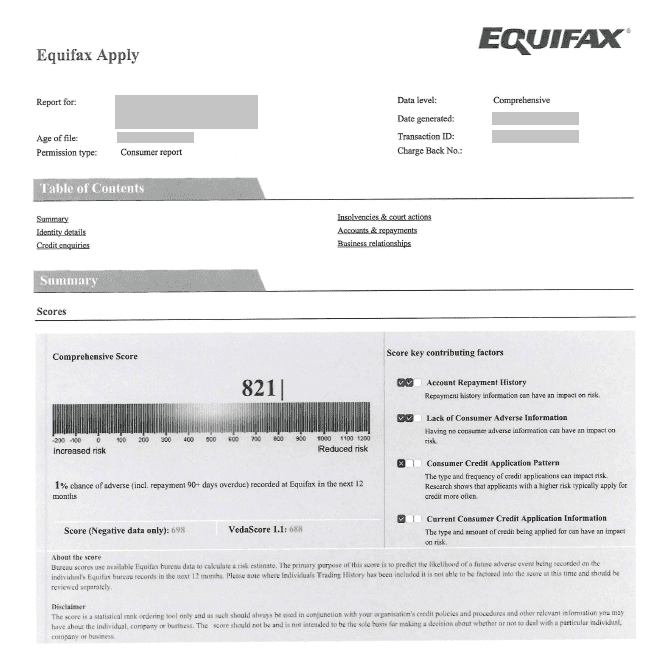
In the below image, Wardle’s client had a credit score of 821. Despite the high number, her client was rejected for a loan due to a mismatch in their credit information. 
example of a equifax credit report

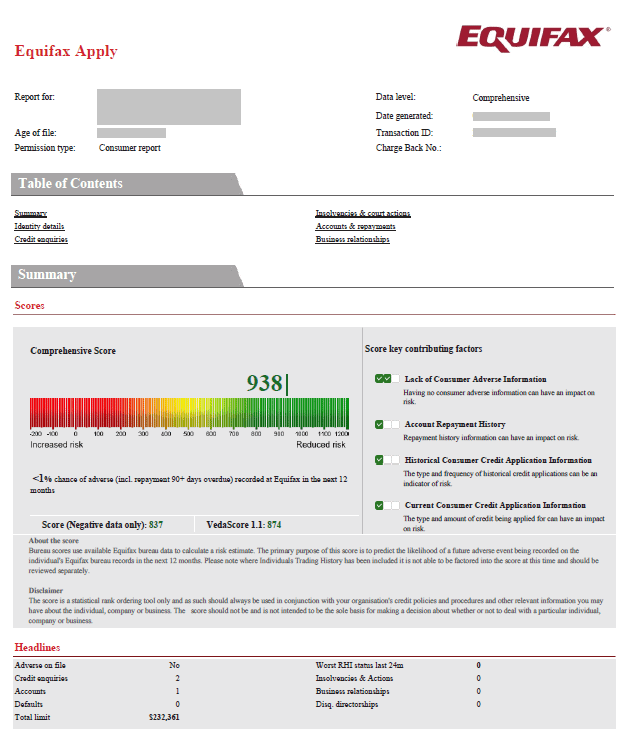
Upon seeking Wardle’s services, she was able to see that her client’s driver’s licence and address on their credit report was incorrect. Once the personal information on her client’s credit report was updated, the customer’s credit score increased by more than 100 points, and their loan application was accepted.
equifax credit report

This is a clear example of how incorrect personal information can not only harm your credit score but also result in you being rejected for a loan or other type of credit. It’s important to outline that having a high credit score doesn’t mean that you can’t be rejected for credit. Checking your personal details are up to date and correct is critical to potentially avoid being rejected for finance in the future.

Why does your personal information affect your credit score?

A lot of people might be confused as to why your personal information can harm your credit score. It’s not your credit history – so why does it affect your rating? As Wardle explains, having incorrect personal information can lead to multiple credit reports being generated for one individual. 

These credit reports won’t have the full picture of your credit history, and as a result, you will likely have a lower credit score as your report may not contain accurate information with respect to your current and updated financial obligations.

In some cases, having incorrect personal information can result in you not having a credit report and score at all. If you don’t have a credit score, then it can be harder to be accepted for credit, and drastically reduce your finance options.

What personal information is most likely to be incorrect?

Mistakes on your credit report are common. In fact, 1 in 5 credit reports have some kind of mistake on them. It is quite common for the personal information on credit reports to either be incorrect or outdated. 

As outlined by Wardle, the personal information most likely to be incorrect are:

  • Full name – it is quite common for your credit report to have your incorrect name. Sometimes, someone else’s name might appear on your report, or your name may have been spelt incorrectly. Often, the incorrect middle initial can appear on your report.
  • Employment – your credit report might have an old employer listed as your current employer on your credit report, or your employer might be completely incorrect.
  • Contact information – your credit report might show incorrect or outdated contact information, such as your phone number and address;
  • Licence number – it is common for credit reports to feature an outdated or incorrect driver’s licence number.

Common reasons for incorrect personal information on your credit report

So now you know what’s likely to be incorrect, let’s get into why that information is more likely to be wrong. Like many things in life, there’s not just one reason, but a multitude of reasons why your personal information on your credit report might be incorrect. 

The personal information on your credit report is collected by the credit bureaus in Australia from credit providers – such as banks. Each time you apply for credit, take on credit, and more, that information is stored and reported to the credit bureaus. This information then appears on your credit report.

As highlighted by Wardle, there are two main reasons why personal information on credit reports can be incorrect – consumer error, or creditor error. Let’s break these two down.

1. Consumer error

When you apply for credit, you will need to fill out your personal details on the application. Sometimes, people make mistakes on the application – they might spell their name wrong, or submit incorrect licence details, for example.

Regardless of whether the application is approved or rejected, the credit enquiry is sent to the credit bureaus with the incorrect information, which can then end up on your credit report.

Furthermore, if you move address, and you don’t update your driver’s licence or inform your credit providers, then your outdated address will remain on your credit report. That’s why it’s important to ensure you update your address across all channels when you move house.

2. Creditor error

Similar to consumer error, creditors can also make mistakes. When they receive your application, they might input your details incorrectly – such as your name, address, date of birth, employment details, driver’s licence number and more. This incorrect information is then passed onto the credit bureaus, which can inevitably end up on your credit report or generate a new report. This is sometimes known as a possible match or a cross-reference.

How to update your personal information on your credit reports

If you can see there is a mistake with your personal information on your credit report, or the information is outdated, how can you fix this? There are two main courses of action – you can reach out directly to each of the credit bureaus to have your personal information updated or corrected.

You can also reach out directly to your credit providers to ensure they have all of your correct personal information. If they don’t, then you can request that they update the details they have on file and request they update these details with the credit bureaus they are connected with. Your credit report will then be updated the next time they send your information over to the credit bureaus if they agree with your request.

Going forward, if you move house, or you change employment, you can provide that updated information to your creditors so the most up to date information remains on your credit report.
When Do Banks Do a Credit Check For Personal Loans?

when banks do credit check for personal loans

If you’re in the market for a personal loan, you might be wondering when do banks do a credit check for personal loans? We have put together this helpful guide to take you through the process of credit checks when it comes to personal loans.

What are credit checks?

Before we get stuck in, let’s first cover what are credit checks. A credit check is when someone checks your credit score. In Australia, only companies you authorise can view your credit scores.

Typically, you provide your permission to conduct a credit check when you apply for credit, such as a personal loan. This is a requirement when applying for a personal loan unless you have sought out a personal loan that does not require a credit check.

Do personal loans require credit checks?

Yes, generally speaking – personal loans offered by banks, non-bank lenders, credit unions and other credit providers will require you to consent to a credit check when you apply for a personal loan

When you apply for a personal loan, the company you are applying with will want to determine how big of a risk you pose. Basically, this means they want to know whether you will make your loan repayments

Your credit score and credit report are some of the factors used to determine your creditworthiness (translation: how reliable of a borrower you are). They will often also ask to see your recent bank statements, employment status and other factors they can use to determine your risk profile.

No credit check personal loans

Whilst nearly all personal loans will require a credit check, there is a niche of personal loans that do not require a credit check. These are referred to as no credit check personal loans.

Although this is an option for you in Australia, no credit check personal loans are difficult to find and your options are limited. For this type of personal loan, instead of looking at your credit history, lenders will generally look at your income, employment status, existing debts and other criteria when assessing your risk profile.

What’s important to highlight here is that no credit check personal loans are riskier for lenders. Because of this, they will often come with higher interest rates and fees, which can cost you a lot in the long run.

What does a credit check do to my credit score?

When you apply for a loan, this is referred to as a credit enquiry and it will appear on your credit report for up to 5 years. There are two main types of credit enquiries – hard and soft. 

The main difference is that a hard enquiry is made after you have applied for money in some form, such as a credit card, loan, post-paid phone plan, whereas a soft enquiry is unrelated to lending you money. 

Hard enquiries harm your credit score. That means, each time you apply for a loan, you are damaging your credit score. Of course, sometimes this damage is unavoidable – and it won’t last forever, but it is a good idea to space out your credit applications and do your research before applying for a loan.

What credit score do I need for a personal loan?

If you’re thinking of applying for a personal loan, is there a perfect credit score you should try and have before you apply? When it comes to credit scores, generally, the higher your score, the better it will be for you.

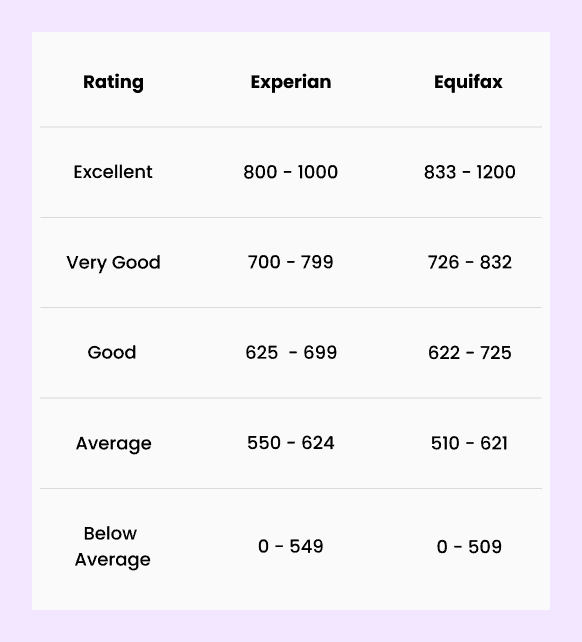
In Australia, you have three credit scores, one with each of the three credit bureaus in Australia – Equifax, Experian and illion. Your credit score will range from either 0 – 1,000 for Experian and illion, or 0 – 1,200 with Equifax.

Your credit score is a representation of your creditworthiness. Therefore, the higher your score, the more reliable of a borrower you are perceived to be. Whilst your credit score isn’t the only factor lenders consider when reviewing your loan application, it is an important piece of the puzzle. In fact, your credit score could be the difference between being accepted or rejected for credit.

Therefore, if you’re wanting the perfect credit score when applying for a personal loan, you should be aiming for a credit score that’s good or higher. Here’s how Equifax and Experian categorise their credit scores:

what is a good credit score, good credit score

Source: Experian and Equifax

If your credit score is average or below average, there are still options out there for you. If you’re not urgently in need of credit, you could try and improve your credit score before applying for a loan. Otherwise, you can do your research and see what bad credit loan options are available for you.

When do banks do a credit check for personal loans?

Now you know what a credit check is and why banks perform them when you apply for a personal loan, let’s take a look at when banks do a credit check for personal loans.

As we discussed above, banks need your consent to perform a credit check. You typically give this consent in the terms and conditions when you apply for a loan. Therefore, banks can only check your credit history once you have made an application with them.

So in answer to the question “when do banks do a credit check for personal loans”, the answer is – after you’ve applied for the loan, and before you’re either approved or rejected.

Where can I get a personal loan?

You can get a personal loan from a range of providers. Whilst banks are still one of the largest players in the game, you can also get personal loans from non-bank lenders and credit unions.

If you are looking for a personal loan, then Tippla has you covered! When you sign up for Tippla, you can access a range of personal loan offers that have been tailored to your credit score. When you fill out the application, you will be matched with a range of lenders who would be willing to lend to you based on your credit score.

Not sure what your credit score is?

If you’re not sure what your credit score is, then Tippla has you covered. When you sign up for Tippla, you can view your Equifax and Experian credit scores and reports. Not only that, but you can access our credit school – a short online course that will take you through the basics of your credit score.

Can You Get a Personal Loan After Bankruptcy?

person wondering about personal loan after bankruptcy

There are many reasons why someone might have to enter into bankruptcy. If you are about to enter into bankruptcy, or you’ve just come out of the bankruptcy process, can you still get a personal loan after bankruptcy? We’ve gathered all the information to help you understand your options.

Bankruptcy in Australia

Bankruptcy is the legal process that is declared when someone is unable to repay their debts. If you are struggling to repay your debts, there are three formal options available for you – bankruptcy, personal insolvency agreements and debt agreements. Today, we’re going to focus on bankruptcy.

Bankruptcy typically lasts for 3 years and 1 day, however, you can end your bankruptcy earlier if you’re able to repay your debts within this time. Bankruptcy can remain on your credit report for up to 5 years.

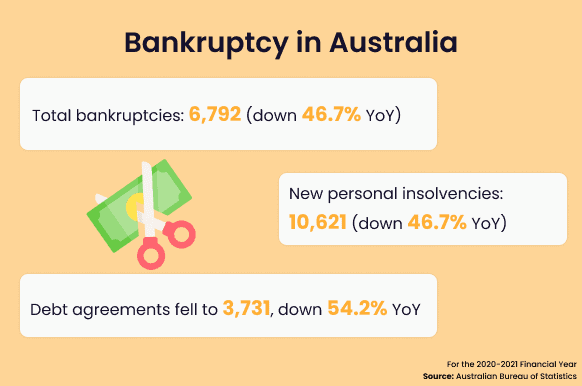
According to the Australian Financial Security Authority (AFSA), there were 6,792 bankruptcies in Australia in the 2020-2021 financial year. This was 46.7% less than the previous financial year.

Bankruptcy in Australia 20-21FY statistics

Going through bankruptcy

If you need to enter into bankruptcy, there are two ways you can do so. According to the AFSA: “You can enter into voluntary bankruptcy. To do this you need to complete and submit a Bankruptcy Form. It’s also possible that someone you owe money to (a creditor) can make you bankrupt through a court process. We refer to this as a sequestration order.”

When you enter into bankruptcy, the Australian government will appoint you with a trustee, who is a person or body who manages your bankruptcy. When you enter into bankruptcy, you are obligated to do the following:

  • Provide details of your debts, income and assets to your trustee;
  • Your trustee will notify your creditors that you have entered into bankruptcy. This will prevent most creditors you owe money to from contacting you regarding your debt;
  • Your trustee may sell some of your assets to repay your debts;
  • If your income exceeds a certain amount, then you may need to make compulsory payments.

Before entering bankruptcy

If you are currently struggling with your debts, there are a few things you can do before formally entering into bankruptcy. 

Seek financial advice

In Australia, there are free resources you can use to help you get on top of your debt, but it’s important that you act quickly. You can reach out to the National Debt Hotline, a not-for-profit service that helps Australians tackle their debt problems. You can also speak to a free financial counsellor through their service.

By using the National Debt Hotline, you can speak to a professional who can help you get on top of your debt before it escalates to bankruptcy, or they can help you understand your options if you need to enter into some kind of debt agreement.

Reach out to your creditor

As soon as you begin to struggle with making your loan repayments, it’s important that you reach out to your creditor/s. You can let them know that you are experiencing financial difficulty. Many credit providers have hardship programs in place that have been created to help support their customers during times like these.

Specifically, you might be able to agree with your creditor on extending your repayment period, set up a flexible payment arrangement and more. However, some of these options could be legally enforceable. Therefore, you may want to seek independent advice before committing to anything.

Accessing finance during bankruptcy

If you have entered into bankruptcy – what are your options when it comes to finance? We have broken this down into two parts – accessing finance when you’re going through the bankruptcy process, and whether you can get a personal loan after bankruptcy.

Can you get a personal loan during bankruptcy?

Let’s start first with whether you can get a personal loan during bankruptcy. Technically, the answer is yes, but there are a few things you need to be aware of. In Australia, according to the Bankruptcy Act of 1996, Section 269 you will have to disclose your bankruptcy status as a debtor if you want to borrow more than $3,000. If you don’t disclose your bankruptcy, then you could face imprisonment.

If you apply for a loan when you’re in the bankruptcy process – this is a big risk for a lender. This is because bankruptcy suggests that you are not effectively able to manage your debt and you are, therefore, a high-risk borrower.

Whilst you can still apply for a loan when you’re bankrupt, it is completely up to the lender as to whether they will loan you money. In order for them to accept your application, you will typically need to prove that your situation has changed since entering the bankruptcy process. 

This could include securing employment when you were previously unemployed, adjusting your lifestyle to one that you can comfortably afford, and other positive financial decisions. If you can clearly demonstrate you have adjusted your financial behaviour, then you might be able to find a lender who will loan you money. 

It is worth highlighting here that if you are currently bankrupt – you are deemed as a high-risk borrower. In order to offset the high risk that you pose, lenders will typically only offer you loan options with very high interest rates, or loans that are secured to an asset. If you are unable to repay this loan, then you could put yourself under further financial strain.

Alternatives to taking on a personal loan

If you are currently in the bankruptcy process and in need of extra financial assistance, it might be a good idea to explore other alternatives as opposed to taking on more debt. This can include:

  • Seeing if there is any government assistance available for you;
  • Adjusting your lifestyle and cutting out any unnecessary expenses;
  • Setting up a budget to get on top of your finances.

national debt hotline

Can you get a personal loan after bankruptcy?

Now let’s tackle whether you can get a personal loan after bankruptcy. Once you have completed the bankruptcy process, there are no restrictions on applying for loans or credit. However, it is once again up to the credit provider to decide whether they will lend you money.

As we mentioned above, most credit providers will want to see evidence that you have improved your financial habits. This could include a solid banking history (not overdrawing your account, no direct debit reversals, etc.), no new defaults on your credit report and similar positive financial behaviour.

Your credit report will show your bankruptcy for either:

  • 2 years from when your bankruptcy ends or;
  • 5 years from the date you became bankrupt (whichever comes later).

Therefore, just because your bankruptcy has ended and you no longer have to inform lenders if you want a loan over $3,000, when they check your credit report, for two years after your bankruptcy has ended, they will be able to see that you were bankrupt.

Before you apply for any type of credit, it’s a good idea to check that you actually need it. Can you make some adjustments to your budget (or create a budget if you don’t have one), can you cut out any unnecessary expenses, or can you get government assistance to help you? These are some options you could consider.