Why Luxury Watches Are More Than Just Timepieces – A Smart Investment

Some call it a flex. Others? A financial move with flair. Luxury watches have transformed from wrist accessories into substantial investment assets that people now view with serious interest. The high-quality timepieces from Rolex Daytona and Patek Philippe now compete effectively with conventional portfolio investments.

Watches from this category have shown superior returns compared to stock investments by delivering both notable capital growth and enduring value growth. The evolution of watch collecting has surpassed its current status as a trend because smart investors are now interested.

People wonder why this industry that combines gears with gold continues to establish itself in the market. The upcoming information will transform your understanding of time.

5 Reasons Why Luxury Watches Are More Than Just Timepieces

1. Luxury Watches Appreciate in Value Over Time

The investment value of certain products extends beyond briefcase dimensions because they appear better on wrists than in business containers. Luxury watches create a unique appeal because they unite the worlds of fashion and financial value. The market values many high-end timepieces because they tend to increase in value after customers purchase them.

Rolex, Audemars Piguet, and Patek Philippe have established their watches as more than mere symbols of status. The Patek Philippe Nautilus serves as an example to support this point. Its original retail pricing of AUD $40,000 has now evolved into secondary market values exceeding AUD $100,000. The Rolex Submariner, and especially its vintage versions, demonstrate consistent value growth in the market every year.

If you’re a trader in Melbourne or own a few luxury watches you no longer use, selling them can be a smart decision. Over time, you might find high-end pieces like Rolex, Omega, or Audemars Piguet sitting in your collection without much use. In such cases, you can sell used luxury watches in Melbourne and reinvest in even more valuable pieces.

The value of collectible watch pieces remains stable because they differ from standard consumer products. These watches stand out as investment-grade timepieces because they are rare and require skilled production, and global watch collectors actively seek them. The value of your wrist resilience increases as an investment asset in modern economic transitions.

2. Watches Offer Tangible and Portable Investment Opportunities

A luxury watch serves as a wearable form of wealth since you cannot carry your stock investments on your wrist. That’s wealth you can wear. Investors find high-end timepieces particularly attractive because they successfully unite style with substantial value. Luxury watches represent tangible, beautiful assets that maintain their value while you are out and about because they accompany you everywhere.

High-end watches operate independently from brokerage services and buyer representatives when it comes to transactions. The limited edition Omega, alongside vintage Patek Philippe watches, functions as a small value store, which provides excellent market flexibility. Luxury watches can be sold to specialist dealers within hours, as well as through private sales and watch auctions that take place globally.

The addition of watches to your investment mix prevents you from placing all your assets in a single category. The watch market moves independently from other markets since currency fluctuations and market shifts play their own role.

Your investment portfolio gains resilience when you add investment-grade watches to it since they provide portfolio diversification. Investments in rare collectible watches have proven to outperform traditional assets because these timepieces demonstrate that stable investments can appear from unexpected sources.

3. Proven Track Record of Rolex and Other Premium Brands

Several brands show the world their time and their stories. Rolex is among the most renowned watchmakers in the high-end market. It exists as both a time-telling company and a cultural symbol that serves as a permanent foundation within watch investment markets. That little crown on the dial? The brand logo functions as more than advertising; it represents long-lasting worth.

The steady presence of Rolex in the market is no coincidence. Stainless steel Submariners and limited Daytona series models have transformed into legendary timepieces that either maintain or surpass their initial market value. The market value of discontinued and limited edition timepieces has experienced dramatic appreciation when they appear at watch auctions and among collectors.

Other brands share the same market position as Rolex. The secondary market values Patek Philippe Grand Complications, Nautilus line, and Audemars Piguet Royal Oak models extremely highly. Watches from both scarce brands benefit from their limited availability combined with their artistic construction, thus delivering investment-grade value that enables strong resale benefits.

The real kicker? Watches represent more than financial investments. These timepieces exist as both physical possessions and portable devices that people throughout the world value highly. Reputable luxury watch brands like Rolex, Patek Philippe, and Audemars Piguet provide invested owners with solid and experienced reliability, found less often when dealing with other monetary assets.

4. The Best Time to Sell Used Luxury Watches and Reinvest

Every watch owner faces a critical point when their previously treasured timepiece resides in its box instead of being worn on the wrist. That moment? The current situation may present itself as an ideal opportunity for transforming style into strategic value. Selling a used luxury watch includes both functional decluttering and enhancement of strategic financial returns.

Timing is everything. Models reach their maximum value when they remain unscathed, while market spikes that include brand anniversaries or product discontinuation reports drive up the resale price. Your understanding of current market movements regarding Rolex Explorer and vintage Omega Speedmaster models enables you to take advantage of optimal watch market opportunities.

The truly fascinating aspect emerges in the act of reinvesting the money obtained from watch sales. Your watch portfolio gains value through both buying rare or limited edition models when their market value increases. The watch resale platform Sell My Watch provides users with an efficient process to achieve top resale values through their streamlined platform which eliminates conventional negotiation methods.

Regular reviews of your watch collection remain necessary to improve its value. You should consider replacing your watch when it fails to match your style or its market value shows no more potential for growth. The practice of watch investment requires owners to understand the right time to sell their watches because it drives the ticking rhythm of the market.

5. Watches as a Hedge Against Inflation

Your morning coffee budget is only one target of inflation, which also diminishes your savings and investments while threatening your long-term financial objectives. Your wealth could benefit from a protection strategy that doubles as an exceptional wrist accessory. Luxury watches serve more purposes than mere collectibles because they function as financial protection tools.

When the economy suffers financial challenges, high-end watches demonstrate the ability to either maintain or grow their market value instead of losing purchasing power like money in a bank account. Rolex and Patek Philippe have continually demonstrated their value preservation abilities throughout times of economic inflation. These watches qualify as excellent wealth preservation instruments because of their rare status combined with worldwide popularity and exceptional manufacturing quality.

The value of Rolex GMT-Master II “Pepsi” watches has consistently grown throughout the past decade, while inflation rates increased. The resilience that watches possess is fundamental to why they serve as more than decorative accessories. Investment portfolios benefit from watches as strategic assets that provide protection from unstable markets involving fiat currency and volatile stock shares.

People who want to secure their financial stability should research models that resist inflation and monitor market value patterns because this strategy provides strong long-term protection. A carefully selected watch provides financial and stylistic advantages when prices rise across all other markets.

Luxury Watches Are a Valuable Investment That Holds More Than Just Time

Some valuable assets operate better as wristwear rather than vault storage because they create revenue while capturing attention. Luxury watches present dual attributes of magnificence and intelligence. The mechanical devices contain investment potential through their combination of expert craftsmanship and financial appreciation. Rolex Daytona pushes with its powerful engine, yet Patek Philippe exists with an unspoken authority because both watches combine timekeeping with proven investment potential.

A watch that fails to bring joy and value should be your indication to upgrade. Your decision to sell intelligently now will result in the opportunity to wear something better in the future.

Watch investment requires more than a stylish accessory since the key power shift exists in your clear understanding of time-to-value trading opportunities.

What’s The Difference Between Credit Cards And Personal Loans?

credit cards and personal loans

If you are looking for extra finance, whether it’s to make a big purchase, cover unexpected expenses, or build a credit history, there are two main options available for you – a credit card or a personal loan. These two types of credit are very popular in Australia, but we’re here to break down the difference between credit cards and personal loans, so you can choose what’s best for you.

What is a credit card?

Before we jump into the difference between credit cards and personal loans, let’s start with the basics – what is a credit card? Literally speaking, a credit card is a piece of plastic or metal that is issued by a bank or financial services company. 

You can use a credit card to pay for goods and services, as well as any personal expenses that may arise. A credit card is a line of credit that you can use to pay for personal or business expenses on the promise that you repay the money back, often with interest. Your credit card is a revolving line of credit, which means it refreshes after a certain period of time – typically each month, and it will continue to do so up until you cancel the card.

Because a credit card is a line of credit, this means you don’t need to have the money physically in your bank account, as is the case with a debit card. This is where credit cards and personal loans are similar.

Different types of credit cards

In Australia, there are many different types of credit cards. Whilst the basics stay the same, the different types of credit cards all come with their unique purposes and benefits. Here’s a quick overview of the different options available to you.

Low-interest credit cards As the name suggests, a low-interest credit card is a credit card that offers a lower interest rate than normal. Many credit cards charge 20% or more on purchases, whereas low interest-rate credit cards generally have an interest rate that’s 14% or lower. These cards can also come with no interest periods, typically up to 55 days. However, low-interest credit cards can generally come with more restrictions, fewer rewards and a higher annual fee.
Balance transfer credit cards A balance transfer credit card is when you transfer your outstanding debt from one credit card to your balance transfer credit card. The balance transfer credit card usually has a low interest rate or sometimes even a 0% interest rate for a limited time. 

This allows you to repay your existing debt, and try and repay your new debt with the balance transfer credit card within the interest-free or low-interest period, which can save you money. However, if you can’t repay it within this period, then it might cost you more in the long run.

No annual fee credit card Most credit cards come with an annual fee that you have to pay each year across the life of your credit card. A no annual fee credit card is a type of credit card where you don’t have to pay this fee. 

There are two main types of no annual fee credit cards – the first is where you don’t have to pay an annual fee during the whole life of the credit card, the second is where you don’t have to pay an annual fee during an introductory period, which usually lasts for 1 or 2 years.

To offset the lack of an annual fee, these types of credit cards usually come with higher interest rates, which could actually cost you more in the end.

Rewards credit card Rewards credit cards give you some kind of reward, usually in the form of points, every time you make a purchase. There are many different types of rewards cards, and the points can be used for things like – retail rewards, supermarket rewards, cashback deals, frequent flyer points and petrol rewards.

Whilst these cards can give you bonuses, they don’t come for free. Generally speaking, rewards cards often come with higher annual fees and it can take a while for the points to build up (and they can expire). So, it’s important to read the terms and conditions carefully and weigh up the pros and cons.

Cashback credit card With cashback credit cards, you can get cashback when you make purchases. This can come in the form of a cash voucher or money credited back to your account. However, as with all types of credit cards – when there are perks, that generally means higher fees. 

In this instance, cashback credit cards often come with higher interest rates and an annual fee. Some cards can also cap how many cashback points you can earn.

Frequent flyer credit card A frequent flyer credit card is a common type of rewards credit card, and it’s great for those who love to travel. When you spend on your frequent flyer credit card, you’ll accrue points. When you build up enough points you can put them towards flights and either get cheaper flights or have the whole cost covered by points – depending on how many you have.

The downsides to this type of credit card are that the frequent flyer points can expire. These types of credit cards also generally come with standard credit cards fees such as – annual fee, program fee, cash advance fee and more.

Platinum or black credit card Platinum or black credit cards are high-end credit cards. You can get a number of benefits with these cards – exclusive dining and travel deals, as well as rewards points that don’t expire. If you’re over 18 and earn more than $50,000 each year, have a good credit score, then you can apply for one of these credit cards.

Some of the drawbacks of a platinum credit card include much higher annual fees and interest rates.

What is a personal loan?

Similar to a credit card, a personal loan is a line of credit that allows you to pay for personal expenses – whatever they may be. A personal loan allows you to borrow a specific amount of money under the agreement that you pay it back within a predetermined time period, referred to as the loan term, with interest. 

The interest rate you are charged will depend on a couple of factors, including your credit score. Want to see where you’re at? Check your credit score with Tippla here.

When taking on a personal loan, you can get a loan with a fixed or variable interest rate. You can also choose between a secured or unsecured personal loan. 

Different types of personal loans

There are a couple of different types of personal loans. Here is a breakdown below.

Secured and unsecured personal loans

The two main types of personal loans are secured and unsecured personal loans. A secured personal loan is when you take on a personal loan that is guaranteed by an asset such as a car. This asset is used as security against you defaulting on your loan. If you default on your repayments and can’t afford to repay the loan, then you are at risk of losing your asset.

Secured personal loans are generally used to purchase the security you’re using against the loan. Let’s break that down. Say you want a loan to buy a car, then the car you buy will be the security on the loan.

One of the benefits of a secured loan is that you can generally get lower interest rates. Interest rates are set to protect the lender against the risk of you defaulting on your loan. Because your asset serves as collateral, the lender can afford to offer you lower interest rates, because they have already hedged against the risk of you defaulting on your loan.

Unsecured personal loans, on the other hand, is a personal loan that you don’t have to provide any security for. Reasons for taking out an unsecured personal loan range from holiday expenses, home improvements, unexpected expenses, medical bills and more.

Because there’s no security against the loan, the interest rates are generally higher for unsecured loans. But on the plus sign, the application and approval process is usually quicker.

Fixed or variable interest rate personal loans

When it comes to interest rates on personal loans, the most common are either fixed-rate or variable-rate loans. Here’s what that means. A fixed-rate personal loan is when the interest stays the same for the whole loan term.

One of the perks of this is it allows you to easily budget for your repayments, as they stay the same each month. However, a downside of this is you could miss out on your interest rate being reduced if interest rates go down. On the flip side, if interest rates go up, then you’re protected with a fixed-rate personal loan.

Variable-rate personal loans are when the interest you’re charged each month isn’t the same, and it can fluctuate depending on the market. Some of the pros of this type of loan include – fewer repayments because you can make earlier repayments and pay off your loan sooner, more flexibility and potentially lower interest rates.

Although there are some positives to choosing this type of loan, there are still some things to consider. Namely, you might end up having to pay more in interest if the interest rate rises. This can cost you in the long run.

What’s the difference between credit cards and personal loans?

Whilst there are many similarities between a credit card and a personal loan, there are also some differences. So what is the difference between credit cards and personal loans? Here are the main points:

Borrowing amount

When you are approved for a personal loan, you will be given a set amount of money in a lump sum at the beginning of the loan term. You can’t spend more than the amount you have been given unless you take out an additional loan. With a credit card, the borrowing limit refreshes each month, so your borrowing limit is more flexible than a personal loan.

Length of term

Personal loans generally come with a fixed term, whether it be a couple of months or years, and they come with a termination date. Credit cards, on the other hand, are a revolving line of credit and refresh each month. For most credit cards, you can have them for as long as you want – whether that’s a month, years, or even decades. The length of time is determined by you as the customer.

Interest rates

Personal loans generally have lower interest rates than credit cards. According to the Reserve Bank of Australia (RBA), the average variable interest rate for a personal loan as of September 2020 was 14.41% and 12.42% for a fixed personal loan. Whereas the average credit card interest rate ranges from 16-18%, according to numerous comparison sites. However, you can avoid paying interest on your credit card if you pay off the card balance in full each month.

Rewards

Although credit cards might have higher interest rates, they generally come with more rewards and perks. As we covered above, sometimes you might end up paying more for these perks, but if you use them wisely, you can make them work for you.

What’s the right decision for me?

Now you know the difference between credit cards and personal loans, you might now be thinking about what’s the best choice for you. At the end of the day, only you know your financial situation. However, there are a couple of things you can consider when choosing between a credit card or a personal loan. 

Firstly, if you have control over your spending and can follow a budget, then a credit card might meet your needs. Whereas if you’re looking to make a big one-off purchase or pay for an expense, a personal loan might be better for you.

If you’re unsure, you can speak to a free financial counsellor who can help you make the best decision for your personal situation.

What Affects My Credit Score? A Quick Guide

what affects my credit score

Whether you’re applying for credit or simply want to know more, we hear you, and we’re here to answer the age-old question of what affects my credit score? Tippla has provided a breakdown below.

What is a credit score?

Before answering “what affects my credit score”, let’s first discuss what is a credit score? Your credit score is a number that ranges from 0 – 1,200, based on the information contained within your credit report. Your score falls somewhere on a five-point scale ranging from below average up to excellent. Your credit score indicates to lenders your creditworthiness; the higher your score, the more reliable you appear to a potential lender. 

What is a good credit score?

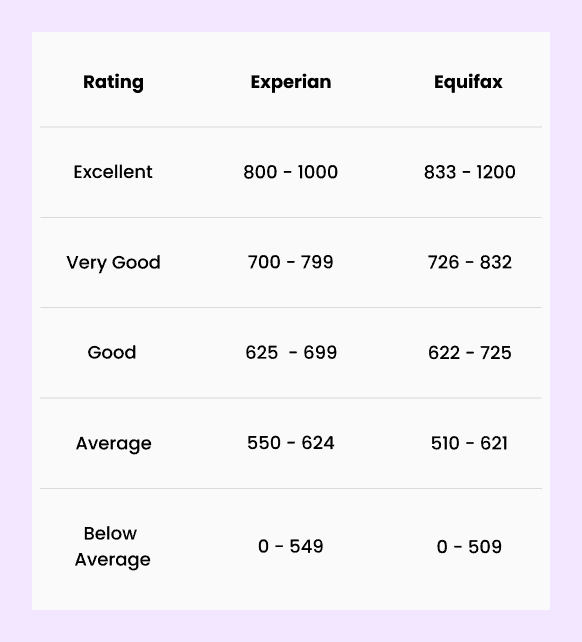
Due to Experian and Equifax calculating your credit score differently, the categorisation of the “below average” to “excellent” scale differs between the bureaus. 

what is a good credit score, good credit score

Source: Experian and Equifax

What’s the difference between a credit score and a credit report?

Your credit score is a number falling somewhere between 0 – 1,200, depending on the reporting agency. In contrast, your credit report includes detailed information regarding your credit history. Your credit score is calculated based on the information contained in your credit report. If you’re still confused about “what affects my credit score”, it’s the information contained within your credit report.

What goes onto your credit report

Many things go onto your credit file, and all of this information will have some kind of impact on your credit score. It’s not just your credit accounts that appear on your report; phone bills, personal loans, and payments to utility companies will also feature on your report. 

Your personal finances, such as checking and savings accounts, have little to no effect on your credit score, as your credit report is only concerned with the money you owe or have previously owed. However, in some unique situations, your personal finances may be affecting your credit score.

What affects my credit score? 

In Australia, you have three different credit scores; here at Tippla, we provide you with your Equifax and Experian scores. It’s important to note that these scores may be slightly different, as they are scored on different scales and attribute different values to the contributing factors. 

Here’s what goes onto your Equifax credit report:

  • Type of credit provider
  • The type and size of credit requested in the application
  • Number of credit enquiries and shopping patterns
  • Directorship and proprietorship information
  • Age of your credit report
  • The pattern of credit enquiries over time
  • Personal information
  • Default information
  • Court writs and default judgements
  • Commercial address information

Here’s what goes onto your Experian credit report:

  • Type of credit provider
  • Type of product that was applied for
  • Repayment history
  • The credit limit on each of the credit products
  • Amount of credit enquiries
  • Any negative events

What harms my credit score

When understanding what affects my credit score, it’s equally important to look at what is also harming it. At Tippla, your reports come from the two leading credit bureaus in the world – Experian and Equifax, each of which considers different factors as detrimental when calculating your credit score.

What harms your Equifax credit score

  • Late repayments
  • Applying for a large amount of credit in a short period of time
  • Closing a credit account
  • Stopping credit-related activities for an extended period
  • Negative public records, such as bankruptcy

What harms your Experian credit score:

  • A large number of credit applications in a short period of time
  • Open accounts with debt collection agencies
  • Short term credit
  • Missed payments
  • Bankruptcy actions
  • Defaults
  • Court judgements

It is essential that you check all your information listed in your credit report to make sure there aren’t any mistakes that could diminish your score. Specifically, check to see that any of the debts and loans are yours and your personal details such as your name and date of birth are correct. If you find any errors or out-of-date information, contact that credit reporting agency and ask them to fix the mistakes.

What improves my credit score

Whether you’ve just checked your credit score and it wasn’t quite as high as you expected, or maybe you just want it to be even better, you can take steps towards improving it when you know what affects your credit score. Maintaining a good credit score means that you are more likely to be approved for different types of accounts and are more likely to get better interest rates when applying for a loan.

When you receive your scores, you should also be able to see the risk factors impacting your score the most; from this information, you can see where changes should be made and make a conscious effort towards doing so. It should be noted that any actions you take won’t see immediate change, and you’ll need to allow time for your creditors to report your positive behaviour before it is reflected in your credit score.

Tips to improve your credit score 

Changing your behaviour can help improve your score over time. You could start by paying your bills on time, as your previous payment history is an indication of your future performance. You could also ensure that you pay off debt and keep balances low on your credit cards and other revolving credit.

You could also improve your credit score by only applying for and opening new credit accounts as necessary. Taking on unneeded credit can damage your score by creating too many hard enquiries or simply tempting you to overspend and accumulate more debt. 

In addition, applying for too much new credit can harm your credit score because it results in numerous hard enquiries, which remain on your report for two years. 

How to fix my credit score

Now that we’ve answered the question of what affects my credit score? Let’s discuss how you can fix your score. 

Credit repair companies offer to quickly fix your credit score by correcting the visible issues on your credit report. Unfortunately, many of the issues can’t be resolved immediately and are things you could do yourself (for free). By reading through your credit report and understanding your score’s contributing factors, you can change these behaviours to prevent yourself from a further decline. 

An important thing to remember is the time taken to fix your credit score can vary, depending on how severe the negative entry is:

  • Enquiries remain for two years.
  • Late repayments can take seven years to leave your credit report. 
  • Public record items can remain on your report for seven years, but some cases of bankruptcy can stay for ten years.

Rebuilding and improving your credit score does take some time, and there aren’t really any shortcuts you can take. One of the best steps you can do is to check your credit scores with Tippla today; from there, you can review which factors negatively affect your score and then head over to the Tippla Credit School to learn more about improving your rating.

How to Choose the Best Australian Centralised Exchange

If you’re new to the world of digital currency, the idea of choosing the proper exchange to buy Bitcoin and other digital assets can feel overwhelming. But don’t worry! We’re here to guide you through the process in a way that’s easy to understand and packed with important information. Whether you’re looking to make your first purchase or you’re ready to start trading, understanding the key factors—like regulations, security, and fees—can make all the difference. Let’s dive in!

Understanding Regulations: Why It Matters

Australia has become a leader in the digital currency space, largely due to its clear and supportive regulatory framework. The Australian government has implemented regulations that help protect investors and ensure that centralised exchanges operate in a secure and transparent way.

When choosing an exchange, it’s crucial to look for one that complies with Australian financial regulations. This means the platform is licensed and follows strict rules to prevent money laundering and fraud. Regulatory bodies like the Australian Transaction Reports and Analysis Centre (AUSTRAC) oversee the digital market to make sure exchanges are operating safely.

By selecting cryptocurrency exchanges in Australia like Independent Reserve, you can ensure that you’re trading on a platform that adheres to these regulations. This provides an extra layer of trust and security, which is especially important for beginners who might not be familiar with the ins and outs of digital trading. As the digital asset landscape evolves, Bitcoin-backed loans in Australia are also emerging as a regulated way for investors to access liquidity without selling their holdings. Some compliant Australian platforms now allow users to use Bitcoin as collateral to secure loans, combining innovation with the security of local oversight — a sign of how mature the country’s crypto market has become.

Security: Protecting Your Investments

Security should be a top priority when choosing a centralised exchange. Unfortunately, the digital space has been prone to hacks and scams, so it’s essential to choose an exchange that has strong security measures in place to protect your funds.

Look for exchanges that offer two-factor authentication (2FA), cold storage for the majority of funds (this means your assets are stored offline and are harder to hack), and insurance to cover any potential losses due to a breach.

For example, platforms like Independent Reserve take security seriously by implementing state-of-the-art security measures and constantly monitoring for suspicious activity. This helps ensure that your investments are as safe as possible from cyber threats.

Fees: What to Expect and How to Minimize Them

When buying or selling digital currency, fees are an inevitable part of the process. But don’t worry, not all exchanges have the same fee structure. Some charge higher fees for transactions, while others offer lower fees in exchange for more advanced features.

To minimize these costs, consider exchanges that offer low trading fees and competitive withdrawal rates. It’s also a good idea to look for exchanges that offer discounts for higher volume traders or those who use native tokens on the platform.

Before committing to a platform, always check the fee structure to make sure you’re getting the best deal for your trading habits. Some platforms, like Independent Reserve, are known for having a transparent fee schedule that makes it easy to understand what you’ll be paying upfront.

4. User Experience: Ease of Use and Support

If you’re just getting started in digital money, you’ll want an exchange that’s easy to navigate. A user-friendly platform can make your buying and selling experience much smoother. Look for exchanges that offer intuitive interfaces, educational resources, and helpful customer support. Some platforms also provide a mobile app, so you can trade on the go.

It’s also important to choose a platform that offers responsive customer support. You may encounter issues or have questions, and knowing you can reach out for help can give you peace of mind.

5. Reputation and Reviews: What Are Other Traders Saying?

Before settling on a centralised exchange, it’s always worth checking out reviews from other users. Look for feedback on reliability, customer service, and how quickly issues are resolved. Reputable exchanges with positive reviews will give you confidence that you’re choosing a trustworthy platform.

Platforms like Independent Reserve are highly regarded in the Australian market, known for their strong reputation and commitment to transparency.

Make the Right Choice for Your Digital Currency Journey

Choosing the right Australian centralised exchange comes down to understanding your needs as an investor. If you’re just starting out, it’s important to find a platform that is secure, well-regulated, and offers reasonable fees. And remember, always do your research—looking into user reviews and comparing different exchanges will help you make the best choice for your Bitcoin investments.

How To Check My Credit Report For Free

how to check my credit report for free

Your credit report is an important document that gives you a clear overview of your credit history and current standing. It’s no wonder a lot of people ask us “how to check my credit report for free”. Tippla has the breakdown for you below.

What is a credit report?

Your credit report is a document that outlines your credit history. It is a summary of how you have handled your credit accounts and managed your debt. If you have a personal loan, home loan, credit card, or your name is on a utility bill, then you will have a credit report.

In Australia, you have a credit report with three credit bureaus – Equifax, Experian, and illion. Each month, your creditors and lenders will report your credit information – such as your repayment activity and history, to one of these three bureaus. The information reported by these financial institutions is what makes up your credit report.

The information on your credit report is what’s used to determine your credit score – a number ranging from 0 -1,200. It provides an indication of how reliable of a borrower you are. If you have positive information on your credit report – such as a reliable repayment history, then you will likely have a good credit score. 

However, if your credit report is filled with negative entries, such as defaults, bankruptcy, etc, then you will likely have an average to below-average credit score. That’s why it’s a good idea to know what’s on your credit report and know how to check my credit report for free.

What goes onto your credit report?

There are many things that go onto your credit report, as outlined by Equifax, your credit report contains the following types of information:

Personal information Your credit report will contain certain information about your identity, such as your name, address and date of birth. It won’t include information such as your marital status, salary, etc.
Credit account information Listed on your credit report will be your credit account information. This includes the type of accounts you have, such as a credit card or loan, the date it was open and your credit limit.
Repayment history Your repayment history for your credit accounts will be listed on your credit report.
Credit applications Your credit report will list all of the enquiries that have been made on your report. There are two types of enquiries – hard or soft. Hard enquiries are when a lender or creditor looks at your report when you apply for a loan or type of credit. 

Hard enquiries affect your credit score. A soft enquiry does not affect your credit score, and ranges from you checking your own report or if a company checks your report for a pre-approved offer. If you have applied for credit, then it will show on your report.

Bankruptcies and defaults Your credit report contains negative entries, if applicable. This can include bankruptcies and defaults. Bankruptcy will stay on your credit report for up to 5 years. If you have defaulted on any of your credit repayments in the past 5 years, then it will appear on your credit report.

How long do items stay on your credit report?

Let’s get stuck into how long items stay on your credit report. Here’s a breakdown:

  • Credit accounts – all of your current accounts, and any that you have closed in the past 2 years;
  • Credit applications – any application you have made for some time of credit will remain on your report for 5 years;
  • Repayment history – your repayment history over the past 2 years will appear on your credit report;
  • Defaults – if you have defaulted on any repayments in the last 5 years then it will appear on your report;
  • Court judgements and bankruptcies – 5 years;
  • Serious credit infringements – these can stay on your credit report for up to 5 years.

Why does my credit report matter?

There are many reasons why your credit report matters, but we’ll take you through a few. One of the main reasons why it’s important to check your credit report and keep it, and your credit score healthy, is because it affects your ability to borrow.

If you have a lot of negative entries on your credit report, such as numerous defaults, then you will be perceived as a riskier borrower. Because of this, you might find it much harder to be approved for credit. 

Not only that, but the credit or loans you are approved for will likely come with higher interest rates, more fees and smaller borrowing limits. If you don’t take care of your credit report and credit score, then it can limit your finances, and as a result, your life. 

If you move into a new house or apartment and you need to sign up for your utilities, such as electricity and water, if you have a bad credit report and a low credit rating, then you might also be rejected by providers because you’re deemed too high of a risk. You could also struggle to get a phone contract.

Your credit report can also be valuable in helping you detect identity theft. If you check your credit report and see that something that doesn’t add up, such as a credit account you don’t recognise, then this could either be a mistake or an indication that someone has stolen your identity and is using it to open credit accounts. That’s why it’s important to check your credit report frequently.

How to check my credit report for free?

Now that you understand what your credit report is and its importance, let’s answer the question “how to check my credit report for free”. There are a few ways you can do this, and it depends on how long you’re willing to wait.

Request your report from the credit bureaus

If you would like to view your credit report for free, you can request a free copy from each of the bureaus – Equifax, Experian, and illion. However, it is important to highlight that you will have to wait approximately 10 days if you want to get a free copy. 

Generally, the bureaus will only allow you to see your credit report free once a year. You may have to pay for a copy of your report from the bureaus if you request a copy more than once a year, and if you want to receive it faster than 10 days.

Sign up to a platform like Tippla

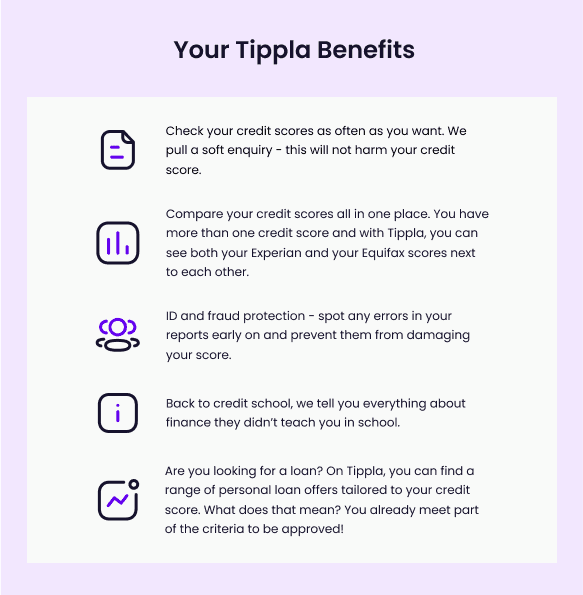
This is where platforms like Tippla come in handy! With Tippla you can view your credit reports and credit scores from the two largest credit bureaus in the world – Equifax and Experian. On Tippla you can access your free personal Equifax credit report and your free personal Experian credit report.

Signing up to Tippla is completely free and you can view your credit report and score as often as you want – it won’t hurt your score. Your report is updated every 90 days, so you can see how you’re tracking throughout the year.

listed benefits of Tippla, a credit score management platform

Does checking my credit report hurt my credit score?

No, it doesn’t! You can check your own credit report as often as you like, it won’t hurt your credit score or reflect badly on your report. This is because when you look at your own report, it is registered as a soft enquiry. Soft enquiries don’t affect your credit score.

The damage is done when you apply for a loan or type of credit, like a credit card. This is because when a lender or creditor views your report to see if you are a reliable borrower, this registers as a hard enquiry. Hard enquiries initially harm your credit score and will remain on your report for up to 5 years.

Want to know what a good credit score is? Here’s how Equifax and Experian categorise their credit scores.

what is a good credit score, good credit score

Source: Experian and Equifax

For more information on what affects your credit score and report, head to Tippla’s financial blog to find everything you need to know and more.

What Credit Score Do I Need for a Home Loan?

What Credit Score Do I Need for a Home Loan

Your credit score is an important number when it comes to applying for different types of credit and loans. It can be the difference between being accepted or rejected for a loan. This has prompted many Aussies to ask “what credit score do I need for a home loan?”. We’ve gathered all the information you need to know in our quick guide below.

If you’re wanting to get into the property market, you’ll likely need to take on a mortgage. To get a mortgage, you’ll need to be approved by a lender. During this process, they’ll check your financial history, as well as your credit history, among several other factors. Having an above-average credit score can make a big difference when it comes to your application success rate, and the terms and conditions you’ll get.

How do credit scores relate to home loans?

Your credit score is a numerical representation of your creditworthiness. In Australia, you have three credit scores, one from Equifax, Experian and illion. Your credit rating will fall somewhere on a scale ranging between 0 – 1,200. 

Depending on your number, your score will be categorised somewhere on a 5-point scale – below average, average, good, very good and excellent. 

So how does your credit score relate to home loans? If you have a below-average credit score, then it signals to lenders that you have a history of not effectively managing your debt. Therefore, you are a riskier borrower and more likely to default on your mortgage repayments.

Having a good credit score, on the other hand, shows lenders that you are responsible with your debt and, as a result, more likely to make your monthly repayments. This will provide you with a boost on your application, whereas a bad credit score, can be a setback.

What is a good credit score?

The determination of a good credit score differs between the credit reporting agencies. Here’s how Equifax and Experian categorise your credit score.

what is a good credit score, good credit score

Source: Experian and Equifax

illion determines a good credit score between the range of 500 – 699.

How does your credit score influence your interest rate?

If you have an average or a below-average credit score, then a lender will assume that you are a risky borrower and more likely to default on your mortgage repayments, as opposed to someone who has a good credit score.

Not only could a bad credit score result in a lender rejecting your home loan application, but it could result in higher fees. Why is this? If you’re deemed as a riskier borrower, then a lender might try and offset this risk with higher interest rates and fees. 

Therefore, if you have a good or higher credit score, then you’re deemed as a more reliable borrower and likely to be approved for a home loan with a lower interest rate.

There are many ways you can reduce the interest rate on your mortgage. This includes shopping around for the best deal you can find. If you start your search with a good credit score, then you’ve already done some of the leg work of saving yourself big time.

What credit score do I need for a home loan?

Unfortunately, there’s not one clear cut answer to the question “what credit score do I need for a home loan?”. Not only do the credit bureaus have different standards for a good credit score, but lenders also have different determinations of what a good credit score is.

Nonetheless, as MoneySmart highlights, a low credit score will affect your ability to get a loan or credit. Moreover, the options available to you will likely have worse conditions such as higher interest rates, more fees and stricter conditions.

Because of this, as a general rule of thumb – the higher your credit score, the better. You can also rely on the bureaus’ rankings, and aim for a score that is good or higher. This could put you in a much better position when applying for a home loan.

How are credit scores calculated?

If you’re thinking of getting a mortgage, then it’s a good idea to check in with your credit score and credit report and see where you’re at. You can get your credit report for free from any of the three credit bureaus. However, you’ll have to wait around 10 business days to receive the report. If you want to see your score and report within minutes, you can sign up to Tippla for no cost whatsoever.

If you want to improve your credit rating or maintain a good score, then it’s important to understand how credit scores are calculated in Australia. Although the exact algorithms each of the bureaus use to calculate your score are a well-kept secret, we do know that the following factors all contribute to your score:

  • The number of accounts you have;
  • The types of accounts;
  • The length of your credit history;
  • Your payment history. 
How equifax calculates credit scores

Source: Equifax

Therefore, if you want to improve or maintain your score, it is worth keeping an eye on the above items and make sure you demonstrate good credit behaviour in these areas. If you want a full breakdown, here’s an article on how to improve your credit score.

Can I apply for a home loan with a bad credit score?

The short answer is yes, you can apply for a home loan with a bad credit score. There are some lenders in Australia that specialise in lending to people with bad credit scores who can’t get approval from mainstream lenders.

However, whilst you can still get a home loan with a bad credit score, the options you’ll have will be limited and they will often come with higher interest rates. As we covered above, high interest rates can cost you.

One thing you could do if you have a bad credit score is to ask a family member with a good credit score to act as a guarantor for the loan. Another option you have is waiting a bit longer to buy a house and focus on improving your credit score first. 

How to check home loan eligibility

There are many online resources that you can use to get an idea of how much you can borrow, and estimations on how much your mortgage repayments will be. MoneySmart’s mortgage calculator provides estimates on your expected interest rate, how much your mortgage repayments will be and how much you can borrow.

However, if you’re wanting to get into the property market, then you might want to reach out to a professional. A financial counsellor would be able to help you decide whether taking on a mortgage is a good idea for you financially, and a mortgage broker could guide you through the process and help you determine how much you can borrow and how expensive the whole process will be.