Common Mistakes on Your Credit Report That Could Be Hurting Your Credit Score

common mistakes on your credit report

Your credit report is an important document that holds your recent credit history. However, mistakes in your credit report can be quite common. Oftentimes, these mistakes can harm your credit score. Today, we’re going to take you through the 2 most common mistakes on your credit report so you can protect your credit score.

Why is your credit report important?

Your credit report is an overview of your recent credit history. The information on your credit report ranges from the types of credit accounts you have (loans, credit cards, utilities, etc), any credit enquiries you’ve made in the past 5 years, repayment history, personal information and more.

When you apply for any type of credit, such as a loan or credit card, the company you have applied with will typically check your credit report and credit score to get an idea of your creditworthiness (how reliable of a borrower you are).

Whilst your credit report isn’t the only thing they’ll check, it is an important piece of the puzzle. Therefore, your credit report and your credit score can be the difference between you being accepted or rejected for a loan.

Why do mistakes on your credit report matter?

Your credit score is calculated based on the information contained within your credit report. We’ve already mentioned above why your credit report and score matter – but here’s a quick recap of the benefits of a good credit score.
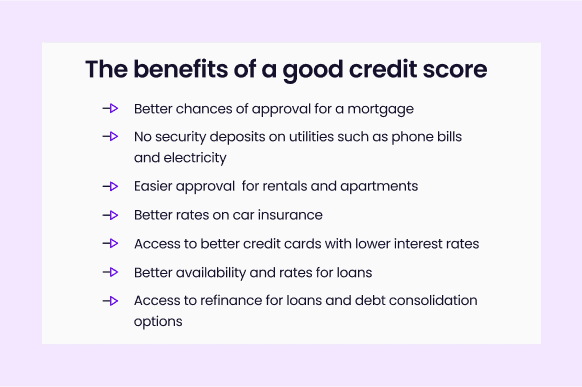
benefits of a good credit score

Mistakes on your credit report can harm your credit score. According to Chinelle Wardle, the Director of Wardle Consultancy Services Pty Ltd, mistakes on your credit report can lower your credit score by more than 100 points, depending on the error.

Why are there mistakes on your credit report?

There are two main reasons why there might be a mistake on your credit report – consumer error or creditor error. Let’s take a look at both of these.

1. Consumer error

When you apply for credit, you will need to fill out your personal details on the application. Sometimes people will make mistakes on the application, and regardless of whether the application is accepted or rejected, this incorrect information is reported to the credit bureaus and placed onto your credit report. 

If you already have a credit report, and you accidentally provide a creditor with incorrect information, or you make a fresh application with a new address (and you haven’t updated your address with your existing credit providers) the credit bureaus might assume you are a different person, and a new credit report will be made for you. 

This can harm your score, because not all of your information is in the same place, and your positive behaviour might not be appearing on one of your credit reports. That’s why it’s important to make sure all of your details are correct when you apply for credit, and that you update your address with your existing credit providers when you move house.

2. Creditor error

Creditors can also make mistakes, which can end up on your credit report. They might input your details incorrectly when they receive your credit application. Or, if you approved for credit, they might record the wrong information. This incorrect data is then passed onto the credit bureaus and can end up on your credit report.

How common are mistakes on your credit report?

In Australia, regulation from the Australian Securities and Investments Commission (ASIC) mandates that when you make a complaint with either a credit bureau or credit provider, they have 30 days to respond to or resolve your complaint.

If a response or resolution is not received within that time, then consumers can raise a complaint with the Australian Financial Complaints Authority (AFCA), who will investigate the complaint at no charge. 

AFCA released statistics on the number of complaints it received from individuals in its 2019-20 annual review. The report clearly highlights just how prevalent complaints are within the credit space.

During the 2019-2020 financial year, AFCA’s report showed that credit providers received 9,857 complaints. Debt collectors or buyers received 2,607 complaints during the period. Credit reporting topped the list for complaints received by issue. Specifically, 6,381 complaints were lodged.
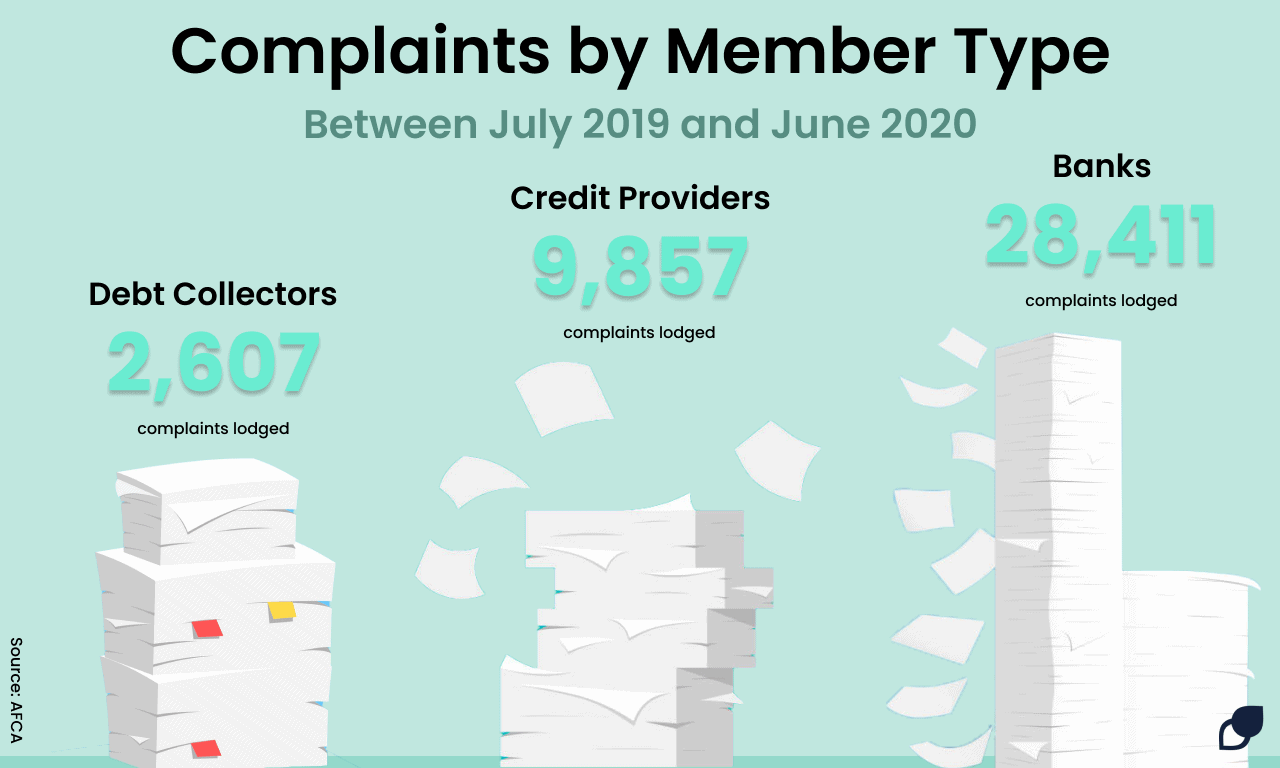
AFCA annual review 2019-20

What are the most common mistakes on your credit report?

According to Wardle, whose company specialises in helping Australian consumers and/or their representatives to improve their credit scores themselves, there are three mistakes that are quite common on your credit report.

1. Personal information

The personal information on your credit report includes the following:

  • Your full name;
  • Current address or your last known address, as well as your previous two addresses;
  • Your current or last known employer;
  • Driver’s licence number.

According to Wardle, it is very common for one of these to be wrong – whether your full name has been listed incorrectly, wrong or outdated address and employer. Sometimes, your driver’s licence number can also be incorrect.

2. Credit enquiries

Every time you apply for credit, regardless of whether your application is accepted or rejected, this is known as a credit enquiry and it will appear on your credit report. Specifically, the type of credit you’re applying for (loan, credit card, etc) will be listed, as well as the amount you applied for.

According to Wardle, it can be quite common for credit enquiries to list the incorrect amount that was applied for. Furthermore, she explains that a lot of Australians don’t realise that when they apply for credit, it will appear on their credit report and harm their score.

3. Repayment history

With the introduction of Comprehensive Credit Reporting (CCR) in 2018, banks now have to report both positive and negative credit behaviour. This includes your repayment history. If you take out a loan and you consistently make your repayments, this will appear on your credit report and boost your credit score.

However, Wardle outlined to Tippla that despite the regulation, repayment history is often left out of an individual’s credit reports. That means they could be missing out on important information which could boost their credit score.

How to fix mistakes on your credit report

If you have identified a mistake on your credit report or missing information – how can you fix the common mistakes on your credit report? According to Wardle, the first step you should take is to reach out to the relevant credit provider to resolve the issue.

Specifically, she advises consumers to raise a complaint with their creditor about the incorrect information. If the complaint isn’t resolved within the required 30 days, Wardle suggests you seek for it to be escalated further both internally within the creditor’s complaints area, and if necessary, escalate it externally with an ombudsman such as AFCA.

What is Credit Repair? How to Fix Your Credit Score

what is credit repair

Mistakes on your credit reports can be quite common. Whether it’s consumer error when filling out credit applications or errors made by the credit providers, mistakes on your credit report can be damaging to your credit score. Tippla has put together this helpful guide on credit repair, so you know how to fix your credit score, should you need to.

What is Credit Repair?

Let’s start first with taking a look at credit repair – what is it, and why would you need to repair your credit report. To put it simply, credit repair is a term that’s used to describe the process of improving an individual’s credit report.

Credit repair involves reviewing your credit report, ensuring that all the personal information is correct and up to date, and investigating any negative entries that might be harming your credit score.

Once the review is complete, a process is undertaken to update or fix any mistakes on the credit report, trying to remove negative listings when applicable.

Why would you need to repair your credit report?

There’s a couple of reasons why. Namely, your credit score indicates your creditworthiness (how reliable of a borrower you are). The higher your score, the more reliable you are deemed to be.

Your credit score is calculated based on the information contained in your credit report. If there are mistakes on your report or negative entries, then this can harm your credit score.

Your credit score and report are some of the factors lenders and credit providers use when determining whether to accept or reject your credit applications. The higher your credit score, the better your chances of getting approved.

Furthermore, your credit score can influence a few things when it comes to credit, such as the interest rate you’re offered, the options available to you and more. Once again, the higher your credit rating, the better chance you have of getting lower interest rates and better terms.

Therefore, credit repair is one way you can make sure your credit score remains healthy, or as high as it can be. 

How common are mistakes on your credit report?

Unfortunately, mistakes are quite common on your credit report. 1 in 5 credit reports have some kind of mistake on them. In Australia, if you want to dispute information on your credit report, you can lodge a complaint with the relevant credit provider, or one of the credit bureaus.

According to regulation from the Australian Securities and Investments Commission (ASIC), when you make a complaint with either a credit bureau or credit provider, they have 30 days to respond to or resolve your complaint.

If the complaint is not resolved within this time, then you can raise a complaint with the Australian Financial Complaints Authority (AFCA). Recent data from AFCA’s 2019-20 annual review highlights just how prevalent complaints are within the credit space.

Between the 1st of July 2019 and the 30th of June 2020 credit providers received 9,857 complaints, according to the annual review, whereas debt collectors or buyers received 2,607 complaints during the period. 

AFCA annual review 2019-20

When it comes to complaints received by issue, credit reporting topped the list, with 6,381 complaints lodged. Credit reporting complaints topped other issues such as service quality, unauthorised transactions and incorrect fees/costs.

When it comes to credit complaints, credit cards were the most complained about product. Specifically, 11,628 complaints were received during the period.

AFCA highlighted in its report: “There was also an increase in the average number of complaints received per month about credit reporting (up 34%), unauthorised transactions (up 14%) and responsible lending (up 14%). An increase in credit reporting complaints was partly driven by a rise in consumer awareness about credit scores and increased refinancing activity towards the end of the year.”

AFCA’s report clearly highlights just how prevalent mistakes on Australian credit reports are.

Most common mistakes on your credit report

Now you know just how common mistakes can be on your credit report, let’s cover the most common mistakes on your credit report. To help us answer this question, Tippla spoke with Chinelle Wardle, the Director of Wardle Consultancy Services Pty Ltd.

According to Wardle, here are some of the most common mistakes on credit reports:

  1. Personal information – incorrect name, wrong or outdated address, and issues with the driver’s licence number are common offenders;
  2. Credit enquiries – incorrect amount or wrong product listed are some of the most frequent issues;
  3. Repayment history – not included on the report at all.

How to repair mistakes on your credit report

Now you know what is credit repair, let’s get stuck into how you can repair your credit report. The first thing you should do when you notice a mistake or want to dispute a negative entry is to reach out to the credit provider to resolve the issue.

Wardle advises consumers to raise a complaint with their creditor about the incorrect information. If the complaint isn’t resolved within the required 30 days, Wardle suggests you seek for it to be escalated further both internally within the creditor’s complaints area, and if necessary, escalate it externally with an ombudsman such as AFCA.
For a more thorough overview of credit repair, you can check out Tippla’s Credit School, where we provide a thorough overview of credit repair. Specifically, we take a deep dive into credit repair, the importance of personal information, how to fix your credit score, and how to prevent mistakes on your credit report.

How Is Interest Charged For Personal Loans?

how is interest charged for personal loans

It can be difficult to understand how interest works when it comes to your personal loan. A lot of people don’t realise how much interest can cost you over the life of your loan. That’s why Tippla is answering the question – how is interest charged for personal loans? Let’s get stuck in.

What is interest?

Before we get into the nitty-gritty details of how interest is charged for personal loans, let’s first cover what is interest. Putting it simply, interest is a fee that you pay in exchange for using someone else’s finances (such as a bank, non-bank lender, credit union, etc). You pay interest on top of repaying the amount you have borrowed (referred to as the principal amount).

You pay interest on top of repaying the amount you have borrowed (referred to as the principal amount). Generally speaking, when it comes to personal loans, the interest rate is noted on an annual basis. This is known as the annual percentage rate (APR). The APR does not use compound interest.

https://youtu.be/ZcyD4rsqaBY

Why do you have to pay interest on personal loans?

Lenders don’t lend to people simply because they want to. Just like anything else, lenders such as banks, non-bank lenders and credit unions are businesses, and businesses need to make money. Charging you interest when they lend you money is one of the ways lenders achieve this.

Furthermore, interest rates are used by lenders to hedge against risk. As the Reserve Bank of Australia (RBA) outlines: “For each loan that it makes, a bank will assess the risk that a borrower does not repay their loan (that is, the credit risk). This will influence the revenue the bank expects to receive from a loan and, as a result, the lending rate it charges the borrower… A bank’s perception of these risks can change over time and influence their appetite for certain types of lending and, therefore, the interest rates they charge on them.”

Personal loans and interest rates

There are a number of personal loan products, and the amount of interest you pay and how it is calculated will vary depending on which product you select. Namely, when you take out a personal loan you can get either a fixed-rate or variable-rate personal loan. In some instances, you can even get a no-interest-rate personal loan. We’ve broken down each product below.

Fixed-rate personal loans

A fixed-rate personal loan is when the interest rate of your loan won’t change for the duration of the loan’s term. With a fixed-rate personal loan means your payments should remain consistent over the life of your loan. Therefore, you can easily budget your repayments. 

Furthermore, should interest rates increase, then you don’t need to worry about having to pay more each month. On the other side, if interest rates fall, then you won’t benefit from not having to pay as much in interest.

Variable-rate personal loans

The opposite to the fixed-rate personal loan, is a variable-rate personal loan. Instead of having the same interest rate for the duration of your loan term, with a variable-rate personal loan, your interest rate can fluctuate depending on the market.

A variable-rate personal loan can offer you more flexibility, as well as allow you to capitalise on lower interest rates when the market takes a dip. However, it can increase your risk of having to pay higher interest rates if interest rates increase.

No-interest personal loans

Another option you have when it comes to interest, are no-interest personal loans. Under the No Interest Loan Scheme (NILS), you can borrow up to $1,500 without needing a credit check. The repayments range from 12 to 18 months.

If you want to get a loan under the NILS, you must:

  • Have an income less than $45,000 per year after tax and have either a Health Care Card or a Pensioner Concession Card;
  • Have lived at your current address for more than three months;
  • Prove that you can repay the loan.

Whilst you can get interest-free loans from NILS, the strict criteria might mean you’re not eligible. However, there are a couple of other schemes and routes you can take. This includes:

  • Centrelink cash advance – if you currently receive Centrelink benefits, you can apply to have one of your payments made in advance. 
  • Pension Loans Scheme – the government scheme allows Australian seniors to supplement their income by borrowing against the equity in their property. Whilst these loans aren’t interest-free, they do have a significantly lower interest rate.
  • Buy Now Pay Later (BNPL) – if you need to make a purchase, but you can’t afford to make the payment in one go, then BNPL platforms could be an option for you. With BNPL, you can split your payments into smaller instalments. You don’t have to pay interest on the purchase, but you can be charged fees including late fees, overdraft fees from your bank, and interest if your account is connected to a credit card.

If you are in need of financial assistance and you’re not sure of your options, you can reach out to a free financial counsellor with the National Debt Hotline to discuss your options.

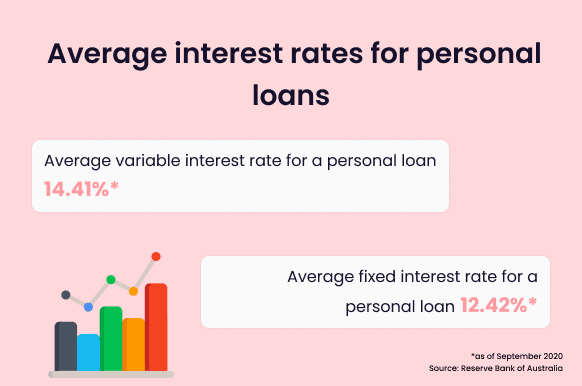
Average personal loan interest rates

How is interest charged for personal loans?

In Australia, the interest calculated for personal loans, car loans and home loans, is usually based on the unpaid daily balance of your loan and is charged to the loan on a monthly basis.

As outlined by Australia and New Zealand Banking Group Limited (ANZ): “The interest rate applied each day is equal to your annual interest rate at the time, divided by 365. Please note: Interest charged to your loan may differ each month, as it is dependent on the number of days in the month, the applicable annual interest rate and the unpaid balance of your loan.”

Here’s an example of what that might look like. Say you have a personal loan of $10,000 and a 2.5% interest rate p.a. You can calculate your interest by first finding the daily interest rate:

$10,000 x 0.025/365 = $0.68 daily interest.

Now, to work out how much in interest you’ll pay for the month (let’s choose October), you need to multiply the daily interest by the amount of the days in the month:

$0.68 x 31 = $21.23 monthly interest for October

Your repayments will then be calculated based on the following factors – the amount of your loan, the loan term, the annual interest rate and any applicable fees.

The impact of interest

Whilst interest is a necessary evil when it comes to taking on finance, interest can really cost you a lot in the long run. So how can you reduce the interest rate on your personal loan? We’ve outlined a couple of things you could do below

Pay off your personal loan quickly

Because your interest is calculated on a yearly basis and charged monthly, the quicker you can repay your loan, the less interest you should have to pay. You can pay off your loan faster by:

  • Rounding up your repayments – say your monthly repayment is $235 a month, you could instead try and put $250 towards your loan each month, which will see the loan paid off faster.
  • Paying fortnightly instead of monthly – there are 12 months in a year or 26 fortnights. If you pay $200 a month, then you’ll pay $2,400 for the year. But if you pay $100 a fortnight, you’ll end up paying $2,600 a year. This could help you pay off your loan faster.
  • Make additional repayments – if you can afford it, instead of making your repayments once a month, you could try and make extra repayments to pay off your loan faster.

Before you make any changes to your repayment schedule, you should check the terms and conditions of your loan to ensure you won’t be charged any fees for paying off your loan faster.

Do your research

One of the best ways to save yourself money when it comes to interest is to do your research before you take on a personal loan. If you compare your options on the market and find a loan with a low interest rate and other agreeable terms, you could save yourself a lot in the long run.

A simple google search can show the many personal loan options that are available for you. There are a number of comparison websites that can allow you to see your options in one place. However, it is important to keep in mind that they won’t show all the options available.

Opt for shorter-term loans if possible

Long-term loans might seem appealing with their smaller monthly repayments and lower interest rates, but long-term loans aren’t always the best option. 

As an example, say you borrow $1,000. If you take out a short-term loan with a 3-month repayment period and a 14% interest rate p.a. Throughout the loan, you’ve paid $35.7 in interest (assuming every month is 31 days).

On the other side, imagine you take out a longer-term loan of the same amount, with a 2% interest rate over 2 years. That 2% interest rate is dramatically smaller than 14%. However, over the 2 years, you’ll end up paying $40 worth of interest, which is more than the higher-interest short-term loan.

Introducing Tippla’s Latest Feature: Spending Habits

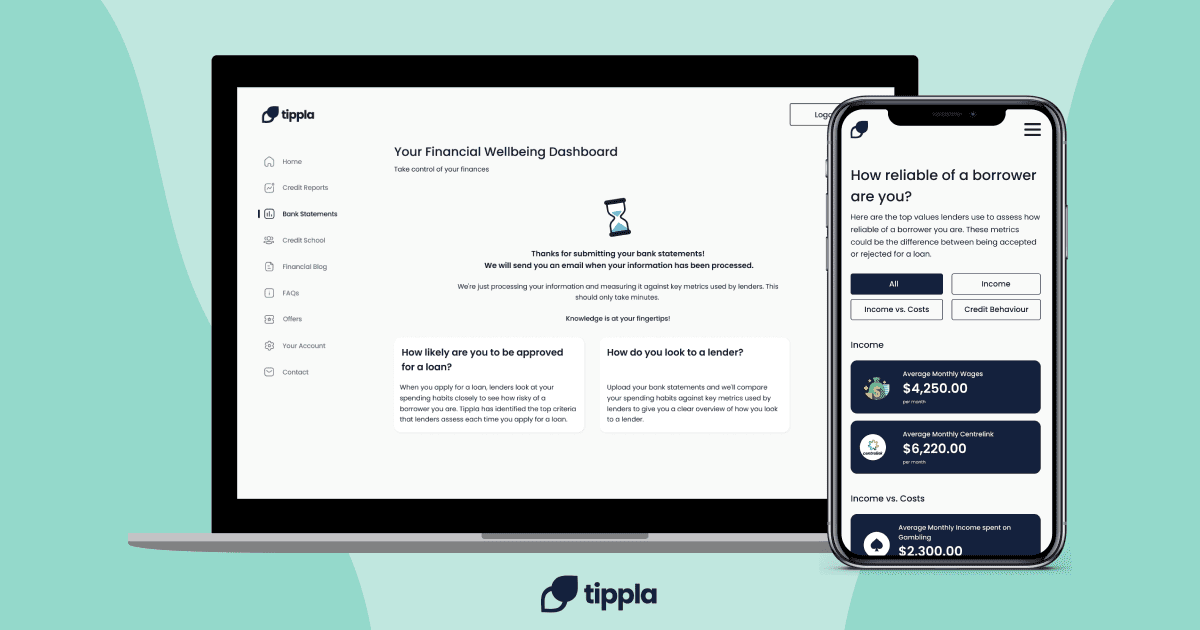
image of Tippla's new feature spending habits on mac laptop

Tippla is expanding. We recently launched a new feature – Spending Habits, to bring our valued customers direct insight into what credit providers look for when they’re analysing your bank statements.

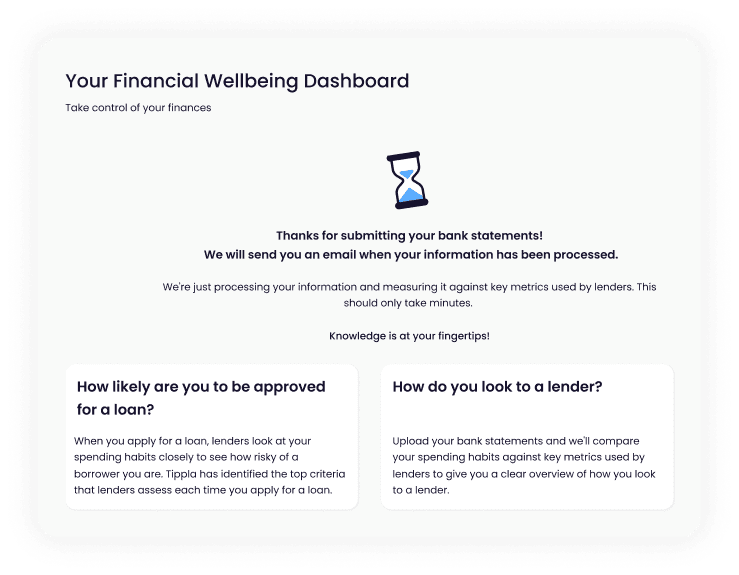
Whenever you apply for credit, credit providers will typically check your recent bank statements. They do this to get insight into your spending habits and determine how risky of a borrower you are. This contributes to their decision to either accept or reject your application.

With Tippla’s latest feature, you can learn what credit providers look out for and why. All you have to do is upload a read-only copy of your bank statements for the past 90 days and Tippla will analyse your financial data to provide you with unique insights into your spending habits.

screenshot of Tippla's spending habits feature

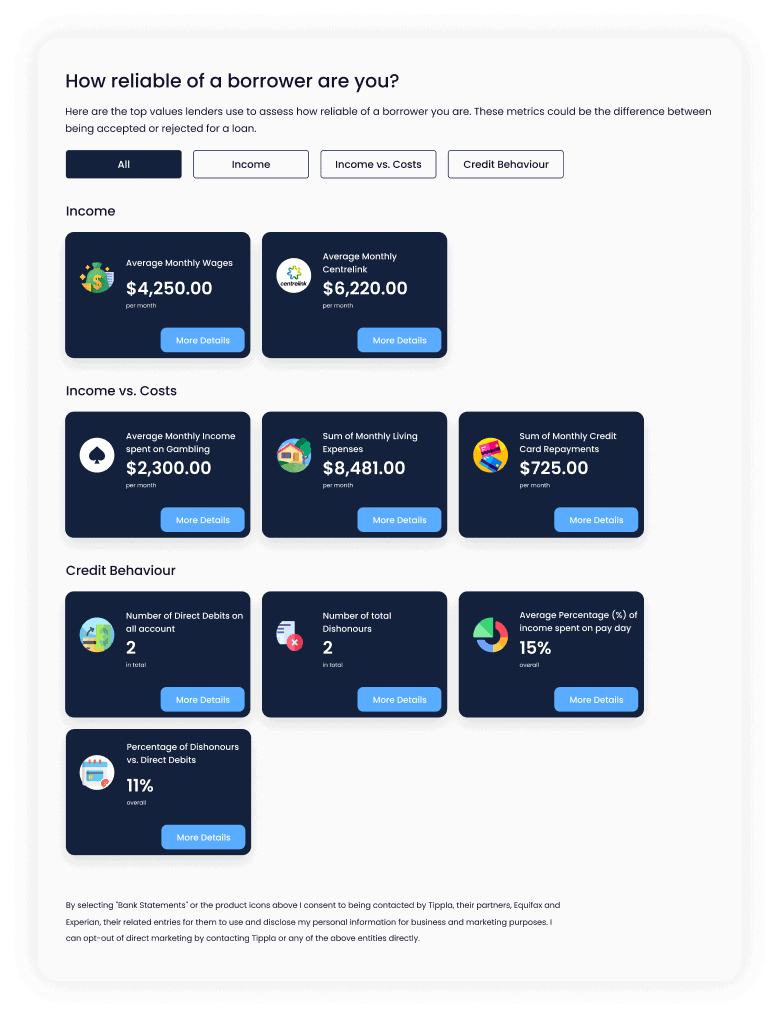
You will be able to learn what habits credit providers look out for – such as gambling as a percentage of your income, Centrelink benefits, income vs outgoings and more. Then, you can see how your current spending habits measure up.

screenshot of Tippla's spending habits feature

Where is the new feature?

The new Spending Habits feature can be found on your Tippla dashboard. Simply log into your Tippla account and head to the menu on the left-hand side of your screen.

If you’re not part of the Tippla family yet, you can sign up for Tippla to get your unique insights.

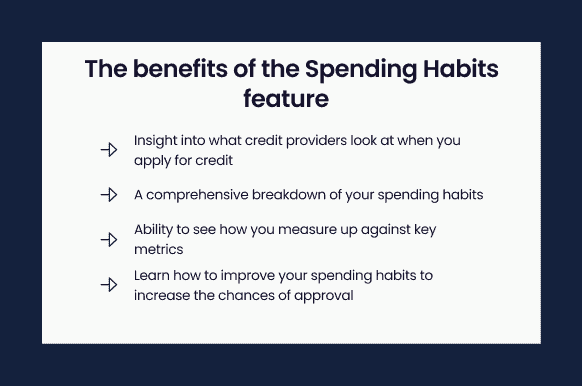
benefits of Tippla's spending habits feature

How much does Tippla’s new feature cost?

Nothing at all. Tippla’s new feature is completely free to use, and there’s no limit to how many times you can use it!

So what are you waiting for? Head to Tippla’s Spending Habits feature now to see how you measure up.

What is a Loan Repayments Calculator?

what is a loan repayments calculator

When you take on a loan, whether it be a bank, non-bank lender, credit union or other financial institution, you will be expected to repay the amount you borrow. Typically, these repayments occur on a monthly basis. Many people opt for loan repayments calculators to get an idea of how much their repayments might be. But what is a loan repayments calculator? That’s what we’re going to cover today.

What are loan repayments?

A loan is a type of credit, which means when you take out a loan, whether it be a personal loan, home loan, business loan, etc., you are expected to repay the amount you have borrowed, typically with interest and fees on top.

When it comes to loans, you’re not expected to pay back the amount all at once, but in smaller and manageable instalments. These are known as repayments. Your repayments might be weekly, fortnightly, monthly or quarterly – depending on the type of credit. For loans with terms longer than 30 days, the repayments are often on a monthly basis by default.

Calculating monthly repayments

There are a few things that can affect how much your repayments will be. These include:

  • Principal loan amount (the amount you are borrowing excluding interest);
  • The interest rate;
  • Fees;
  • Loan term;
  • Repayment schedule.

https://youtu.be/EC0jvbcvGHk

All of these ingredients are used to determine your repayments. Whilst the exact formula banks and lenders use to calculate your repayments isn’t publicly available, and each calculation will be unique to your personal situation and loan conditions, repayment calculators can help you get a general idea of what your repayments might look like.

What is a loan repayments calculator?

As the name suggests, a loan repayments calculator allows you to calculate the repayments of your loan. There are many loan calculators out there – banks such as NAB, ANZ, Westpac and more each provide their own loan repayment calculators (personal loans, mortgage and more), and even government organisations such as MoneySmart also have loan repayment calculators.

The purpose of a loan repayments calculator is to give you a general idea of what your repayments could look like if you decide to take on a loan. You will need to input the loan amount, the interest rate, loan term, your repayment frequency and a few other details.

Using the information you have provided, the calculator will provide you with an estimated amount that you will have to repay each week, fortnight or month (depending on the repayment frequency you selected).

Are loan repayments calculators reliable?

Loan repayments calculators are a great tool to give you an idea of what your repayments might look like. But, it is important to highlight that loan repayments calculators are not 100% accurate. 

They do make a lot of assumptions, as they can’t know your specific loan conditions. Therefore, loan repayment calculators provide you with a general idea of what you can expect to pay – but they can’t provide you with your precise repayment schedule.

Different types of loan repayments calculators

You can find different types of loan repayment calculators depending on your needs. MoneySmart, a government financial educational platform, has a repayment calculator for personal loans, mortgages, compound interest and even superannuation.

Many banks also have their own calculators, with mortgages and personal loans being the two of the most common repayments calculators. Here’s a list of some of the repayments calculators you can find:

  • Mortgage repayments calculator;
  • Personal loan repayments calculator;
  • Generic loan repayments calculator (can cover business loans, personal loans, student loans, etc);
  • Extra repayments calculator;
  • Superannuation calculator;
  • Borrowing power calculator.

Who offers loan repayments calculators?

Now we’ve answered the question “what is a loan repayments calculator”, let’s break down who offers loan repayments calculators. We’ve already touched on a few, but here’s a closer look:

  • Banks – not just the big four banks in Australia offer loan repayments calculators. Many banks offer a range of different calculators;
  • Government organisations – numerous government organisations such as MoneySmart and the Australian Taxation Office (ATO) provide repayments calculators for a range of products;
  • Comparison sites – a number of comparison websites also offer their own loan repayments calculators;
  • Non-bank lenders – non-bank lenders who also offer Australians loans can have their own repayments calculators to allow you to get an idea of how much your repayments might be.

How can I find out my exact repayments?

Loan repayments calculators can give you a good general idea of what your repayments might look like, but as mentioned above, they can only get you so far. So is there a way you can find out what your exact repayments are?

Unfortunately, the answer is no. There are certain details lenders can’t guarantee in advance, such as the interest rate they are willing to offer you. This is because the interest rate is typically heavily dependent on your personal circumstances and how risky of a borrower you are. Therefore, lenders generally don’t determine the interest rate they will offer you until after you have applied for the loan.

https://youtu.be/ZcyD4rsqaBY

Because of this, you won’t know what your exact repayments are until you have been approved for the loan. That’s why loan repayments calculators are a great tool to give you a general idea of what you might be looking to repay. But you won’t know for certain until after you have applied for the loan.