Understanding Compound Interest in Savings

Ever wondered how your savings account can grow over time, even without you adding extra cash? That’s the magic of compound interest, often referred to as “interest on your interest”.

It’s a way of earning interest on both your initial deposit (the principal) and the interest you’ve already accumulated. This can significantly grow your savings over time, especially if you start early and make regular contributions. Unlike simple interest, which is only calculated on the original amount deposited, compound interest works like a snowball – it keeps growing bigger and bigger.

Understanding compound interest can be a real advantage, especially when it comes to saving for a house deposit or a comfortable retirement.

The Power of Compound Interest in Savings

Compound interest is like a magic trick for your savings account, but instead of rabbits, it pulls out extra cash. It’s all about earning interest on your interest, not just the original amount you deposited.

Imagine you save $1,000 at a bank offering 1% interest compounded monthly. With simple interest, you’d only earn $10 after a year. But with compound interest, you earn interest on the $10 too, so your savings plan grow a little faster each time.

Compound Interest: Key Factors

Compound interest can significantly boost your savings, but a few key factors influence how much it grows:

  • Interest Rate: The higher the interest rate you earn on your savings, the greater the compounding effect. Even a small difference in interest rate can make a big difference over time.
  • Frequency of Compounding: How often interest is added to your savings and starts earning more interest. Daily or monthly compounding generally leads to greater growth compared to annually compounded interest.
  • Time: The magic of compound interest truly unfolds over time. The longer your money stays invested and keeps compounding, the greater your final balance becomes.

Compound Interest in Australian Savings Accounts

Features of Savings Accounts

  • Most savings accounts in Australia have compound interest. This means you earn interest on your initial deposit and any interest you’ve already accumulated.
  • Compounding frequency varies depending on the account. Some accounts compound interest daily, while others do it monthly or annually. More frequent compounding generally leads to a greater rate of return.

Interest Rates

  • Typical interest rates for Australian savings accounts range from around 0.10% to 5.75% p.a. To find the best rates, you can compare offerings from different banks using resources like Canstar or Choice.

Remember that not all savings accounts are created equal. While some prioritise high-interest rates, others may offer features like ease of access or fee-free withdrawals. Consider your needs when choosing an account. For maximised compound interest growth, look for a savings account with a competitive interest rate and frequent compounding.

Maximising Compound Interest on Your Savings

Compound interest is a powerful tool for growing your wealth in Australia, but how can you get the most out of it? Here are some tips:

  • Start early: The magic of compound interest works best over time. Even a small amount saved early can grow significantly over the long term.
  • Make regular term deposits: The more frequently you contribute to your savings, the more your interest can compound. Consider setting up an automatic transfer from your everyday account to your savings.
  • Choose the right account: Look for a savings account with a competitive interest rate and frequent compounding. Remember to compare features and fees alongside interest rates to find the best fit for your needs.

By following these tips, you can harness the power of compound interest and watch your savings grow over time.

Compound Interest Calculators and Tools

Online compound interest calculators can be a valuable resource for Australians looking to plan their savings strategy. These tools allow you to:

  • See the impact of time: Visualise how your savings can grow over different timeframes.
  • Experiment with interest rates: Compare how different interest rates can affect your final balance.
  • Factor in regular savings: Some calculators allow you to include regular deposits to see how they contribute to growth.

Here are some Australian resources that offer compound interest calculators:

Remember, these calculators are estimates and may not account for all factors affecting your savings.

Tax Implications of Earning Interest in Australia

All interest earned on savings accounts and other investments in Australia is considered taxable income.

Here are some key points to remember:

  • There are no tax-free savings accounts in Australia.
  • The tax rate you pay on your interest earnings depends on your total taxable income.

It’s important to consider the tax implications when developing your savings strategy. For more information on investment income and tax, refer to the Australian Taxation Office or a registered tax professional.

Common Misconceptions About Compound Interest

Compound interest is a powerful tool for growing your wealth, but there are some common myths floating around. Let’s address a few:

  • Myth 1: Savings accounts grow quickly: Interest rates on savings accounts are currently low. While compound interest can still help, significant growth takes time.
  • Myth 2: Your money is locked away: This is generally not true. You can usually access your savings account funds, although certain accounts may have limitations on withdrawals.
  • Myth 3: All savings accounts offer the same rates: Interest rates can vary significantly between banks and even between different savings accounts at the same bank. It pays to shop around to find the best rate for your needs.

Understanding compound interest and avoiding these misconceptions can help you develop a smarter savings strategy.

Compound interest is a powerful tool that can significantly grow your savings over time, especially if you start young and contribute regularly. By letting your interest earn interest, you can watch your savings snowball. Australian government resources and calculators are available to help you understand how compound interest can work for you. Consider reviewing your savings strategy to see if you can harness the power of compound interest to achieve your financial goals.


How to Build a Good Banking Relationship

Having a strong relationship with your bank can be a valuable asset. It can offer you access to better financial products and services, personalised advice, and potentially even help you secure a loan in the future.

This article will guide you through the steps of building a strong banking relationship in Australia, helping you get the most out of your financial institution.

Understanding the Australian Banking Landscape

Australia’s banking sector is primarily dominated by four major banks: Commonwealth Bank, Westpac, Australia & New Zealand Banking Group, and National Australia Bank. Apart from these major banks, there are around 97 banks in Australia, including foreign-owned subsidiary banks and regional banks. Additionally, there are approximately 36 credit unions and societies contributing to the banking landscape. Subsidiary and regional banks offer competitive rates and a focus on customer service but may have fewer branches compared to major banks.

The ASIC (Australian Securities and Investments Commission) regulates banks and financial institutions, ensuring compliance and consumer protection. The regulatory environment in Australia, overseen by ASIC, impacts banking relationships by setting standards for financial conduct, ensuring fair practices, and maintaining stability in the banking sector.

Starting on the Right Foot: Choosing the Right Bank for You

Choosing the right bank in Australia is an important first step towards managing your money effectively. Here are some factors to consider:

  • Needs and Priorities: Consider your everyday banking needs like transaction accounts, savings options, internet banking, and access to ATMs to meet your specific requirements.
  • Fees: Compare account fees, including monthly charges, transaction fees, and fees for using ATMs that aren’t part of your bank’s network.
  • Customer Service: Look for a bank with a good reputation for customer service to ensure timely assistance and support.
  • Values Alignment (Optional): Consider if the bank’s values align with yours. For example, Bank Australia prioritises social and environmental responsibility.

Opening Your Account

  • Research: Once you’ve chosen a bank, research the specific requirements and documents needed to open your chosen account type
  • Required Documents: Generally, you’ll need identification (passport or driver’s license), proof of residency (utility bill), and your tax file number.
  • Initial Deposit: The initial deposit amount can vary depending on the bank and account type. Check the bank’s website or ask a customer service representative.

Maintaining a Positive Relationship

Building trust and maintaining a good relationship with your bank in Australia can be beneficial in the long run. Here’s how:

  • Regular Communication: Keep your bank informed about major financial decisions or changes in your circumstances, such as starting a new job or expecting a significant income increase. This shows transparency and builds trust.
  • Meeting Obligations: Timely repayments on loans and credit cards are crucial. A good payment history demonstrates reliability and strengthens your credit score.
  • Utilising Bank Services: Going beyond basic transactions by using other services offered by your bank can be advantageous. This could include savings accounts, financial planning tools or insurance products. Remember to check if these align with your needs first, but utilising them can show your commitment to the bank.

By following these tips, you can cultivate a positive and long-lasting relationship with your bank, which may benefit you in the future when applying for loans or other banking products. It’s also worth noting that under the Banking Code of Australia, banks have a responsibility to treat customers fairly.

Leveraging Your Banking Relationship

A strong relationship with your bank can be beneficial in several ways. Here’s how:

  • Negotiating Better Terms: Being a loyal customer can give you leverage to negotiate for a better interest rate on your home loan, lower fees on accounts, or improved service terms. Remember to do your research on competitor rates first. Highlight your good credit history and on-time repayments to strengthen your case.
  • Accessing Additional Services: A good banking relationship can open doors to a wider range of financial products and services tailored to your needs. This could include investment options, financial planning advice or preferential rates on other loans.

Remember, building trust and maintaining a positive rapport with your bank can be advantageous in the long run.

Handling Disputes and Challenges

A bank’s complaint resolution process shows how much they value their customers. When a bank offers a straightforward and fair system for addressing issues, it shows a commitment to customer satisfaction and fosters trust. So if you have complaints with your bank, here are steps you can take to address it:

Effective Communication

  • Clearly outline your complaint to your bank in writing or by phone. You can find contact details on your bank’s website:
  • Be clear and concise about the issue and the desired outcome.
  • Keep a record of all communication with your bank, including dates, names and reference numbers.

Seeking Assistance

If you’re unhappy with your bank’s response to your complaint, you can complain to the Australian Financial Complaints Authority (AFCA). AFCA is an independent service that investigates and resolves disputes between consumers and financial institutions.

Remember, it’s important to act promptly when addressing any banking issues.

The Role of Digital Banking

Digital banking is becoming increasingly popular in Australia, with many customers shifting to online platforms for their convenience. Digital platforms analyse your banking habits to offer targeted financial advice and promotions, which can make you feel like your bank understands your needs and wants to help you reach your goals.

Here’s a breakdown of its advantages and security aspects:

Embracing Technology

  • Convenience and Efficiency: Manage your finances 24/7 from anywhere with an internet connection. You can make payments, transfer funds, and check account balances all through your phone or computer.
  • Improved Functionality: Many banks offer budgeting tools, financial products and services readily accessible through online banking platforms.

Security Considerations

  • Banks take security seriously: Australian banks are constantly working on improving online security measures to protect their customers from fraud.

Your Role in Staying Safe

  • Be cautious of emails, texts or calls requesting your personal information or online banking credentials. Banks will never ask for this information via these channels.
  • Use strong passwords and update them regularly.
  • Be aware of the latest online scams and phishing attempts. The Australian Banking Association (ABA) is a great resource to stay informed.

By following these tips, you can embrace the convenience and efficiency of digital banking while keeping your finances secure.

Building Long-Term Relationships

Maintaining a positive relationship with your bank can be advantageous, but it’s also important to ensure your needs are being met.

Review and Adapt

  • Regular reviews: Schedule periodic reviews (biannually or annually) to discuss your financial health and goals and needs with your bank. This allows you to explore new products or services that better suit your evolving circumstances.
  • Competitiveness: Research and compare the interest rates and fees offered by other banks in the market. Knowing your options empowers you to negotiate better deals with your current bank.

Loyalty Benefits

A long-standing relationship can offer perks like better rates and personalised service. However, be aware of loyalty programs that may not necessarily align with your financial goals.

By proactively managing your banking relationship, you can secure the best possible service and value for your financial needs.

Special Considerations for Business Customers

There are advantages to having a dedicated business bank account beyond just separating personal and business finances. Here’s what business banks can offer:

Business Banking Services

  • Tailored products and features: Business banks provide financial products and services designed to meet the specific needs of businesses, such as business loans, credit cards, transaction accounts with higher transaction limits and cash management solutions.
  • Support and expertise: Many business banks have dedicated business banking teams who can provide financial advice and support specific to running a business.

Building a Network

  • Relationship building: Building a strong relationship with your business banker can lead to valuable connections within the business community. Banks often host networking events or have partnerships with business organisations that can open doors to new opportunities.

Building a strong relationship with your bank in Australia can offer significant benefits. By following the tips above, you can establish a positive rapport that fosters trust and opens doors to better financial products, services, and potentially even loan approvals in the future. Remember, maintaining an open dialogue, fulfilling your financial obligations, and leveraging the services your bank offers can contribute to a mutually beneficial relationship. Don’t hesitate to research and compare options, but a strong relationship with your bank can be a valuable asset in your financial journey.

Medical Loans: Options for Emergency Medical Expenses

Unexpected medical emergencies can significantly impact individuals and families financially, causing stress and hardship. Statistics from the Australian Institute of Health and Welfare show that from 2020 to 2021, Australians spent over $220.9 billion on healthcare, highlighting the potential burden of medical costs.

Being prepared for unforeseen medical expenses is crucial. This article explores various loan options available to Australians facing such situations.

Understanding Emergency Medical Expenses in Australia

Emergency medical expenses are unforeseen medical costs associated with urgent or critical medical conditions requiring immediate attention. These situations typically involve a visit to the emergency department, ambulance services, or urgent specialist consultations.

Australia’s healthcare system is a mix of public and private services. While Medicare, a government-funded program, covers a significant portion of healthcare costs for Australian residents, there can be gaps in coverage. These gaps can lead to out-of-pocket expenses for patients, even in emergencies. Examples include:

  • Specialist fees: While Medicare covers some specialist consultations, some specialists charge additional fees beyond the Medicare benefit.
  • Ambulance services: While ambulance services are generally free in emergencies, some non-emergency ambulance transports may incur a fee.
  • Medications: Not all medications are covered by Medicare, and some may have co-payments, meaning patients pay a portion of the cost.

Loan Options for Covering Emergency Medical Expenses

Emergency medical expenses can arise unexpectedly, placing financial strain on individuals and families. Fortunately, several loan options can help manage these costs in Australia, each with its advantages and considerations:

Personal Loans

Offered by banks and lenders, personal loans are a common option for various purposes, including medical bills. They can be secured loans, which are backed by collateral, or unsecured loans, which are not backed by collateral and are often based on creditworthiness. Personal loans can be suitable for various medical expenses, but interest rates can be higher compared to other options.

Medical Loans

Offered by some lenders specifically for medical purposes, medical loans may have lower interest rates than standard personal loans. They might also have flexible repayment options tailored to medical expenses. However, medical loans may not be as widely available as personal loans, and eligibility criteria can vary depending on the lender.

Credit Cards

Using credit cards for medical expenses can be an option, especially if you have a card with a low introductory interest rate. However, making repayments on time is crucial to avoid high-interest charges. Only use credit cards for medical expenses if you can pay the balance in full before the introductory period ends. Rolling over a balance can lead to significant debt due to compounding interest.

Home Equity Loans

Home equity loans allow homeowners to borrow money against the value of their property. They typically offer lower interest rates than personal loans. These loans come with significant risks, as you risk losing your home if you cannot meet repayments. This option should only be considered as a last resort after exploring other avenues.

Payment Plans with Medical Providers

Many healthcare providers and hospitals are willing to discuss payment plans for outstanding medical bills. This can be a flexible and affordable option to manage repayments over time. It’s always recommended to discuss payment plan options directly with your healthcare provider or hospital to find a solution that suits your financial situation.

Remember: Before taking on any loan, carefully consider your financial situation, compare options, and ensure you can comfortably manage repayments. It’s also advisable to seek professional financial advice to discuss the best course of action for your specific circumstances.

Factors to Consider When Choosing a Loan for Medical Expenses

Choosing a loan for medical expenses requires careful consideration of several factors to ensure you secure the most suitable option for your circumstances. Here are some key points to keep in mind:

Interest Rates and Fees

Comparing interest rates and associated fees offered by different lenders is crucial as a lower interest rate can significantly reduce the total cost of the loan. Look beyond just the advertised interest rate and consider the comparison rate, which includes fees and charges, to get a clearer picture of the true cost of the loan.

Repayment Terms and Flexibility

Consider the loan term (repayment period) and ensure it aligns with your financial situation. Longer terms may lead to lower monthly repayments but accrue more interest overall, while shorter terms might require higher repayments but are paid off sooner. Choose a loan that allows for early repayments without penalties, as this can help you save on interest if you have the funds to pay it off sooner.

Speed of Funding and Access to Funds

If your medical expenses require immediate attention, consider the speed at which different lenders can process and disburse the loan funds.

Impact on Credit Score and Long-Term Financial Health

Taking on a loan adds to your overall debt and can impact your credit score. Ensure you can comfortably manage the loan repayments within your budget to avoid potential financial strain and long-term credit score issues.

How to Apply for Loans for Medical Expenses

When facing unexpected expenses in Australia, obtaining a loan can be a viable solution. Here’s a step-by-step guide to help you navigate the application process for different types of medical loans:

  • Research and Identify Lenders: Explore reputable lenders in Australia offering medical loans. Consider banks, online lenders, and specialised medical loan providers.
  • Determine Loan Types: Understand the various types of loans available for medical expenses, such as personal loans, payday loans (short-term loans), medical loans, or loans specifically designed for healthcare needs.
  • Check Eligibility Criteria: Review the eligibility criteria of potential lenders. Criteria may include creditworthiness, income verification, and specific requirements for medical loans.
  • Gather Necessary Documentation: Collect essential documents, including proof of identity, income statements, medical bills, and any other documents specified by the chosen lender.
  • Complete the Loan Application: Fill out the loan application form accurately and provide detailed information about your medical expenses and other details such as proof of income. Online applications are common, offering convenience.
  • Submit Application and Await Approval: Submit the completed application to the chosen lender. The approval process varies, and lenders may request additional information during this stage.
  • Review Loan Terms: Once approved, carefully review the terms of the loan, including interest rates, repayment periods, and any associated fees.
  • Accept the Loan Offer: If satisfied with the terms, accept the loan offer. Some lenders may provide electronic acceptance options for swift processing.
  • Receive Funds and Use Responsibly: Upon acceptance, the funds will be disbursed. Ensure you use the funds responsibly for the intended medical expenses.
  • Repayment: Adhere to the agreed-upon repayment schedule. Timely payments are crucial to maintain a positive credit history.Loan Options for Emergency Medical Expenses

For a successful application, ensure that all the documentation is accurate and complete. Check and improve your credit score before applying, and make sure to compare offers from different lenders for the best terms.

Helpful Tip💡 Did you know that Tippla can also help you find pre-approved credit offers? Simply sign-up to Tippla and get access to your own dashboard today. Best part is this is completely free and will not lower your credit score.

Government Assistance and Charitable Organisations

The Australian government and various charitable organisations offer financial assistance programs to help with medical expenses. Here’s an overview:

Government Assistance

  • Services Australia: They offer various payments, including the Crisis Payment to people experiencing financial hardship due to unforeseen circumstances, which might include medical emergencies.

Financial Hardship Support

  • Financial hardship programs: Many healthcare providers and hospitals offer financial hardship programs to help eligible patients manage medical bills like the Better Health Channel.
  • No-interest loans: Some government websites such as Moneysmart provide information on no-interest loans, which may be suitable for medical expenses.

Charitable Organisations

  • Numerous charitable organisations like Way Forward offer financial assistance for medical costs, often focused on specific illnesses or circumstances.

Remember: Eligibility criteria and application processes vary depending on the program or organisation. It’s important to research and contact them directly for more information.

Alternatives to Loans

While medical loans can be an option, exploring other avenues to cover medical expenses is crucial. Here are some alternatives to consider:

  • Private health insurance claims: If you have private health insurance, check what your policy covers for your specific medical needs.
  • Superannuation early release for medical expenses: Under certain circumstances, you may be able to access a portion of your superannuation for medical expenses This is a complex process with strict eligibility criteria, so seeking professional financial advice is recommended.
  • Crowd-funding platforms: Online platforms allow individuals to raise funds from the community for various needs, including medical expenses. Carefully research and choose reputable platforms before considering this option.

It’s important to thoroughly research and compare all options before making any financial decisions. Consider seeking professional financial advice to ensure the chosen approach aligns with your financial situation and goals.

Managing Repayment and Financial Recovery

Managing repayments and recovering financially after medical expenses requires a strategic approach. Here are some steps to consider:

Create a Budget

  • Track your income and expenses to understand your financial situation.
  • Prioritise essential expenses like housing, food, and utilities.
  • Allocate funds for loan repayments and consider allocating some for savings, even if it’s a small amount.

Explore Repayment Options

  • Contact your lender: Discuss options like extending the loan term or reducing your monthly repayments.
  • Debt consolidation: Consider consolidating your debts, including medical loans, into one loan with a potentially lower interest rate. Remember, this doesn’t eliminate debt but can simplify repayments.

Seek professional guidance

  • A financial advisor can help you create a personalised plan to manage your debt and rebuild your finances.

Remember that managing debt takes time and commitment. Be patient and consistent with your efforts. Also, prioritise your well-being throughout this process. Seek support from friends, family, or mental health professionals if needed.

Conclusion

Facing unexpected medical expenses can be stressful, and exploring various options is crucial. Consider government assistance programs, private health insurance coverage, and alternatives like payment plans with healthcare providers before considering loans. If a loan is necessary, research thoroughly, compare offers, and seek professional financial advice to ensure it aligns with your financial situation and goals.

7 Insurances To Consider To Protect Your Finances

Life is full of ups and downs, and while some bear nice and memorable experiences, others can upend your current living situation and negatively affect your future.

Naturally, it should be your goal to minimise the impact of these down moments every chance you get. While we can’t prevent every single bad thing life throws our way, we can take preemptive action in case they do arise. 

One way to financially protect yourself is by securing an insurance policy.

An insurance policy serves as a safety net to help keep your finances secure in case of emergencies. There are different categories of insurance policies you can obtain, and each has its own specific coverage and claim methods. 

No single insurance policy can cover the entire breadth of financial emergencies—this is why it’s highly recommended that you get multiple coverage options to be adequately protected.

This begs the question: What insurance policies should you get to protect your finances?

This article will list just that! Here are seven types of insurance you can consider to safeguard your money.

Income Protection Insurance

If you’re unable to work due to a sudden sickness or injury, you can claim a payout under the income protection insurance scheme. 

This insurance provides monthly payments in compensation for lost wages until you’re physically and mentally capable of returning to paid work or if you retire.

It’s vital to note that this insurance doesn’t substitute for the entirety of your salary before your illness or injury. It’s typical for you to receive about two-thirds of your earnings before tax. 

Typically, the coverage pays the most during the first six months of claiming, and it trickles down to a slightly lower payment value for a specified time after six months. 

Furthermore, the income you get from this policy is tax-free, so you don’t have to worry about dealing with tax reports when you claim.

This insurance is ideal for employees who don’t have income protection insurance covered under their employment contract or their super fund. It’s also ideal for entrepreneurs and self-employed individuals who don’t have access to income protection due to the nature of their work. 

People with dependents or with big debt obligations like mortgages can also greatly benefit from this insurance plan. Regardless of your profile, having this insurance policy is great to have to protect you in case you find yourself in accidents or are susceptible to illnesses.

Health Insurance

While Australia is renowned for its excellent healthcare policies, some hospital visits will require payments, especially if you’re expected to get surgery or stay for an extended period of time.

Having a robust health insurance policy helps you avoid facing a pile of bills in case you find yourself in a medical emergency. This insurance plan covers a wide range of hospital-related expenses, such as hospitalisation, emergency treatment, prescription medications, dental and vision checkups, and general appointments. 

This insurance doesn’t only help you reduce expenses on the spot, but it also allows you to receive timely medical attention, reducing the need for you to tighten your expenditures to save up for unexpected hospital visits.

The peace of mind you can get from owning a robust health insurance policy is priceless. This is especially true if you have dependents, as you won’t bring them along a massive debt cycle in case you fail to get adequate health insurance.

TPD Insurance

Another way to protect your finances is by owning a total and permanent disability (TPD) insurance plan. This insurance provides coverage for you and your family if you become totally or permanently disabled.

Totally and permanently aren’t just superlative adverbs; these terms refer to attributes that describe a complete, irreversible and permanent incapacity to work in any job function. When this happens, naturally, a person won’t find employment which can lead to a loss of income.

Unlike the income protection insurance plan, this plan pays out in a lump sum structure. This gives you immediate access to funds, allowing you to alleviate the stress of financial strain as soon as you gain access to the payout.

This can cover an entire breadth of disability and medical-related expenses, such as rehabilitation costs and medical expenses. It can also cover living expenses like mortgage payments and food costs.

TPD insurance is typically covered by your super fund. If you plan to claim a partial amount of it, you’ll need to pay a superannuation withdrawal tax fee for the lump-sum payment. 

This TPD tax calculator from Curo Financial Services can help you accurately pinpoint how much you have to pay in taxes from your claim.

Comprehensive Car Insurance

Do you own and drive a vehicle in Australia? If so, you’re legally required to own car insurance for it, specifically, compulsory third-party (CTP) insurance. 

This insurance protects your finances by covering personal liability caused by you to third-party individuals in a vehicular incident. This includes other drivers, their passengers, or random passers-by. In particular, it covers their medical expenses and hospitalisation bills.

That said, this car insurance doesn’t cover your injuries, your passenger’s injuries, and property damage that occurred during the incident. This is where comprehensive car insurance steps in.

This optional car insurance covers a wide range of unforeseen events that may cause damage to you and your vehicle. It can cover the repair and replacement fees, for instance, allowing you to financially stay afloat even if your car has sustained massive damage during a crash.

It also covers accidental damage to your car. This includes theft, vandalism, falling objects, flooding, fire, and damaging weather elements like hailstorms. 

Given that a car is one of the most expensive assets an ordinary individual can afford, getting comprehensive insurance for it can ensure that you’re financially safe from any sudden, adverse events.

Home and Contents Insurance

Speaking of expensive assets, your house most likely tops the list as one of your most expensive one. 

This is considering the fact that the median house price in Australia is teetering close to the seven-digit mark—and even higher if you only consider houses near major cities like Sydney and Melbourne.

There’s no question that you want to keep your property safe. And while you can definitely uphold safety practices for your home, remember, anything can happen—including fires, storms, and theft incidents that may ruin the structural integrity of your home and cost you thousands of dollars.

If you want to protect yourself from all these adverse outcomes, you should consider getting comprehensive home and contents insurance for your property and possessions. 

This insurance covers a partial or full amount of the financial extent of the damages, helping you maintain your savings without being overburdened by repair and maintenance costs.

This insurance covers not just your building, but also the furniture and possessions found inside your house. This includes your jewelry, kitchenware, and other valuable items that you may possess.

If you want to safeguard your items, be sure to get this type of insurance to have peace of mind knowing that the value of your home remains intact even in extreme situations.

Life Insurance

If you have family members or dependents, then it’s vital to have life insurance to provide financial security for them in the event that you pass away. 

A life insurance policy guarantees a lump-sum payout to your beneficiaries, covering funeral costs, existing debts, and other living expenses.

This type of insurance is typically only available for people aged 18-65, but some insurers may extend the policy to include people aged 75 in some cases.

Life insurance is a crucial tool to help your family remain financially afloat after your passing. There are also different types of policies available, particularly term life, all of life, and group life insurance.

Be sure to review each type and choose the one that best fits your individual circumstances.

Business Insurance

If you own a company, it’s vital to get business insurance to protect your company in case of lawsuits and unforeseen events.

There are multiple types of business insurance policies you can get in Austarlia. The most common ones you should have include:

  • Workers’ compensation: Covers medical costs, wage replacement, injury, and death of employees.
  • Professional liability insurance: Protects you against civil liability cases.
  • Loss of income insurance: Replaces lost wages and gives you money at the end of the contract.
  • Property insurance: Protects your building and its contents in case of adverse events.
  • Business stock insurance: Covers inventory or merchandise in case it gets damaged, lost or stolen.
  • Cybercrime insurance: Pays out your company in case it has been victimised by cyber attacks.

By getting ample business insurance, you can protect your business and set the foundation for it to grow and prosper with few risks.

Balloon Payments in Loans

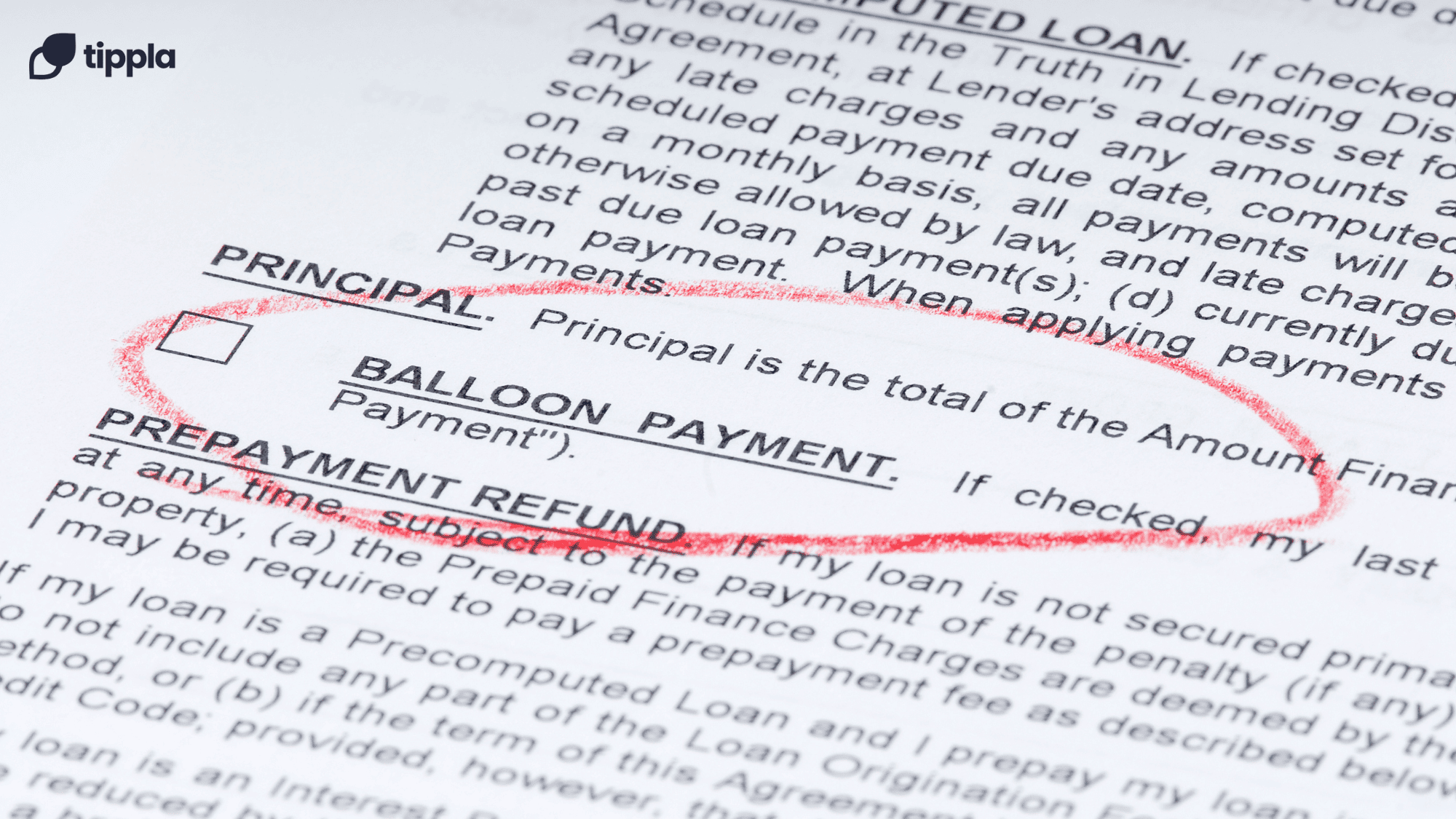
Thinking about taking out a loan in Australia? You might come across the term “balloon payment” and wonder what it means. Unlike the predictable monthly payments of a standard loan, a balloon payment throws a significant lump sum into the mix, requiring careful planning and consideration.

This article will serve as your guide to understanding balloon payments in Australian loans. We’ll delve into how they work, the different types of loans they’re associated with, and the key factors to consider before signing on the dotted line. Whether you’re a seasoned borrower or just starting your loan journey, this information will equip you with the knowledge to make informed decisions and avoid potential financial pitfalls.

What are Balloon Payments?

A balloon payment stands out as a unique financial feature in the world of loans. Think of it as a financial balloon – inflated compared to your regular repayments, impacting your borrowing strategy.

So, how does it differ from a standard loan repayment structure? Let’s break it down:

  • Regular Loan Repayments: Imagine a loan as a pie. With each monthly payment, you’re essentially slicing off a portion of the pie, gradually reducing the outstanding balance until the entire pie (loan) is paid off.
  • Balloon Payment Loan: Picture the same pie, but with a larger chunk left untouched. This chunk represents the balloon payment, deferred until the end of the loan term. During the regular loan term, you only pay off a portion of the principal (the pie itself) through your regular repayments, while the interest accumulates on the entire loan amount, including the deferred balloon payment.

This means your monthly repayments are typically lower with a balloon payment compared to a standard loan, offering some initial financial breathing room. However, it’s crucial to remember that the balloon payment itself can be significant, sometimes amounting to 20-50% of the original loan amount.

In essence, a balloon payment allows you to access a loan with lower monthly repayments, but you’ll need to have a plan in place to handle the larger lump sum payment at the end of the loan term. This could involve saving diligently, selling an asset, refinancing the loan, or extending the loan term (subject to lender approval).

Types of Loans with Balloon Payments

Balloon payments find their way into various types of loans, each with its own set of dynamics. Understanding how these payments function in different contexts is instrumental for borrowers making informed financial decisions.

Mortgage Loans

Australian homebuyers often encounter balloon payments in mortgage loans, particularly when opting for non-traditional financing arrangements. In these scenarios, borrowers may benefit from lower monthly repayments throughout the loan term, with a substantial balloon payment awaiting them at the end. This structure allows homeowners to manage short-term affordability while planning for the eventual lump sum payment, making it crucial for prospective property owners to carefully evaluate the long-term implications of such mortgage agreements.

Commercial Loans

For businesses seeking capital to fuel expansion or navigate cash flow challenges, commercial loans with balloon payments emerge as a viable option. In the Australian business landscape, these loans can allow entrepreneurs to manage operational expenses by offering lower monthly repayments. However, the deferred balloon payment demands astute financial planning to ensure that the business can meet its obligations and capitalise on growth opportunities.

Personal Loans

In the world of personal finance, balloon payments can be a component of certain loan arrangements. Australians exploring personal loans, perhaps for significant life events or unexpected expenses, may encounter repayment structures featuring lower monthly instalments and a balloon payment capping off the term. Borrowers need to assess their financial capacity and make informed decisions that align with their long-term goals.

Auto Loans

When it comes to financing a vehicle purchase, balloon payments can be woven into auto loan agreements. Australians looking to drive away with their dream car may opt for loans with reduced monthly payments, facilitated by a balloon payment looming at the end of the loan term. Navigating the road of auto financing with balloon payments necessitates a clear understanding of the vehicle’s depreciation, trade-in value, and the financial capability to meet the final lump sum.

What are the Advantages of Balloon Payments?

While balloon payments come with inherent risks, they can offer certain advantages under specific circumstances. Here are some potential benefits to consider:

Lower Initial Monthly Payments

The most evident advantage of a balloon payment loan is the reduced monthly repayments compared to a standard loan with the same loan amount and term. This can be particularly attractive for borrowers with tighter initial budgets or those seeking to free up cash flow for other financial needs in the short term.

Potential Benefits for Specific Borrowers

  • Business Owners: Balloon payments in equipment finance can help businesses acquire necessary equipment with lower upfront costs, potentially improving cash flow and aiding business growth.
  • Car Upgraders: If you plan to trade in your car every few years for a newer model, a balloon payment car loan can be suitable. The balloon payment can often be covered by the depreciated value of the older car when traded in.

Sustainability for Short-Term Financing Needs

Balloon payments can be appropriate for short-term financing needs where you anticipate having the necessary funds to cover the lump sum at the end. This could be suitable for situations like:

  • Financing a short-term project with a clear payout within the loan term.
  • Bridging a temporary cash-flow gap until you receive expected funds (e.g., inheritance, bonus payment).

However, it’s crucial to remember that these advantages are conditional and should be weighed against the potential risks associated with balloon payments before making a decision.

What are the Risks and Disadvantages?

While the initial appeal of lower monthly repayments might be tempting, balloon payments come with significant risks and disadvantages that need careful consideration. Here are some key points to remember:

Large Lump Sum Payment at the End

The most prominent disadvantage is the large lump sum payment due at the end of the loan term. This can be a significant financial burden, especially if you haven’t planned and saved diligently throughout the loan term. Unexpected life events, job loss, or simply forgetting about the balloon payment can quickly turn this financial strategy into a major hurdle.

Risk of Financial Strain and Default

Failing to manage the balloon payment can lead to financial strain and potentially defaulting on the loan. This can have severe consequences, including:

  • Damage to your credit score: Defaulting on a loan can significantly impact your credit score, making it harder and more expensive to borrow money in the future.
  • Repossession of assets: In some cases, lenders may repossess the financed asset (e.g., car, equipment) if the balloon payment is not settled.
  • Legal action: Lenders may pursue legal action to recover the outstanding debt, leading to additional costs and stress.

Impact on Long-Term Financial Planning

The presence of a large upcoming payment can restrict your financial flexibility and hinder long-term planning. It’s crucial to consider how the balloon payment might impact your ability to save for other financial goals, such as a home deposit or retirement.

Before opting for a balloon payment loan, it’s essential to carefully assess your financial situation and risk tolerance. Ensure you have a concrete plan to manage the lump sum payment at the end, whether through savings, refinancing options or selling the financed asset.

Consulting a financial advisor can be invaluable in helping you understand if a balloon payment loan aligns with your overall financial goals and risk profile.

How do Lenders Calculate Balloon Payments?

While the exact calculation might vary slightly between lenders in Australia, the general principle remains consistent. Here’s how lenders typically determine the size of a balloon payment:

Balloon Payment = Loan amount – (Total regular repayments)

  • Loan Amount: This is the total amount of money you borrow from the lender.
  • Total Regular Repayments: This refers to the sum of all your monthly payments over the loan term.

Essentially, the balloon payment represents the remaining portion of the loan principal after accounting for the interest and a portion of the principal paid through your regular monthly repayments.

Factors Affecting Balloon Payment Size

  • Loan Amount: Naturally, the larger the loan amount, the larger the balloon payment will be.
  • Loan Term: A shorter loan term generally results in a larger balloon payment as the time available to pay down the principal is reduced. Conversely, a longer loan term typically leads to a smaller balloon payment but also translates to paying more interest overall.
  • Interest Rate: A higher interest rate will increase the total amount of interest charged over the loan term, leading to a larger balloon payment. Conversely, a lower interest rate translates to a smaller balloon payment.

It’s important to remember that balloon payments are negotiated between you and the lender. While the formula provides a general framework, the final balloon payment size might be influenced by your creditworthiness, the type of loan, and the lender’s specific policies. Therefore, it’s crucial to carefully review the loan agreement and understand the exact amount of the balloon payment before committing to a loan with this structure.

Considerations Before Choosing a Loan with a Balloon Payment

Taking on a balloon payment loan requires careful evaluation and planning. Here are some essential considerations before making this financial commitment:

Assess Your Financial Stability and Future Income Prospects

  • Financial Stability: Are you in a stable financial position with a reliable income stream? Unexpected events or fluctuations in income can make managing the balloon payment difficult.
  • Future Income Prospects: Do you have confidence in your future earning potential? If you anticipate significant income changes, managing the balloon payment could become challenging.

Understand the Full Terms and Conditions of the Loan

  • Balloon Payment Amount: Thoroughly understand the exact balloon payment amount and its due date. Factor in potential interest accrual if the payment isn’t settled on time.
  • Hidden Fees: Be aware of any associated fees like early repayment penalties or exit fees.
  • Refinancing Options: Explore if the loan allows for refinancing the balloon payment at the end of the term, depending on your circumstances and the lender’s policies.

Explore Alternatives to Balloon Payments

Consider standard loan structures with fixed monthly repayments that gradually pay down the principal and interest throughout the term. This might require adjusting your budget or borrowing a smaller amount initially.

Consulting with a Financial Advisor

Seeking guidance from a qualified financial advisor is highly recommended. They can assess your specific financial situation, analyse the pros and cons of a balloon payment loan in your context, and suggest alternative financing options that align with your financial goals and risk tolerance.

Remember, a balloon payment loan can be a viable option for some borrowers, but careful planning and responsible financial management are crucial to avoid potential pitfalls and ensure a smooth financial journey.

Refinancing Options

If you’re nearing the end of your balloon payment loan term and the lump sum payment is causing concern, refinancing might be a viable option. However, it’s crucial to understand the process and carefully weigh the factors involved.

Refinancing Options in Australia

Refinancing with the Existing Lender

Approach your current lender to discuss the possibility of refinancing the balloon payment into a new loan with extended terms and lower monthly repayments. This option might be easier and quicker as your lender already has your financial information.

Refinancing with a Different Lender

Shop around and compare interest rates and terms offered by other lenders. You might be able to secure a more competitive rate, potentially reducing the overall cost of refinancing. However, be aware of any exit fees associated with closing your existing loan.

Factors to Consider When Refinancing

  • Eligibility: Not all lenders offer refinancing specifically for balloon payments. Check the lender’s requirements and ensure you meet their eligibility criteria.
  • Interest Rate: Compare the interest rate offered for refinancing against your current loan’s rate. While refinancing might extend the loan term, a lower interest rate can potentially save you money in the long run.
  • Loan Term: Extending the loan term through refinancing will lower your monthly repayments but will also increase the total interest paid over the extended period.
  • Fees: Be mindful of any origination fees, application fees, and other associated costs of refinancing. Factor these fees into your decision-making process.

Additional Considerations

  • Impact on Credit Score: Refinancing can impact your credit score, so it’s crucial to understand how it might affect your borrowing power in the future.
  • Financial Situation: Ensure your financial situation is stable and you can comfortably manage the new loan repayments, including potential interest rate fluctuations.

Consulting a financial advisor can be highly beneficial. They can help you assess your options, understand the implications of refinancing, and determine if this strategy aligns with your financial goals and risk tolerance. Remember, refinancing a balloon payment is not a guaranteed solution and comes with its own set of considerations. Weigh the pros and cons carefully and explore all options before making a decision.

Conclusion

Balloon payments in Australian loans offer the allure of lower initial repayments but come with the significant challenge of a large lump sum payment at the end of the term. While they might be suitable for specific situations like short-term financing needs or business equipment acquisition with a clear plan to sell the asset, the risks associated with managing the balloon payment should not be underestimated. Careful financial planning, understanding the full loan terms, and exploring alternatives like standard loan structures are crucial before committing to a balloon payment loan. Consulting a financial advisor can provide invaluable guidance in assessing your circumstances and ensuring this financing option aligns with your overall financial goals and risk tolerance.

Frequently Asked Questions

  • How does a balloon payment differ from regular loan repayments?

Unlike regular loans where you pay a fixed amount each month that covers both principal and interest, balloon payments only cover the interest and a portion of the principal throughout the loan term. This results in lower monthly repayments initially, but you’ll have a large lump sum payment (the remaining principal) due at the end of the loan term.

  • Are there any specific regulations or laws regarding balloon payments?

While balloon payments were once more common in Australia, their use has become less frequent due to stricter regulations aimed at protecting borrowers. The National Consumer Credit Protection Act (2009) outlines responsible lending practices, and lenders must ensure borrowers understand the risks associated with balloon payments before entering into such an agreement.

  • How do balloon payments affect my credit score?

Making your loan repayments on time, including the balloon payment, will positively impact your credit score. However, failing to manage the balloon payment and defaulting on the loan can significantly damage your credit score. This can make it difficult and more expensive to borrow money in the future.